
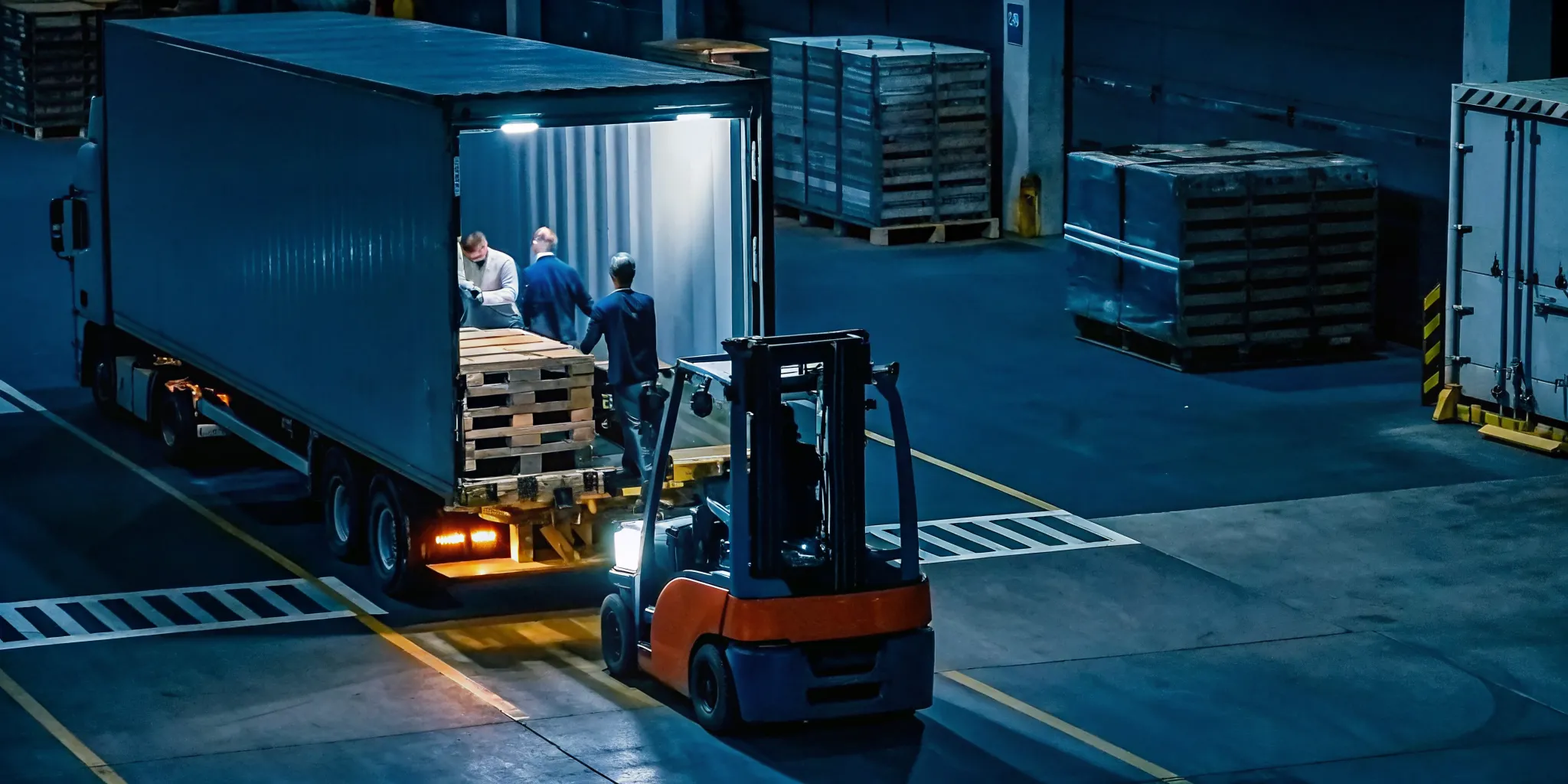
A load can shift after hard braking, a sharp turn, uneven pallet weight, or damaged packaging, turning an on-time delivery into an immediate safety and scheduling problem. Do not keep driving simply because the trailer still moves. A shifted load can compromise handling, increase braking distance, and raise the risk of tipping, according to the Federal Highway Administration.
When you need a shifted load near me solution, contact a professional freight remediation provider that can send qualified help to the load’s location. WeFixFreight provides 24/7 on-demand support through a nationwide network of more than 150 service agents, with options for safe assessment, pallet restacking, rework, cross-docking, or other load correction.
Fast action protects the driver, other motorists, and the cargo itself. WeFixFreight helps freight brokers, carriers, shippers, and 3PLs determine whether the shipment needs emergency pallet rework and restack services or a broader remediation plan. First, it is important to understand why a shifted load may be rejected before it can continue.
What Is a Shifted Load and Why It Gets Rejected
A shifted load is cargo that has moved from its original secured position during transit. The movement may be obvious, such as leaning or fallen pallets, or less visible, such as freight that has slid enough to change weight distribution inside the trailer. Either way, the shipment may no longer meet the receiver’s safety and handling requirements.
Receivers reject shifted loads because accepting unstable freight can expose people, equipment, and cargo to unnecessary risk. The Federal Highway Administration explains that an unbalanced or shifting load can compromise vehicle handling, increase braking distance, and raise the risk of tipping. That risk affects the driver and other motorists, not just the shipment owner. A receiver may also require the freight to be inspected, restacked, rewrapped, or separated before it can enter the facility or continue to its destination.
Stacking standards are another reason for a rejection. Pallets that are leaning, broken, fallen over, or no longer aligned can fail during unloading or forklift movement. These pallet conditions are common triggers for emergency freight re-work, particularly when the cargo must be removed and safely re-palletized before transport continues. Damage, contamination, unstable stacking, and missing securement can all turn a delivery appointment into a time-sensitive recovery effort.
Some providers focus on a defined service area or a single correction model. Cross Dock Fix presents pallet rework and restacking as a focused service, while Parker Freight Correction highlights load-shift assistance through a direct local contact. Those options may fit a specific lane. WeFixFreight is built for brokers, carriers, shippers, and 3PLs that need a consistent response across the country. With a nationwide network of more than 150 service agents available 24/7.
When you need emergency pallet rework and restack services, the goal is clear: stabilize the freight, protect the people handling it, and get the shipment back on the road through a documented, practical solution.
Why You Cannot Drive With a Shifted Load
A shifted load is not just a cargo-quality problem. It can change how the vehicle responds to steering, braking, and turns. The Federal Highway Administration notes that an unbalanced or shifting load can compromise handling, increase braking distance, and raise the risk of tipping. That makes immediate correction a safety requirement, not an optional stop when the route is busy. Read the FHWA guidance on load stability.
A minor shift can become a major hazard
Freight that appears only slightly out of position may move again when the truck accelerates, brakes hard, changes lanes, or enters a curve. FMCSA guidance explains that cargo must be secured to prevent shifts that can cause a driver to lose control, particularly during maneuvers. Once weight moves toward one side of a trailer, the vehicle may handle differently than the driver expects.
The risk extends beyond the cab. An unstable commercial vehicle can endanger the driver, nearby motorists, roadside workers, and anyone affected if cargo falls or the vehicle tips. Continuing to drive also increases the chance of crushed product, contamination, spoilage, and a larger cargo claim. Prompt remediation can limit damage before the situation spreads through the rest of the shipment.
Securement violations can create liability
Operating with improperly secured cargo may lead to a roadside inspection, a violation under applicable federal or state requirements, and fines or an out-of-service decision. If the load causes a collision, cargo loss, or injury, the carrier and other responsible parties may also face liability, insurance complications, and delivery delays. The exact consequences depend on the facts, jurisdiction, and inspection findings, but moving an unsafe load does not reduce that exposure.
Stop safely instead of attempting a roadside fix
If you are searching for a shifted load near me, do not keep driving to the next terminal or try to pull pallets back into place without the right equipment and trained labor. Move to a safe location when possible, secure the vehicle, and call for professional help. WeFixFreight can coordinate on-site rework and restacking through its load shift safety guide, helping you address the problem before the shipment and people around it face greater risk.
Finding Emergency Shifted-Load Correction Near You
When you search for a shifted load near me, speed matters. A load that has moved out of position needs professional attention before the vehicle continues. The fastest option is usually to contact a freight remediation provider that can coordinate help at your actual location. Rather than asking the driver to search for a facility, equipment, and labor independently.
Start with your exact location and load condition
Contact WeFixFreight and provide the driver’s current location, the shipment’s destination, the type of trailer or container, and a concise description of what happened. Photos can help the response team understand whether pallets are leaning, broken, fallen over, or shifted. This information helps determine whether the load can be corrected where the truck is parked or whether it should move only under professional direction to a nearby cross-dock.
WeFixFreight’s nationwide network includes more than 150 service agents and provides 24/7 on-demand support. That coverage is designed for urgent requests in cities, industrial areas, highway corridors, and locations where a driver may not know a reliable local provider. A local search result may show a company such as Air Van in Jacksonville, but a Jacksonville-only option does not solve a shifted-load emergency in another state. Nationwide coordination gives brokers, shippers, carriers, and 3PLs one response path wherever the load is located.
Choose the right correction point
Professional re-stacking is often required after cargo shifts. An agent can assess the freight, determine what can be safely recovered, and arrange the labor and equipment needed for re-work. If the trailer cannot be corrected at the roadside or delivery location, cross-docking can separate compromised cargo from intact freight and move the shipment into a controlled facility. WeFixFreight can also coordinate related services such as re-work, cross-docking, and re-delivery.
For a direct local response, review the emergency pallet restacking service, then contact the team with the load’s current location. This is faster and more reliable than leaving the driver to find their own solution while cargo remains unstable.
How Fast Can a Shifted Load Be Fixed?
The timeline depends on how far the freight has moved, whether pallets or packaging are damaged, and whether the trailer can be safely worked at its current location. A small pallet restack may take about one to two hours. A more involved trailer rework can take half a day. The fastest way to get an accurate estimate is to call with the trailer location, shipment condition, and photos if they are safe to obtain.
Professional correction follows a straightforward process:
- Call: Share the location, load details, and immediate safety concerns.
- Dispatch: A nearby service agent is identified and sent to the site.
- Assess: The team evaluates shifted pallets, damaged product, access, and the safest correction method.
- Fix: The crew restacks, re-palletizes, rewraps, transfers, or otherwise reworks the freight so it can move forward safely.
WeFixFreight provides 24/7 on-demand support through a nationwide network of more than 150 service agents. That availability matters because emergency response depends on expedited freight handling, and every hour a trailer sits can create additional scheduling, detention, claim, and delivery pressure. Read the FHWA guidance on emergency freight routing.
Unlike an equipment-heavy recovery approach that may center on bringing in a full recovery truck, WeFixFreight can often use local cross-docks and on-site labor. That flexibility helps match the response to the problem. A straightforward restack may be completed where the driver is waiting. If the trailer needs to be unloaded, sorted, or transferred, cross-dock services near your load can keep intact freight moving while damaged or unstable product is addressed.
For brokers and carriers, time saved is money saved. Fast, professional freight re-work minimizes downtime and helps protect delivery commitments, equipment availability, and cargo value. For a broader correction involving unstable pallets, damaged packaging, or a rejected shipment, review our emergency pallet rework and restack services.
What Nationwide Shifted Load Near Me Services Include
When a load shifts, carriers and brokers need more than a local labor contact. They need one coordinated response that can assess the freight, correct the immediate problem, and support the next step in the shipment. WeFixFreight coordinates that process through a nationwide network, so you make one call and the right service resources are arranged around the load’s location.
Assessment and corrective freight work
The response begins with an assessment of the trailer, pallets, packaging, and cargo condition. Depending on what the team finds, the work may include unloading, down-stacking, restacking, rewrapping, and re-palletizing unstable freight. This is the practical difference between a temporary adjustment and a correction that is ready for the next leg of transit. You can review the full range of emergency pallet rework and restack services when a shift involves leaning, broken, fallen, or damaged pallets.
| Service Option | Best For | Typical Scope | Equipment Needed |
|---|---|---|---|
| On-Site Restack | Stable trailer, leaning or tipped pallets, reusable packaging | Down-stack, re-stack, re-wrap, re-secure at current trailer location | Forklift, pallet jack, shrink wrap, straps, banding |
| Cross-Dock Transfer | Unstable trailer, mixed damaged and intact freight, access-limited site | Unload, sort, separate compromised cargo, reload onto outbound equipment | Dock, forklifts, pallets, sorting area |
| Full Freight Re-Work | Collapsed pallets, receiver rejection, broken packaging, product contamination | Full unload, re-palletize, replace damaged packaging, re-wrap, band, reload | Full warehouse facility, multiple forklifts, labor crew, inspection station |
| Transload / Re-Delivery | Trailer cannot continue, missed delivery window, reroute needed | Transfer cargo to new equipment, coordinate new delivery appointment | Dock, forklifts, outbound trailer, dispatch support |
Each option matches a specific set of conditions. The assessment call determines which path fits best.
More than a restack
Some incidents require additional logistics support. WeFixFreight’s service scope includes freight re-work, cross-docking, re-delivery, transloading, rail remediation, and specialized projects. If the original trailer cannot continue, the team can coordinate a transfer or other corrective option. For shipments that need to move from one vehicle to another, cross-dock services near your load can help separate compromised freight from intact cargo and keep the shipment moving. On-site labor, short-term warehousing, and product disposal may also be arranged when the assessment shows they are necessary.
Reloading, re-securement, and payment
After the freight is corrected, the team reloads it, distributes the weight appropriately, and re-secures the shipment for continued transport. The goal is to give the carrier a stable, workable path back en route, not simply to move damaged freight out of the way. Pricing is transparent and standardized, with no hidden fees or surprise emergency markups. Services are payable upon completion to WeFixFreight via Comchek, EFS, or Credit Card. The driver will not pay on location.
That coordinated approach helps brokers, shippers, and carriers reduce handoffs during a time-sensitive disruption while keeping responsibility clear from first assessment through onward movement.
Frequently Asked Questions
What should I do first when a load shifts?
Stop in a safe location and do not continue until the freight has been inspected. A shifted load can affect handling, braking distance, and stability. Contact a professional re-work provider with the shipment location, trailer or container details, photos if available, and any visible cargo damage. This information helps the response team determine whether on-site labor, cross-docking, or another solution is appropriate.
Can I drive with a shifted load if the trailer still moves?
No. The fact that a vehicle can move does not mean the cargo is safe to transport. Improperly secured or shifted freight can increase the risk of loss of control, tipping, and harm to the driver or other motorists. The Federal Highway Administration identifies immediate correction as critical when an unbalanced load compromises vehicle stability. Review the FHWA guidance on shifted-load safety.
How quickly can someone correct a shifted load near me?
Response time depends on the shipment location, access conditions, cargo condition, and the work required. WeFixFreight provides 24/7 on-demand support through a nationwide network of more than 150 service agents. The team can coordinate professional re-stacking and re-palletizing, cross-docking, transloading, or related freight re-work to reduce avoidable downtime.
What happens during professional shifted-load correction?
The process typically starts with an assessment of the freight and safety risks. The team may then unload the trailer, separate damaged or compromised cargo, re-stack and re-wrap usable freight, and reload it for stable transport. If the shipment cannot move immediately, short-term warehousing or product disposal may be arranged. Pricing is transparent and standardized, with no specific fee assumed before the scope is reviewed.
Contact us now for shifted-load correction
A shifted load needs a clear plan and capable hands to help protect the shipment and keep your operation moving. WeFixFreight provides 24/7 support through a nationwide network for urgent freight correction needs. Contact us now to discuss the load and get the next step underway.