
When a freight problem is unfolding at a truck, dock, warehouse, or receiver, an on-site freight labor service can put skilled handlers where the problem is instead of making the load travel farther. The right team can help stabilize, sort, rework, reload, or prepare freight for its next safe move.
Contact us now for on-site freight labor at your location.
What On-Site Freight Labor Actually Covers
On-site freight labor is hands-on support delivered at the location where freight needs attention. A qualified team may unload or reload cargo, restack or reposition pallets, sort product, replace damaged packaging, support an inspection, and coordinate the next transportation step without sending the problem to another facility first.
That flexibility matters when a trailer is already at a receiver, a dock is blocked, or a driver cannot continue with an unstable load. Instead of treating every exception as a transportation problem, the response begins with the physical condition of the freight and the constraints at the location.
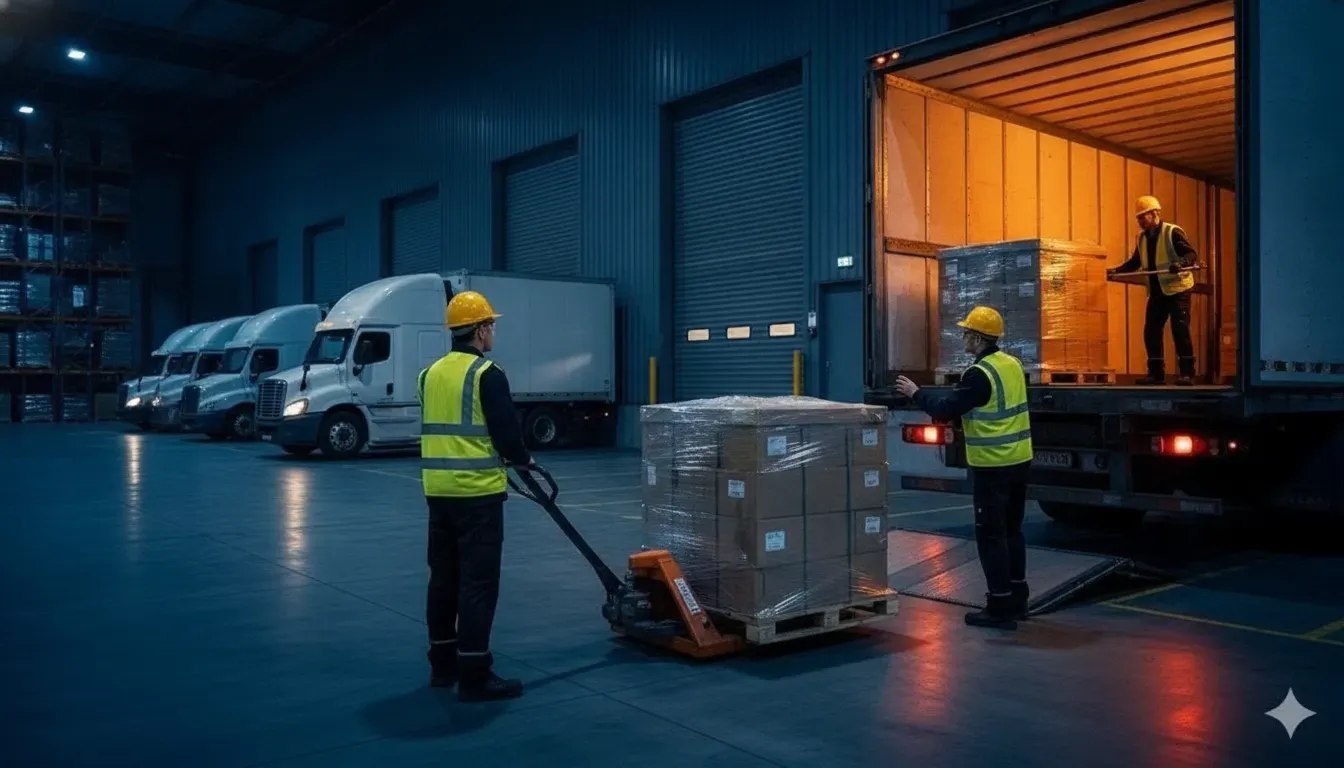
Common assignments include:
- Unloading freight so a damaged or compromised trailer can be cleared.
- Restacking fallen, leaning, broken, or shifted pallets.
- Repositioning cargo to improve stability and make the load road-ready.
- Sorting damaged, usable, refused, or temperature-sensitive product.
- Repackaging or reinforcing cartons when the original packaging is no longer dependable.
- Supporting cross-docking, transloading, re-delivery, short-term warehousing, or product disposal decisions.
The exact scope should be agreed before work begins. Freight brokers, shippers, carriers, and 3PLs should provide the location, cargo type, issue, deadline, and access conditions so the dispatch team can match the job with an appropriate local resource.
When Is On-Site Labor the Right Call vs. Cross-Docking?
On-site labor is usually the better first option when the freight can be corrected where it sits and moving it would add risk, delay, or cost. Cross-docking is more appropriate when the load needs a controlled transfer between vehicles or a facility with dock space, equipment, or a specific handling capability.
| Situation | Best starting point | Why |
|---|---|---|
| A pallet has shifted but the trailer and dock are usable | On-site freight labor | Handlers can stabilize or reposition the load at the current location. |
| A receiver refuses a load and the freight needs a new plan | On-site assessment, then rework or re-delivery | The condition, disposition, and next destination need to be coordinated together. |
| Freight must move from a damaged trailer to another vehicle | Cross-docking or transloading | A controlled transfer may be safer and more efficient than a field correction. |
| The dock is blocked by fallen product | On-site labor | The immediate need is to clear, sort, and stabilize the affected freight. |
| The load needs temporary holding space | Short-term warehousing with labor | The freight needs both a secure location and people to handle the transition. |
These options are not mutually exclusive. A single response may start with handlers at the truck, move freight through a cross-dock, and finish with re-delivery. WeFixFreight coordinates those connected steps when a shipment needs more than one service.
For a broader look at recovery after a rejected delivery, see WeFixFreight’s rejected load re-delivery service guide. This article focuses on the labor decision at the location, while the guide covers the larger recovery path.
What Skills and Equipment Do On-Site Freight Teams Bring?
Effective on-site freight labor combines careful physical handling with fast operational judgment. The team must understand how to protect the product, preserve the usable portion of the shipment, communicate condition changes, and work within the site’s safety and access rules.
Depending on the freight and location, the work may require:
- Load assessment: identifying instability, damaged packaging, blocked access, and product that needs to be isolated.
- Pallet handling: restacking, exchanging, repositioning, wrapping, bracing, and preparing pallets for continued movement.
- Sorting and segregation: separating sound, damaged, refused, contaminated, or temperature-sensitive product according to the approved disposition.
- Dock coordination: working with the driver, receiver, warehouse, shipper, and broker so everyone understands the sequence of work.
- Documentation: recording quantities, visible condition, completed work, and exceptions that affect re-delivery or claims handling.
- Equipment awareness: using or coordinating pallet jacks, dock equipment, stretch wrap, straps, edge protection, replacement pallets, and other site-approved materials when appropriate.
Equipment availability is location-specific. A responsible dispatch does not assume that a pallet jack, lift, dock, refrigeration, or secure storage will be available. It confirms the requirement and coordinates the resource before the team arrives.
For safety-sensitive work, the site controls still matter. OSHA’s material handling and storage standard addresses keeping stored materials stable. An on-site team should follow the facility’s procedures, use appropriate personal protective equipment, and stop when the requested work exceeds the available equipment or safe working conditions.
How Do You Dispatch On-Site Freight Labor in an Emergency?
Dispatch works best when the first call gives the response team enough detail to make a sound match. The objective is not merely to find a person nearby. It is to identify the location, capability, equipment, timing, and communication plan needed for this particular freight exception.
- Identify the exact location. Share the facility address, dock or yard details, access instructions, and a reliable on-site contact.
- Describe the freight condition. Explain whether pallets are fallen, leaning, shifted, broken, wet, refused, damaged, or blocking access. Photos can help the team understand the scope.
- Share cargo and handling details. Include product type, approximate quantity, pallet count, weight concerns, temperature requirements, and any special handling restrictions.
- State the operational deadline. Explain whether the truck is waiting, the receiver is closing, a delivery appointment is at risk, or a production schedule is affected.
- Confirm the desired outcome. The goal may be a stable load, a cleared trailer, a sorted shipment, a cross-dock transfer, temporary storage, or preparation for re-delivery.
- Approve the scope and communication path. Confirm who can authorize additional work and how updates, photos, quantities, and completion status should be reported.
WeFixFreight supports emergency freight response 24/7 through a nationwide network of more than 150 service agents. The network model allows the response to be matched to the location and job requirements rather than forcing every freight exception into one facility or one standard process.
When the situation involves a rejected shipment, on-site labor may be only one part of the solution. The response can also include rework, re-delivery, cross-docking, transloading, short-term warehousing, or product disposal. The key is to make the next move from a documented understanding of the freight condition.
What Should You Prepare Before the Team Arrives?
A few accurate details can shorten the time between the first call and productive work. Preparation does not mean the broker or driver must solve the freight issue alone. It means the arriving team has the information and access needed to work safely and avoid avoidable delays.
- Facility name, complete address, gate instructions, dock number, and hours of access.
- On-site contact name and phone number, plus the broker, shipper, receiver, or carrier contacts who need updates.
- Photos or a concise description of the damaged, shifted, fallen, leaning, or blocked freight.
- Bill of lading, load number, pallet count, product description, and any relevant delivery or refusal notes.
- Known hazards, restricted areas, PPE requirements, lift requirements, temperature controls, and appointment deadlines.
- The decision-maker who can approve rework, replacement materials, storage, disposal, cross-docking, or re-delivery.
Keep the original freight instructions and customer requirements available. If the load contains regulated, hazardous, temperature-sensitive, or otherwise restricted product, disclose that before dispatch. Do not ask a general labor crew to perform specialized work without confirming that the needed capability and equipment are available.
How Does On-Site Labor Support Rejected Load Recovery?
On-site freight labor can be the practical bridge between a rejected delivery and a workable recovery plan. Handlers can help document the condition, separate product, correct packaging or pallet issues, and prepare the shipment for re-delivery, transfer, storage, or an approved alternate disposition.
The labor assignment should not replace the broader recovery decision. A broker or shipper still needs to confirm who owns the freight, what the receiver will accept, which product can move, and where the shipment should go next. The on-site team supplies physical execution and condition updates that help the decision-makers act with better information.
That is why this service pairs naturally with WeFixFreight’s on-site labor service and its emergency pallet restack service. When the problem is a shifted or unstable load, the response can focus on making the freight safe and road-ready. When the issue is broader, the team can coordinate the next logistics step instead of stopping at the first correction.
Frequently Asked Questions
What is an on-site freight labor service?
An on-site freight labor service sends qualified handlers to the location where freight needs physical attention. Depending on the situation, the team may unload, sort, restack, repackage, reposition, reload, or prepare product for cross-docking, storage, disposal, or re-delivery.
When should I call for on-site freight labor?
Call when a shifted, fallen, leaning, damaged, refused, or blocked load needs hands-on help at its current location. Early coordination is especially useful when a driver is waiting, a dock is blocked, a receiver has limited hours, or a delivery commitment is at risk.
Can on-site labor work with cross-docking?
Yes. On-site handlers can stabilize or prepare freight before a controlled transfer, and cross-docking can move the shipment from one vehicle to another when the current trailer or location is not suitable. The right combination depends on the freight condition, equipment, facility, and next destination.
What information does a freight labor dispatcher need?
Provide the exact location, on-site contact, cargo type, pallet count, visible problem, photos if available, access conditions, equipment needs, deadline, and desired outcome. Also disclose hazardous, temperature-sensitive, regulated, or restricted freight before the team is dispatched.
Does WeFixFreight provide on-site freight labor nationwide?
WeFixFreight provides 24/7 emergency freight support through a nationwide network of more than 150 service agents. Availability and capabilities depend on the specific location and job requirements, so the dispatch team should confirm the fit for the load before work begins.
Contact us now to coordinate skilled freight handlers at your location.