
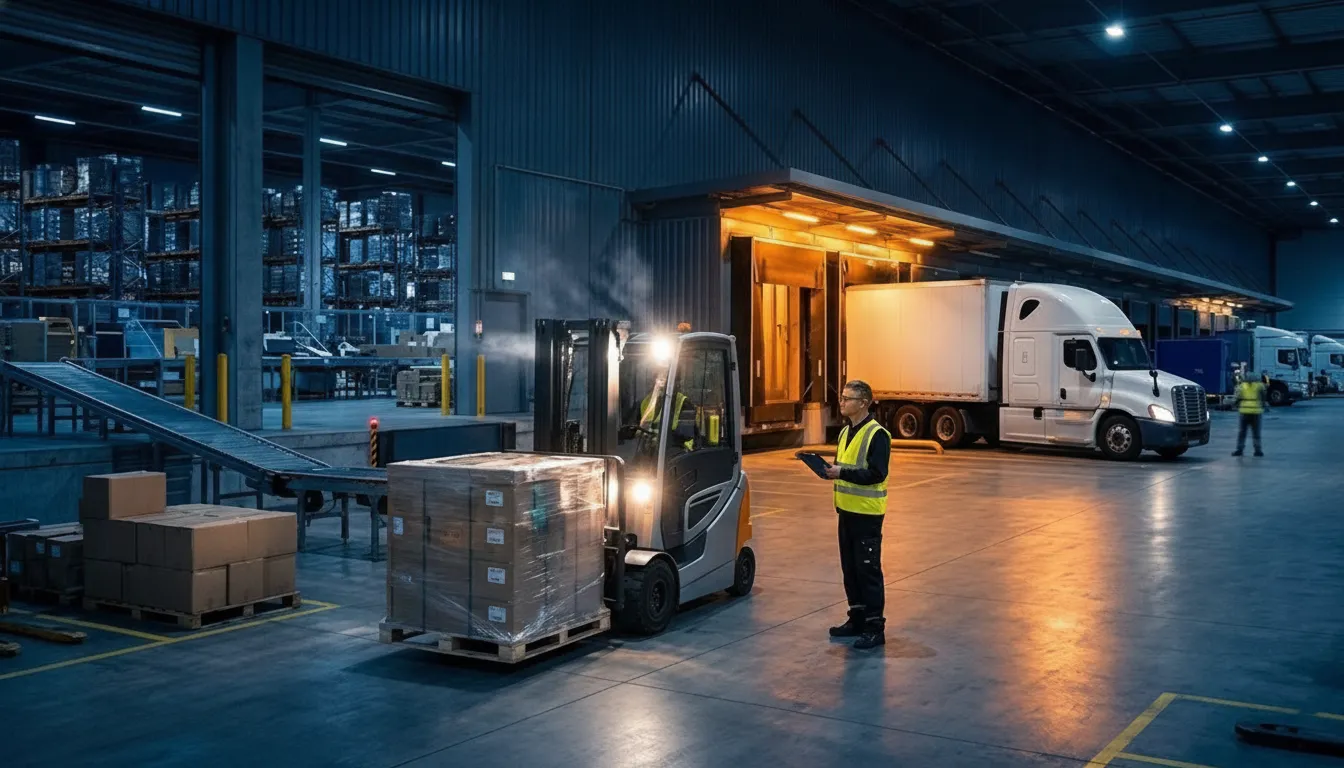
When a trailer reaches a warehouse and the freight needs to be handled before it can move. A lumper service may provide the labor to load, unload, sort, or restack the shipment. That distinction matters when a shifted pallet, damaged packaging, rejected load, or tight dock schedule is already putting delivery plans at risk.
In practical terms, what are lumper services? They are third-party loading and unloading labor arranged for work at warehouses, distribution centers, and similar facilities. The exact tasks and payment process depend on the facility, shipment agreement, and operating circumstances. When the problem extends beyond routine dock labor, We Fix Freight can coordinate documented on-site labor services, freight re-work, and related handling support.
Understanding the industry term first makes it easier to identify what your shipment actually needs. Who should coordinate the work, and when a broader recovery response is more appropriate.
What Are Lumper Services? The Definition Freight Pros Use
What are lumper services? In freight operations, the term generally means third-party labor hired to load or unload freight at a warehouse, distribution center, cross-dock facility, or similar dock. The shipper, receiver, carrier, broker, or facility may arrange the work, depending on the shipment and the facility’s process. The goal is to handle freight efficiently without requiring the driver to perform every loading or unloading task.
A lumper is usually focused on facility-based freight handling. The crew may work from dock instructions, verify shipment details, and prepare products for storage, putaway, or another outbound movement. Common activities can include:
- Loading or unloading trailers at the facility.
- Sorting products or separating freight by destination.
- Breaking down, splitting, or building pallets.
- Staging freight for putaway or cross-docking.
- Restacking or rewrapping freight when the facility’s process includes that work.
Exact duties vary. One warehouse may use lumpers primarily for unloading, while another may expect sorting, palletizing, staging, or limited rework. The shipment type, dock procedures, equipment, staffing, and agreement between the parties all affect what the crew is authorized and prepared to do. A lumper service should not automatically be treated as a full freight-recovery operation.
That distinction matters when a load arrives shifted, damaged, rejected, or unsafe to move as-is. In those situations, you may need capabilities beyond routine dock labor, such as on-site labor services for unloading, sorting, repackaging, palletizing, or expedited reloading. Clarifying the condition of the freight and the work required helps the right team respond without delaying the next transportation step.
What Tasks Do Lumper Services Cover?
Lumper duties are usually tied to the receiving facility’s workflow. A crew may handle routine dock labor, prepare freight for its next movement, or complete specific handling steps requested by the warehouse. The exact scope depends on the facility, the shipment, the equipment available, and the agreement for the load.
- Unloading: Removing freight from an arriving trailer and moving it into the designated dock or staging area.
- Loading: Placing freight onto an outbound trailer according to the facility’s loading plan.
- Sorting: Separating products by shipment, destination, item type, or other receiving instructions.
- Palletizing: Building or rebuilding pallets so products can be staged for putaway, transfer, or cross-docking.
- Restacking: Rebuilding a pallet when freight has shifted, fallen, or arrived in a condition that requires additional handling before it can move onward.
- Dock handling: Checking in at the facility, following its dock procedures, staging freight, and completing other site-specific handling steps.
Some providers also report splitting pallets, rewrapping damaged pallets, labeling freight, and documenting completed work. Those services are not automatic parts of every lumper arrangement, so confirm the requested duties before the crew begins.
Routine unloading and pallet handling are different from freight re-work. If a load has shifted or packaging is damaged, the work may require more than moving boxes from one trailer to a dock. It can involve restacking or re-palletizing the load, replacing or reinforcing damaged packaging, or transferring freight from a damaged trailer. Freight re-work is the more precise term for that remediation-focused work, while on-site labor services can cover unloading, sorting, repackaging, palletizing, and expedited reloading when those capabilities fit the situation.
Who Pays for Lumper Services?
There is no universal rule that assigns every lumper charge to the driver, carrier, shipper, receiver, or broker. The payer and reimbursement process can depend on the facility’s operating process, the shipment terms, any approved accessorial arrangement, and the agreement between the parties. In some workflows, a carrier may pay at the facility and request reimbursement later. Other arrangements may have the shipper, receiver, broker, or another authorized party coordinate payment directly. Confirm the process before work begins rather than assuming the person at the dock is responsible.
Payment instructions should also be separated from the decision to use labor. FMCSA states that carriers cannot be coerced into unwanted loading or unloading assistance and required to pay for it under 49 U.S.C. 14103. That rule does not create one universal billing method, so the shipment’s approved process still needs to be documented.
Confirm these details before unloading or rework starts
- Who authorized the service? Identify the shipper, receiver, broker, carrier, or facility contact who approved the work.
- Who pays at the facility? Confirm whether payment is direct, handled through an account, or advanced by another party.
- How is reimbursement handled? Ask what documentation, receipt, reference number, or accessorial submission is required.
- What work is approved? Define whether the request covers unloading, sorting, palletizing, restacking, rewrapping, or another task.
- Who confirms completion? Establish which contact signs off on the work and preserves the supporting records.
Written confirmation helps prevent disputes when a shipment changes at the dock. For urgent freight problems that require broader handling than a facility’s normal lumper process, review the scope and payment terms with the arranging party before dispatch.
FMCSA guidance on lumper assistance
Lumper Services vs. On-Site Labor: What Is the Difference?
The terms can overlap in a freight emergency, but they do not always describe the same scope of work. A lumper service generally means third-party labor arranged to load or unload freight at a warehouse, distribution center, or dock. The work may include sorting, palletizing, staging, or restacking, depending on the facility and the agreement.
On-site labor is a broader response category. We Fix Freight documents on-site labor services that can be coordinated around the actual condition of the shipment, location, and next transportation step. That distinction matters when a load needs more than routine dock unloading.
| Consideration | Lumper service | On-site labor |
|---|---|---|
| Typical meaning | Third-party loading or unloading labor, often at a facility or dock. | Labor coordinated at the freight location to address a wider handling need. |
| Common work | Unloading, loading, sorting, palletizing, staging, or restacking, subject to facility procedures. | Unloading, inventory sorting, repackaging, palletizing, short-term storage when needed, expedited reloading, and dispatch. |
| Best fit | A facility has a defined labor requirement for receiving or shipping freight. | A shipment needs coordinated handling, rework, stabilization, or a rapid next move. |
For example, a facility-based lumper crew may unload and stage product for putaway. A broader on-site labor response may also sort inventory, repackage damaged units, rebuild pallets, arrange short-term storage, and expedite reloading or dispatch. Those services should be confirmed against the specific shipment needs rather than assumed from the label alone.
If the issue involves shifted or damaged freight, clarify whether you need routine loading labor or a coordinated remediation response before dispatching help. The right scope can reduce avoidable handling and help keep the shipment moving.
When Should You Request Lumper-Style Freight Labor?
Request help before a routine unloading problem becomes a missed appointment, extended driver wait, or a load that cannot continue safely. The right trigger is not the label used for the labor. It is the condition of the freight, the facility’s rules, and the amount of coordination required to keep the shipment moving.
- Confirm the facility cannot handle the work with its available crew. Some warehouses, distribution centers, and cross-dock facilities use third-party labor for loading and unloading. Ask about dock access, appointment requirements, check-in procedures, equipment restrictions, and whether the facility permits outside labor. Do not send a crew without confirming who can authorize the work on site.
- Call when the truck is approaching an appointment or dock constraint. If unloading, sorting, or reloading must happen within a narrow window, coordinate labor before the driver loses more time waiting for instructions. Share the facility location, load condition, appointment details, and the work the dock expects.
- Escalate when pallets have shifted, broken, or become difficult to handle. A load that cannot be safely unloaded may need pallet restacking, re-palletizing, repackaging, or damaged packaging reinforcement. Freight re-work can include restacking shifted loads and unloading freight from a damaged trailer for transfer to another vehicle.
- Request support for rejected or damaged freight. A refusal at the dock can create a decision point involving inspection, sorting, repackaging, temporary storage, reloading, or transfer to another vehicle. Provide photos and receiving instructions when available, so the labor plan matches the actual issue rather than assuming a standard unload.
- Use a coordinated labor plan when inventory must be sorted. Mixed, damaged, or disputed freight may require inventory classification, palletizing, staging, and documentation before it can be accepted or dispatched. We Fix Freight’s documented on-site labor capabilities include unloading, inventory sorting, repackaging and palletizing, short-term storage when needed, and expedited reloading and dispatch. Confirm the scope and quote before work begins.
Early coordination gives the broker, shipper, carrier, 3PL, facility, and service provider the same operating picture. It also helps separate a straightforward unload from a broader freight re-work or cross-docking need, without promising an outcome before the load is assessed.
How We Fix Freight Helps When Freight Cannot Wait
A conventional lumper arrangement is usually tied to labor at a warehouse, distribution center, or dock. That may solve a scheduled loading or unloading need, but urgent freight problems can require more than moving cargo from a trailer. A shifted load, damaged pallet, compromised trailer, or rejected shipment may need coordinated action at the location where the problem occurs.
We Fix Freight provides broader emergency freight handling across the United States. Its central dispatch team coordinates local service agents through a nationwide network of more than 150 agents, with availability 24/7/365. That model is designed for brokers, shippers, carriers. And 3PLs that need a practical response when waiting for a standard facility labor arrangement could extend truck or shipment downtime.
Depending on the situation, the response may include:
- On-site labor services for unloading, sorting, repackaging, palletizing, and expedited reloading and dispatch.
- Freight re-work for pallet restacking, re-palletizing shifted cargo, cargo repair, or replacing and reinforcing damaged packaging.
- Transfer of freight from a damaged trailer to another vehicle when the original equipment cannot continue safely or effectively.
- Cross-docking services that move freight from an incoming truck to an outbound truck without intermediate storage.
This is why it is useful to distinguish the question “what are lumper services?” from the broader question of how to recover freight under pressure. We Fix Freight is not presented as a conventional facility lumper provider. It coordinates emergency labor and logistics remediation that can address the freight, the equipment, and the next transportation step together. That broader scope can be relevant when a shipment needs pallet restacking, cargo repair, a damaged-trailer transfer, or a rapid cross-dock rather than routine unloading alone.
Frequently Asked Questions
Who usually pays for lumper services?
There is no universal payer rule. Responsibility can depend on the facility’s process, the shipment agreement, and how accessorial charges are handled. Confirm the arrangement before work begins, including who authorizes the labor, how the charge is documented, and whether a carrier needs reimbursement.
Are lumper services the same as on-site labor?
Not always. Lumper services usually refer to facility-based loading or unloading labor. On-site labor can be broader, covering unloading, inventory sorting, repackaging, palletizing, short-term storage when needed, expedited reloading, and dispatch. The right option depends on whether the freight only needs routine dock handling or needs active recovery and coordination.
What tasks can a lumper crew perform?
Common tasks include loading, unloading, sorting, palletizing, staging, and restacking freight. The exact scope varies by facility and agreement. If a load has shifted, damaged packaging, or needs transfer between vehicles, confirm whether the crew is equipped and authorized for that work before dispatch.
Can We Fix Freight help when a load needs more than routine unloading?
Yes. We Fix Freight coordinates emergency on-site labor and freight re-work for situations such as shifted pallets, cargo repair, damaged-trailer transfers, and expedited reloading. Its nationwide network includes more than 150 service agents with 24/7/365 availability, helping brokers, shippers, carriers, and 3PLs coordinate a practical response when freight cannot wait.
Ready to Discuss Your Freight Labor Needs?
When a shipment needs coordinated handling, re-work, or related labor support, a clear conversation can help identify the next practical step. Contact us now to discuss urgent freight labor, re-work, or related handling needs with We Fix Freight.