
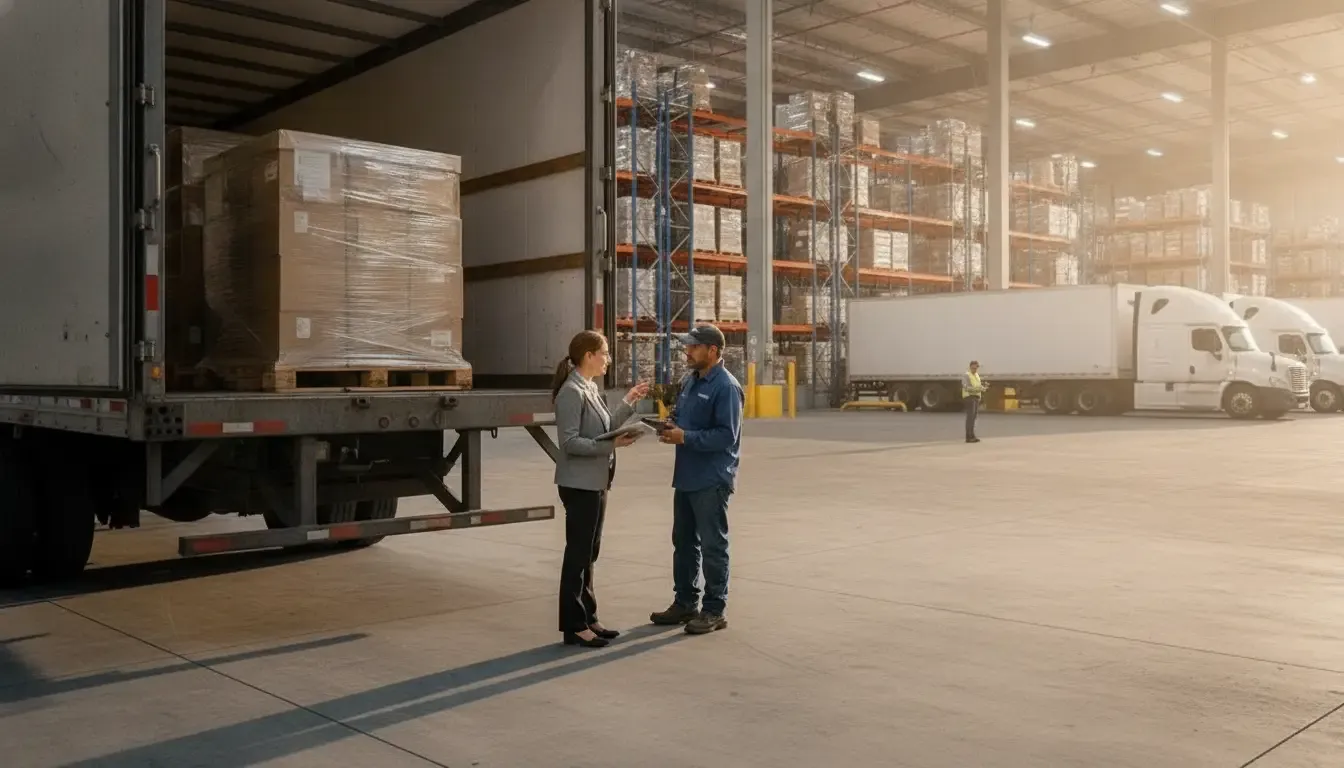
Southwest freight refused at receiver is a clock problem, not a storage problem. The receiver has turned the trailer away. The driver is still on the clock. Pavement in Phoenix, Tucson, Las Vegas, or El Paso can push a closed trailer past a safe hold in one afternoon. This page is the first 30 minutes. It covers who to call, what to photograph, where the trailer can wait, and how to choose hold, rework, transfer, or disposal. For the wider menu of regional warehouse help, use the Southwest warehouse services guide. For the national recovery path after you pick a next move, use the rejected load re-delivery service.
Contact us now if the trailer is still at the gate.
First 30 Minutes When Southwest Freight Is Refused at the Receiver
Do these five things before you debate fault. The order matters because photos, the appointment record, and a safe place to wait disappear faster than the freight does.
- Confirm the refusal in writing. Ask the receiver for the reason: damage, count, temperature, paperwork, or a missed window. A verbal “we are not taking it” is not enough for the shipper or the carrier later.
- Park the driver somewhere legal. A closed gate, a scale house, or a no-parking shoulder is not a holding plan. Get the trailer off the receiver’s property and into a dock, yard, or drop lot that will accept it.
- Photograph the load and the paperwork. Seal, trailer number, refusal note, temperature reading if there is one, and the visible damage or shift. Take these before anyone opens the trailer to “just look.”
- Name the product limits. Food, beverages, electronics, and anything with a temperature range cannot sit in a dry closed trailer through a Southwest afternoon. Say the limit out loud so dispatch does not treat it like general freight.
- Call one coordinator, not five vendors. WeFixFreight dispatch can match a local agent for freight rework, a cross-dock, short-term holding, or disposal. The public line is 855-493-3435.
If the receiver will still accept a corrected load the same day, protect that window. Rework only what they named. Do not restack a whole trailer when they refused two crushed cases.
Write the five facts on one note before you hang up with the gate. City, refusal reason, product limit, whether the driver can stay, and the next time the receiver will look at the freight. That note is what you read to dispatch. It is also what you send the shipper so they are not guessing from a voicemail.
A refused load in this region often sits an hour from the next useful dock. El Paso, the Phoenix valley, Tucson, and Las Vegas are large. A warehouse pin on a map may be a contract site that will not take a one-day exception. Ask for a dock that accepts refused freight today. Do not ask for a warehouse tour.
Where a Refused Trailer Can Wait
The first decision is physical, not commercial. A refused trailer needs a place that will take it now, keep the product inside its limit, and let labor work it if the receiver wants a second attempt. Match the place to the refusal.
Where to send a refused Southwest trailer.
| Situation | Best next place | Why it fits |
|---|---|---|
| Fix still welcome today. | Dock labor near the receiver. | Saves the window. |
| Appointment is dead. | Short-term warehouse or yard. | Moves the driver. |
| Shifted or crushed freight. | Rework dock. | Fixes the defect. |
| Heat, leak, or odor. | Assess, then hold or dispose. | Stops a total loss. |
Short-term holding at WeFixFreight is temporary space, often under 90 days, not a contract warehouse. If the product needs temperature control, say “refrigerated” or “protect from heat” on the first call so dispatch can confirm whether the proposed facility and equipment fit the load before it moves. See short-term warehousing for what that service includes.
Do not leave a refused trailer in a retail lot or on a city street while you wait for the shipper to answer email. Detention and a tow cost more than a few hours of yard space. Photos are also harder to take after the trailer moves without you.
Match the wait to the freight, not to the driver’s remaining hours. A driver who is out of hours still needs the trailer in a safe place before going off duty. A drop yard that will not let anyone open the doors is fine for intact general freight overnight. It is the wrong place for a shifted load you still hope to correct before morning.
If the receiver is inside a secure campus, ask where rejected trailers stage before you leave the guard shack. Some campuses have a holding row. Some will escort you off the property and leave you on a frontage road. Know which one you are in before the gate closes behind the truck.
How Southwest Heat Changes the Refusal
A refusal in a mild climate can wait overnight. A refusal in the Southwest often cannot. The National Weather Service lists 122 degrees Fahrenheit as Phoenix’s hottest day, on June 26, 1990, with many days at 110 or above since then (NWS Phoenix extreme temperatures). Packaging glue softens, chocolate and beverages fail, and a produce or dairy load that was acceptable at the gate can be unsaleable by evening.
Ask three heat questions before you choose a yard:
- Does the product have a stated temperature range, or only “keep dry”?
- Is the trailer a dry van, a reefer with a running unit, or a reefer whose unit was shut off at the gate?
- How many hours until sunset, and is the yard shaded or indoor?
If the reefer unit is off, restarting it later does not undo hours of heat. Note the reading at the refusal and again when the trailer reaches the holding dock. That pair of readings is what the shipper will ask for before they approve rework, return, or disposal.
Heat also changes labor. A restack that is safe at 7 a.m. may be the wrong job at 3 p.m. on open pavement. Ask the agent whether the work happens inside. If it does not, move temperature-sensitive freight first and leave general freight for the cooler hour.
Border-area refusals add a second clock. Freight turned away in El Paso, or after a handoff near a port of entry, may still have paperwork a new dock will ask to see. Bring the commercial invoice, the bill of lading, and the refusal note together. A dock can unload without them. It often will not reload for a new receiver without them.
Resort and casino deliveries around Las Vegas fail for a different reason. The window is tight, the dock is small, and a late trailer is simply not received. Treat that as an appointment failure, not as damage, unless the receiver marked the freight itself. Holding for the next receiving slot is usually cheaper than a full restack.
Hold, Rework, Transfer, or Dispose
Once the trailer is safe, pick one path. Mixing them is how a refused load sits for two days and misses the replacement appointment.
Hold
Hold when the freight is intact and the only problem is the window, the purchase order, or a receiver who is full. Book short-term warehousing, tell the shipper the daily shape of the cost, and get the next appointment before the driver is released if you still need that same trailer.
Rework
Rework when the receiver named a fix: fallen or shifted pallets, crushed corners, broken wrap, or labels that do not match the bill. Freight rework covers restack, repack, and a transfer off a trailer that cannot deliver. Send the receiver’s note so the agent fixes the stated defect instead of rebuilding the load.
Transfer
Transfer when the original trailer has to leave, or the next delivery is a different dock. A cross-dock moves sound freight to an outbound truck without a storage stay. Use it when the product is fine and the problem is the trailer, the driver hours, or a split destination.
Dispose
Dispose when the product is contaminated, leaking, or past a temperature limit the shipper will not waive. Product disposal is a separate decision from rework. Do not restack freight the shipper has already written off, and do not dump it without their written okay.
The national sequence after that choice lives on the rejected load re-delivery service page. This article stops at the Southwest refusal window so that guide can own the later recovery steps.
Use one path for the next appointment. A hold plus a partial restack plus a disposal quote, all at once, leaves the agent waiting on three approvals. Pick the path that matches the receiver’s note. You can change it after the shipper sees photos. You should not start three kinds of work on the same pallets.
Count the pallets the receiver rejected versus the pallets that are fine. A two-pallet damage refusal does not require the whole trailer to go to disposal. Separate the bad freight, note the count, and keep the sound freight eligible for a redelivery. Mixing them is how a small refusal becomes a total loss.
Who Must Approve the Next Move
A local dock can start photos and a safe hold. It should not guess the commercial outcome. On a refused Southwest load, four people usually have a vote, and only one of them can release the freight to a new plan.
- Receiver. Owns the reason and whether a same-day correction is still welcome.
- Broker or 3PL. Owns the customer conversation and the clock.
- Carrier. Owns the driver, the trailer, and hours of service.
- Shipper or cargo owner. Owns salvage versus disposal, and any return to origin.
Call them in that order only if the receiver is still in front of you. After the driver has left the gate, call the broker and the shipper together. Give them the photos plus two options, not an open question. A useful ask is a hold indoors tonight or a rework for a morning redelivery. An open what-do-you-want question is how the trailer sits in the heat.
WeFixFreight coordinates the agent, the dock, and the quote. The quote comes after a look at the load, not from a posted rate card. Ask for the estimate before labor starts when the shipper has to approve the spend.
Keep the approval short. Send the photos, the two options, and the deadline. Ask for a yes on one option. A long email thread while the trailer sits at the gate is the failure mode this page is trying to avoid.
If the cargo owner is overseas or off shift, the broker still needs a temporary hold authorized by someone who can speak for the freight. Say that the hold is to protect the load, not to choose salvage or disposal. That distinction lets a night dispatcher approve shelter without approving a write-off.
What to Tell Dispatch on the First Call
A complete first call is shorter than a vague one. Have these facts ready so the coordinator can name an agent instead of calling you back for the basics.
- City and the receiver’s cross street or gate, not just the metro.
- Trailer number, live unload or drop, and whether the driver can stay.
- Piece count, pallet count, and the product type in plain words.
- Temperature need, or a clear “no temperature requirement.”
- The refusal reason in the receiver’s words.
- The deadline that still matters: same-day correction, next morning, or no second appointment yet.
Coverage is a nationwide network of more than 150 service agents, with people on call 24 hours a day. That is not a promise that every Southwest zip code has an indoor cooler. It is a promise that dispatch will look for the nearest agent who can do the job you named. The coverage map shows the national footprint. Your call confirms the dock.
If the load is refused after hours, say so in the first sentence. Night gates, weekend receivers, and early-morning produce docks are common in this region. The agent who can open a door at 9 p.m. is not always the agent who answers at noon.
After dispatch names an agent, confirm three things before the truck rolls. The dock address, what time they will receive the trailer, and whether they can do the service you asked for or only a drop. A missed address in a large Southwest metro costs the hour you just saved.
Then release the original driver or keep them, on purpose. If the redelivery is the same day and the driver has hours, keeping the power unit can be the fastest fix. If the driver is out of hours, drop the trailer and let a fresh truck handle the next leg. Do not leave that choice implied.
Send the refusal details before the trailer sits through another hot hour.
Frequently Asked Questions
What should I do first when Southwest freight is refused at the receiver?
Get the refusal reason in writing, move the trailer to a legal dock or yard, and photograph the seal, the freight, and any temperature reading. Then call one coordinator with the city, product limits, and whether the receiver will still accept a correction today.
Can the driver wait at the receiver until the shipper calls back?
Only if the receiver allows it and the product can tolerate the wait. A closed dry van in afternoon heat is a poor holding plan. A short yard stay indoors or in shade is safer than idling at the gate.
Do I need a warehouse or a rework crew?
Need a warehouse when the freight is sound and the appointment is the problem. Need a rework crew when the receiver refused damage, a shift, or bad labels. Need disposal only after the cargo owner says the product cannot be sold or returned.
Who pays for the hold or the restack?
The broker, carrier, and shipper still have to assign the cost. WeFixFreight can quote the dock work after seeing the load. The quote does not decide fault, and labor should wait for approval when the shipper controls the spend.
Get the Refused Load off the Clock
If Southwest freight was just refused, do not spend the next hour searching for a warehouse on your own. Call WeFixFreight at 855-493-3435 or send the trailer location and photos through contact us now. Dispatch will match a local agent for a hold, a rework, a transfer, or a disposal review.