
When a shipment is damaged, refused, delayed, or no longer aligned with its original route, the recovery plan has to protect both the freight and the delivery schedule. One of the most useful options is a coordinated cross-dock transfer. The biggest cross docking advantages are speed, controlled handling, and the ability to move freight toward its next destination without committing it to long-term storage.
Contact us now for freight recovery support
What cross-docking means in a recovery plan
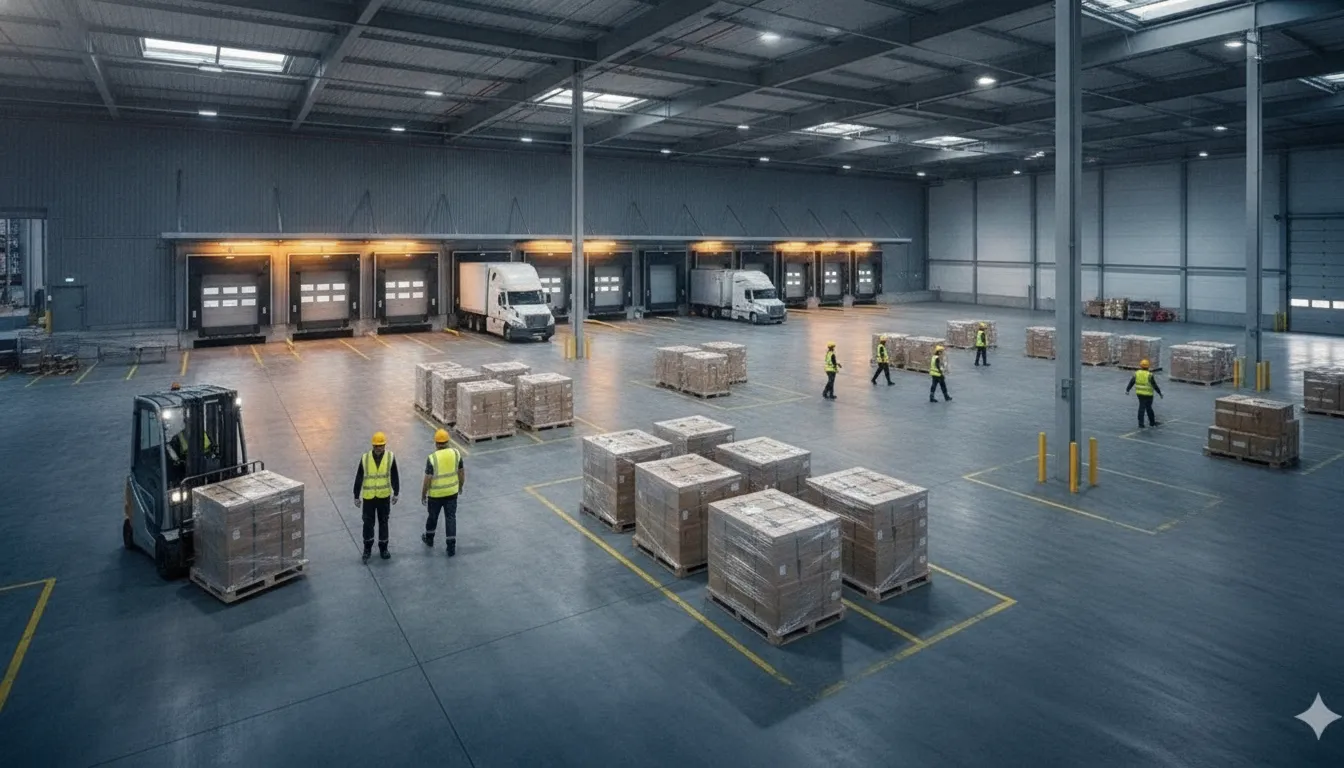
Cross-docking is a transfer process. Freight arrives at a facility, is received and checked, then moves across the dock to an outbound vehicle or a new load plan. It may be staged briefly while teams confirm counts, condition, destination, and transportation instructions, but the goal is not to place the shipment into ordinary warehouse storage.
That distinction matters during an exception. A recovery team may need to remove a compromised pallet, consolidate usable units, change equipment, or redirect a shipment after a consignee refusal. Cross-docking gives the team a controlled handoff point where freight can be inspected and repositioned while the next movement is arranged.
A cross-docking and emergency freight transfer guide can help teams compare transfer, rework, and transloading options. The right choice depends on the condition of the freight, the time available, and whether the next carrier can accept the load as planned.
Six cross docking advantages that support freight recovery
1. Less time between the exception and the next move
Every extra handoff can extend a delay. Traditional warehousing may involve put-away, storage, picking, and a later outbound appointment. A cross-dock recovery plan is built around the next movement from the beginning. That can reduce the number of steps between receipt and dispatch when the freight is ready to continue.
Speed does not mean skipping controls. The facility still needs an appointment or operating window, a clear load plan, and a contact who can approve the next step. When those details are ready before arrival, the transfer can be organized around the shipment’s actual recovery need rather than a generic storage workflow.
2. Fewer storage and handling stages
Cross-docking minimizes the time freight spends in a storage environment. That can be useful when a pallet is stable but a shipment needs a new route, when a trailer must be changed, or when several pieces need to be combined for a common destination. Fewer touches can make it easier to maintain counts and document who handled the freight at each point.
For a damaged or shifted load, the team may still need a dedicated freight re-work facility or on-site labor before the shipment can cross the dock. Cross-docking is not a substitute for safe stabilization. It is the movement plan that follows when the freight is ready for transfer, or the part of a larger plan that connects rework to the next outbound move.
3. Better control over consolidation and destination changes
A recovery transfer often changes more than the truck. Several partial shipments may need to be consolidated, or a load may need to be split because one consignee can accept some units but not others. Cross-dock staging creates a practical point for grouping freight by destination, appointment, product condition, or transportation priority.
That control is especially valuable for brokers and 3PLs coordinating several parties. Instead of asking each party to interpret a changing plan independently, the operations team can use one transfer point to confirm the outbound grouping, record exceptions, and release the next movement with the correct instructions.
4. Lower exposure to avoidable damage and obsolescence
The less time sensitive freight spends in unnecessary storage and repeated handling, the fewer opportunities there are for additional delay, misplacement, or damage. A short transfer window can be helpful for seasonal, time-sensitive, temperature-sensitive, or promotion-dependent goods, provided the facility and handling plan are appropriate for the product.
This is a risk-reduction advantage, not a guarantee. Cross-docking does not repair a broken pallet, correct unsafe packaging, or eliminate the need for inspection. Teams should identify visible damage, segregate affected units, and document condition before loading freight onto the outbound vehicle.
5. More efficient use of available transportation
When freight is already moving through a network, a cross-dock can make it easier to use available trailer capacity or align multiple shipments to the same destination. Consolidation may reduce empty space, avoid an unnecessary storage stop, and help the recovery team build a workable route around the new delivery requirement.
The transportation plan still has to account for appointment times, equipment limitations, weight distribution, and the condition of the freight. The benefit comes from coordinating those constraints at one point rather than assuming that the original route can continue unchanged.
6. Clearer handoff documentation
Freight recovery depends on facts. A useful cross-dock record can capture arrival time, piece count, pallet count, visible condition, photos when appropriate, seal information, exceptions, outbound equipment, and the person or organization approving the next move. This information helps brokers, shippers, carriers, and 3PLs explain what happened without relying on a series of incomplete phone updates.
Good documentation also helps distinguish a transfer from a rework event. If a pallet was restacked, product was reconfigured, or a shortage was discovered, those actions should be recorded instead of describing the entire event as a simple cross-dock.
Cross-docking advantages compared with other recovery options
Cross-docking is most effective when the shipment can move again after a controlled receipt and transfer. Other recovery paths may be better when freight requires repair, longer holding, a new mode, or a second delivery attempt. The table below provides a starting point for selecting the operational path.
| Recovery need | Best-fit path | Primary advantage | Key check before dispatch |
|---|---|---|---|
| Freight is stable and needs a fast transfer or consolidation | Cross-docking | Shorter path from receipt to outbound movement | Counts, condition, destination, equipment, and appointment |
| Load is shifted, leaning, broken, or unsafe to move | Pallet restack or freight re-work | Stabilization before the next transportation step | Safe access, labor scope, photos, and release approval |
| Freight must change transportation mode or equipment | Transloading | Coordinated transfer between modes or vehicles | Handling requirements, equipment, routing, and timing |
| Delivery cannot continue immediately and freight needs a holding point | Short-term warehousing | Controlled storage while the next appointment is arranged | Storage duration, product requirements, access, and release plan |
| Consignee can accept a new attempt after a delivery failure | Re-delivery | Focused plan for a second delivery attempt | Receiver instructions, appointment, freight condition, and access |
When cross-docking is not the right answer
A cross-dock should not be selected only because it sounds faster. It may be a poor fit when the load is unstable, when the product requires specialized storage, when the destination is not confirmed, or when there is no realistic outbound movement. Moving freight through a facility without solving the underlying exception can create another delay and another handling event.
Ask these questions before approving the transfer:
- Is the freight safe to unload, stage, and reload?
- Are piece counts and visible condition documented?
- Does the outbound equipment match the freight’s dimensions and handling needs?
- Is the destination and receiver availability confirmed?
- Does the plan require rework, disposal, storage, or a second delivery instead?
- Who can approve an exception if the freight does not match the expected condition?
If the answer to one of these questions is unclear, pause the movement long enough to confirm the scope. A short, documented delay is usually easier to manage than an uncontrolled transfer that creates a shortage, new damage, or another refused delivery.
How to prepare a cross-dock recovery request
A complete request helps an operations team identify the right service path quickly. Include the pickup or current location, destination, shipment reference, number of pallets or pieces, approximate dimensions and weight, current condition, photos if available, trailer or container details, receiver requirements, and the time by which the freight needs to move.
Also explain what changed. A shipment that needs consolidation is different from one that was rejected because of visible damage. A shifted load may need stabilization before transfer. A missed appointment may need temporary storage or re-delivery. Naming the exception helps the team avoid treating every recovery request as ordinary cross-docking.
For a broader overview of damaged, refused, and stalled shipment scenarios, see the distressed load solutions guide. For a cross-dock-only request, the cross-docking service page is the most direct service path.
What research says about cross-docking
Cross-docking is not simply a warehouse shortcut. A systematic literature review in Sustainability describes the process as moving inventory from inbound to outbound transportation with limited or no storage. The review identifies reduced storage and handling, shorter lead times, shipment consolidation, and improved resource use as recurring advantages, while also emphasizing the importance of scheduling, routing, and inventory control.
Those findings translate well to freight recovery, but the operational details still matter. A fast transfer only creates value when the right freight is moving to the right destination with a safe handling plan and a documented handoff.
Contact us now to plan the next freight recovery move
Frequently asked questions
What is the main advantage of cross-docking?
The main advantage is reducing unnecessary storage and handling between inbound receipt and outbound movement. In a recovery plan, that can shorten the path to the next truck or destination when the freight is stable and the next move is confirmed.
Can cross-docking be used for damaged freight?
It can be part of a damaged-freight recovery plan, but damaged or unstable freight may need inspection, pallet restack, re-work, or other handling before it is transferred. Do not treat cross-docking as a replacement for making the load safe.
What information is needed to arrange a cross-dock?
Provide the current location, destination, shipment references, piece and pallet counts, freight dimensions and weight, condition, timing, equipment details, receiver requirements, and any photos or instructions that clarify the exception.
How is cross-docking different from warehousing?
Warehousing is designed for storage and later retrieval. Cross-docking is designed for a controlled transfer from inbound to outbound transportation, usually with minimal staging time. If the next move is not ready, short-term warehousing may be a better fit.
Can a cross-dock handle a refused shipment?
A cross-dock may help when a refused shipment needs a new destination, consolidation, rework, storage, or re-delivery plan. The facility and service scope should be confirmed before the truck arrives so the freight is not moved without an approved next step.