
Urgent freight is not a new booking when the load is already stuck. A broker, shipper, carrier, or 3PL usually has a trailer at a dock, a refused appointment, or a shifted pallet stack. The clock is the delivery window. The first job is to name the failure, pick the service that matches it, and send enough facts for a local agent to start.
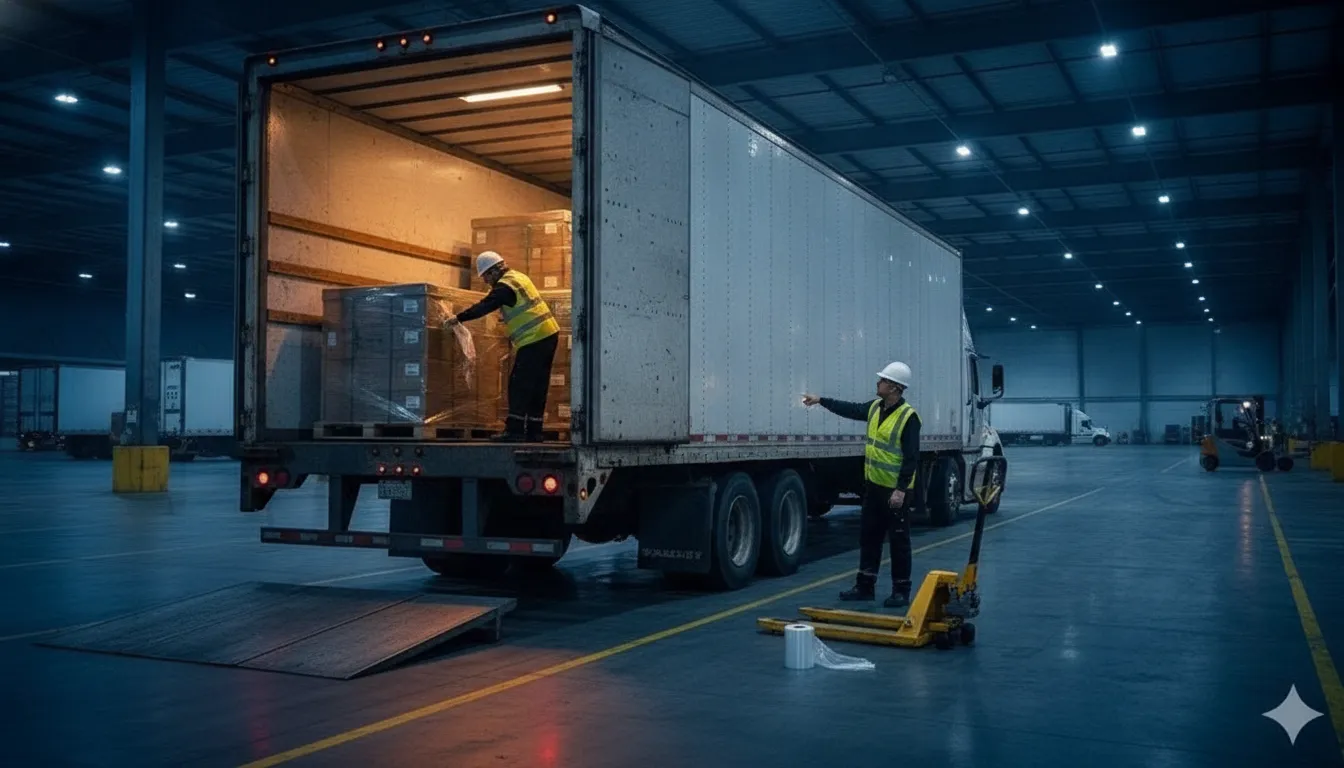
WeFixFreight is a nationwide freight repair and logistics remediation network. It is not an expedited carrier. The team coordinates more than 150 service agents across the contiguous United States, day and night. First contact is committed within two hours of a request. Services are payable upon completion to We Fix Freight via Comchek, EFS, or Credit Card. The driver will not pay on location.
Start with the failure, not the service name
People search urgent freight when a commitment is about to break. Search results are full of hot-shot carriers and same-day air. That is the wrong door if the freight is already on a truck and cannot be delivered as it sits. Booking another haul does not restack a collapsed pallet, and it does not get a refused receiver to reopen the door.
Sort the call by what failed:
- The freight itself is unstable, wet, crushed, or poorly packed.
- The trailer, railcar, or appointment is the problem, and the product is still sound.
- The receiver rejected the load, or the delivery window closed.
- The product cannot be saved, and the dock needs the space back.
Those four buckets decide the next move. A shifted stack is a rework job. A sound load in the wrong trailer is a transfer job. A refused delivery is a redelivery job after the freight is made acceptable. Unsalvageable product is a disposal job. Mixing those up is how a two-hour problem becomes an overnight detention bill.
Write the failure in one sentence before you call. A useful note is “Forty cases shifted in Dallas. Receiver refused the trailer at 4 p.m. Appointment expires tonight.” That is enough to route the work. “We need urgent freight help” is not.
Which urgent freight path fits the failure
Each path below is a different operation. Link the reader to the service page for the work itself. This section only decides which door to open.
| What you see | Best first path | Use it when | Do not use it when |
|---|---|---|---|
| Leaning, fallen, or broken pallets. | Freight rework. | Product can be restacked or rewrapped on site or nearby. | The trailer must leave now and the product is already sound. |
| Sound freight in the wrong trailer or mode. | Transloading. | Cargo must change trailer or mode to keep the window. | The cartons are crushed and still need repair. |
| A tight handoff with no storage. | Cross-docking. | Freight can roll from inbound to outbound in one move. | The load needs hours of sorting or repack first. |
| Receiver refused the delivery. | Re-delivery. | The dock said no, and a new appointment is the goal. | Nobody has checked whether the product can still be used. |
| Dock is full and the fix can wait a day. | Short-term warehousing. | You need a hold under 90 days while appointments catch up. | The product is perishable and dwell hurts value. |
| Product cannot be salvaged. | Product disposal. | The goods are unsaleable and the site needs them gone. | A restack could still save a sellable portion. |
Two paths can run in sequence. A refused load often needs rework first, then redelivery. A rail delay often needs transloading onto a truck, then a cross-dock handoff. Name the first path on the call so dispatch does not send the wrong crew. The emergency cross-docking guide covers the handoff itself. This table only tells you whether a handoff is the right first move.
On-site labor versus a facility move
If the receiver will allow work on their dock, on-site labor can restack or rewrap without a second trailer. That is the fastest path when the appointment is still open and the damage is limited to a few pallets. Move the freight when the dock will not allow labor. Also move it when the trailer is unsafe to work in. A facility is the better stop when the product needs a dry floor, a scale, or photos that a live door cannot support.
What to send before the agent rolls
A complete first note is what makes the two-hour contact useful. Agents cannot price or staff a job from a city name alone. Send these facts in the first message:
- City, state, and the exact dock, yard, or rail spot.
- Trailer, container, or railcar number, plus whether the doors are still sealed.
- What failed, in one sentence, and whether anyone is injured or the dock is blocked.
- Piece count, pallet count, and whether the product is food, temperature-controlled, or hazmat.
- The hard deadline: appointment time, line-down time, or detention start.
- Who can approve work on site, and a phone number that will be answered.
- Photos of the stack, the trailer floor, and any rejection stamp or paperwork.
Photos matter more than a long story. A leaning stack, a wet floor, and a refused bill of lading tell a dispatcher which crew and which equipment to send. If you do not have photos yet, say so. Do not wait for a perfect packet if the trailer is about to be turned away.
Also say who pays. Services are payable upon completion to We Fix Freight via Comchek, EFS, or Credit Card. The driver will not pay on location. Naming the payer up front keeps the driver, the broker, and the agent from stalling at the door.
Decide in the first hour
Use this order while the driver is still at the site. It is a decision order, not a service manual.
- Confirm people are safe and the trailer is not blocking a fire lane or live door that must reopen.
- Ask the receiver, in writing if you can, whether they will accept a restack on their dock.
- If they will, request on-site rework and keep the appointment.
- If they will not, decide whether the product is sound enough to transfer, or damaged enough to repair first.
- If the product is sound, request a cross-dock or transload to a trailer that can still make the window.
- If the product is damaged, request rework at a facility, then a new delivery plan.
- If a portion cannot be saved, separate it before the good freight moves, and ask about disposal only for that portion.
- Tell every party the same next step so the driver, broker, and receiver are not working three plans.
The coverage map shows where agents sit. Use it to see whether a nearby facility is realistic. Do not treat the map as a booking tool. The request still goes through Contact us now so dispatch can match the job to an available agent.
Federal cargo securement rules are the reason a shifted load cannot simply be driven on. 49 CFR 393.100 requires cargo to be contained, immobilized, or secured. The rule covers leaks, spills, and freight that could fall from the vehicle. It also covers a shift that affects stability or maneuverability. A restack is not cosmetic when the stack has already moved. It is what makes the next leg legal to run.
What this is not
Urgent freight, in the way most search results use it, means expedited transportation. That is a carrier product. WeFixFreight does not book hot-shot trucks, team drivers, or same-day air. If the product is fine and you only need a faster truck, call a carrier. If the product, the packaging, the appointment, or the mode is the failure, a faster truck will deliver the same problem sooner.
A few neighboring pages already own their own answers. Do not expect this article to replace them:
- Emergency freight rework services owns the broad rework service answer.
- Distressed load solutions owns the wider guide for damaged, refused, and stalled freight.
- Urgent freight redelivery owns the step sequence after a failed delivery.
- Rejected truckload rework and storage owns the hold-and-repair path for a refused truckload.
- Rail remediation owns stranded railcar work.
Specialized or oversized freight that does not fit a standard restack or transfer belongs with specialized projects. Say that on the first call if the piece will not fit a pallet jack or a standard door.
After the agent accepts
Once an agent accepts, keep one thread. The person who called should stay reachable until the crew is on site. Mid-job changes, such as a new appointment or a receiver who suddenly will take the freight as-is, should go to that same thread. A side text to the driver creates two plans.
Ask for three things at the end of the job. You need photos of the rebuilt freight, a short note of what was done, and confirmation of the payer method. Payment runs by Comchek, EFS, or credit card to We Fix Freight. That packet is what the broker needs for the customer. It is also what the carrier needs before the trailer rolls. It is not a legal claim file. Claim rules depend on the contract and the mode. This article does not give legal advice.
Pricing is quoted for the job after the facts are in. WeFixFreight uses clear, upfront, standardized rates with no hidden fees. Do not expect a public rate card, and do not ask the driver to pay the agent at the dock.
Common stalls that waste the window
Most urgent freight delays are coordination failures, not missing trucks. Catch them before the agent is already en route.
- Three people call with three different cities. Pick one site contact and one phone that will be answered.
- The photo shows the outside of the trailer, not the stack. Open the doors if it is safe, and shoot the lean, the floor, and the paperwork.
- The receiver has not been asked whether labor is allowed. That one question decides on-site work versus a facility move.
- The payer is unnamed. Say Comchek, EFS, or credit card to We Fix Freight before the crew leaves.
- A second carrier is booked before the stack is legal to haul. Cancel that plan until the freight is secured.
- Hazmat, food, or temperature control is mentioned late. Say it in the first note so the wrong crew is not dispatched.
None of these require a new service. They require the same facts, sent once, to the person who can dispatch. If the window is under two hours, say that in the first sentence. A specialist can still make first contact inside the two-hour commitment, but the crew cannot invent dock permission that was never requested.
A short example
A beverage trailer arrives leaning after a hard brake. The receiver will not unload it. The appointment ends in three hours. The broker sends the city, the trailer number, and a photo of the stack. The note includes the appointment time. It also says the shipper will pay by credit card on completion.
Dispatch sees a restack, not a new haul. The receiver will not allow labor on the door, so the first path is a nearby rework, not on-site labor. The sound pallets can still make a revised appointment. The crushed cases are separated before the good freight is rewrapped. That is one urgent freight decision. Repair what can move. Hold or dispose of what cannot. Do not book a second truck until the stack is legal to haul.
Frequently asked questions
What does urgent freight mean if the load is already stuck?
It means the delivery window is at risk and the freight cannot move as it sits. The next step is repair, transfer, redelivery, a short hold, or disposal. It is not a request for a new expedited carrier.
Should I book another truck first?
Only if the product and packaging are already sound and the only failure is transit time. If pallets shifted, the receiver refused the load, or the mode has to change, fix or transfer the freight before you book the next haul.
How fast can someone respond?
WeFixFreight commits to first contact within two hours, any day, through a network of more than 150 service agents. Arrival time depends on the city, the dock rules, and the crew the job needs.
Who pays the agent on site?
Nobody at the dock pays the driver. Services are payable upon completion to We Fix Freight via Comchek, EFS, or Credit Card. The driver will not pay on location.
What if only part of the load is damaged?
Separate the unsaleable portion before the good freight is restacked or transferred. Rework or redelivery can still save the sound freight. Disposal is for the portion that cannot be used, not for the whole trailer by default.
Get the load moving
Send the city, the failure in one sentence, a photo if you have one, and who will pay. A specialist will contact you within two hours and match the job to an agent near the freight.