
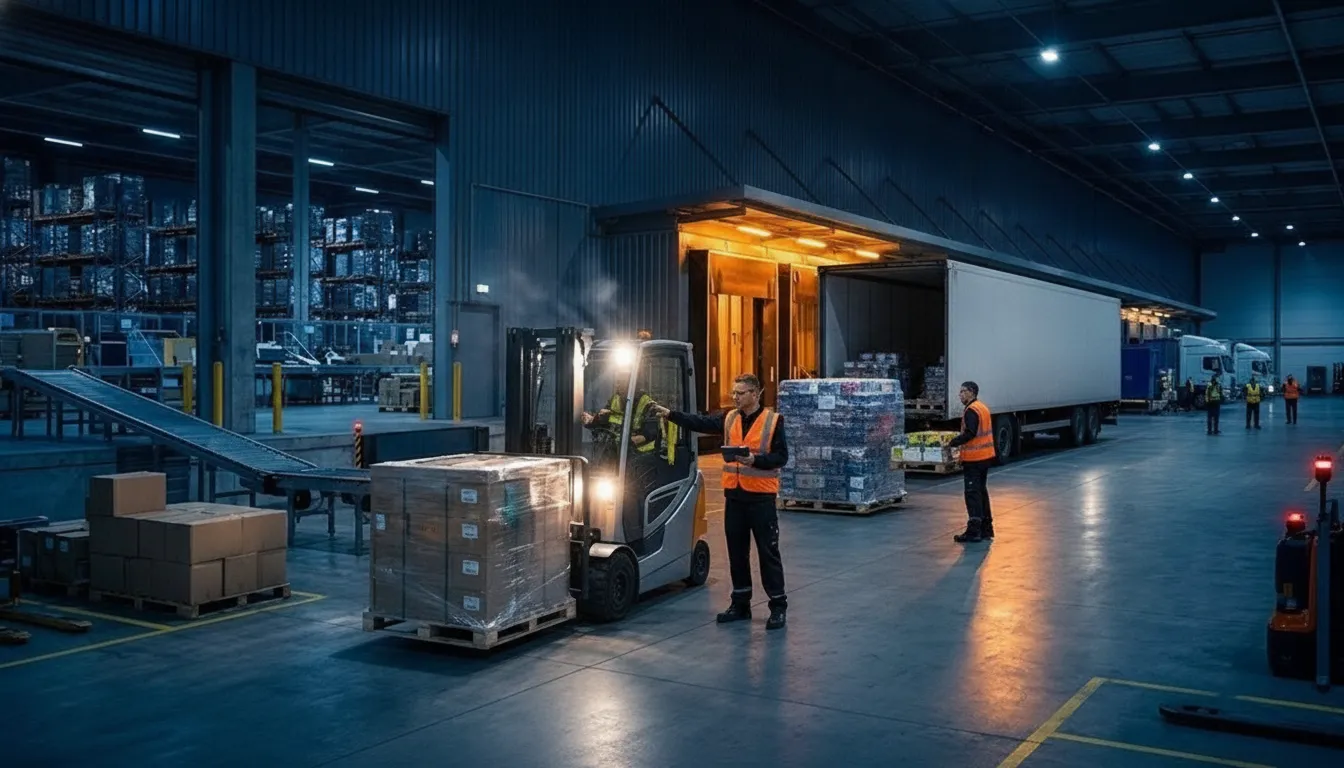
When apparel or consumer-goods freight arrives damaged, shifted, or mislabeled, every extra handling decision can affect delivery commitments and customer relationships. The priority is to assess the load, separate the problem, and make the shipment road-ready without losing control of what moves next.
Contact us now to discuss your freight recovery needs.
Apparel freight rework services help brokers, shippers, carriers, and 3PLs stabilize, sort, repackage, relabel, or transfer affected product loads according to shipper and receiver instructions. Depending on the situation, the work may include pallet restacking, damaged-packaging replacement or reinforcement, cross-docking, and documentation for the next routing decision.
Apparel loads often require more deliberate unit-level control than a simple restack. Understanding why these shipments need specialized handling is the first step toward choosing the right recovery path. When product cannot be recovered for delivery, the freight disposal and specialized cargo guide can help frame the next disposition conversation.
Why Apparel Freight Rework Services Require Specialized Handling
Apparel freight and other consumer goods often require decisions at the unit, carton, and assortment level. A shifted pallet, crushed carton, torn wrap, or incorrect label can affect how individual products are identified, sorted, presented, and routed. The objective is not simply to move a damaged load from one location to another. It is to assess the shipment, stabilize the product, and prepare the affected units for the next approved step while minimizing avoidable disruption to delivery commitments.
This is what makes apparel freight rework services distinct from broad freight rework. General rework may focus on making a pallet stable or getting a vehicle moving again. Apparel and consumer goods may also require careful separation of units, cartons, or assortments so that the shipper, carrier, broker, or receiver can confirm what is present and what needs attention. The handling plan should follow the available shipment records and the instructions from the shipper or receiver, rather than assumptions about a particular product category.
Packaging condition is another important consideration. When cartons or protective materials are damaged, the work may involve repackaging, reinforcing packaging, or reorganizing unstable freight. Those actions can help protect product presentation during the remaining movement of the load. They also create a clearer handoff when a receiver needs to inspect the shipment, accept part of it, reject part of it, or provide new routing instructions. The goal is practical control of the load, not a promise that every unit can be restored to its original condition.
Labels and shipment identification deserve the same disciplined approach. If labels are missing, damaged, or inconsistent with the shipping instructions, the rework team needs the correct information from the responsible parties before making changes. Useful inputs can include photos, carton or SKU counts, the bill of lading. The reason for a rejection, and any routing or label instructions supplied by the customer or receiver. This keeps the work tied to the actual shipment and reduces the risk of creating a new identification problem.
Some units may not be suitable for continued delivery. Depending on the disposition direction from the customer, the response may include freight disposal and specialized cargo options alongside rework, cross-docking, or re-delivery. For urgent loads, this coordinated decision-making helps brokers, shippers, carriers, and 3PLs protect delivery commitments without treating specialized consumer goods handling as a one-size-fits-all pallet repair job.
Common Apparel Freight Rework Scenarios
Apparel loads can require freight rework when product arrives damaged, unstable, disorganized, or unable to move forward as planned. The right response depends on what happened to the load, what condition the cartons and pallets are in, and what the shipper or receiver needs next. A practical assessment helps separate salvageable product from freight that needs a different disposition.
Damaged cartons and packaging failures
Cartons may be crushed, torn, wet, or opened during transit. Rework can include sorting affected units, replacing damaged outer packaging, reinforcing cartons, and rebuilding pallets for safer handling. When product damage is part of the incident, the team can help organize inspection and handling around the documented condition. Review these damaged freight recovery steps for a broader look at recovery planning.
Shifted, leaning, or unstable pallets
A pallet that has shifted or begun leaning may need to be taken apart and rebuilt before it can continue. Restacking involves separating cartons, assessing the load configuration, and creating a more stable arrangement. Repositioning can also help when product has moved within a trailer or when several pallets are pressing against one another. The objective is to make the freight organized and road-ready without assuming that every load can be handled the same way.
Moisture, mold concerns, and affected product
Moisture exposure can affect cartons, pallet integrity, and the condition of nearby product. Mold concerns require careful documentation and clear direction from the responsible parties. Rework may involve separating affected freight, identifying what needs further review, and coordinating repackaging or another disposition. The response should follow the shipper’s and receiver’s instructions rather than inventing a product-care or compliance standard.
Mislabeled, mixed, or floor-loaded freight
Incorrect labels, mixed product, and floor-loaded freight can create confusion at delivery. Re-sorting can separate cartons by product group, destination, or instructions provided for the load. Relabeling should use the information supplied by the shipper or receiver, including any approved labels or routing details. Floor-loaded freight may need to be unloaded, counted, grouped, and repackaged or restacked before onward movement.
Receiver rejection and repackaging needs
A receiver may reject a load because of visible damage, unstable pallets, incorrect labeling, mixed product, or a condition that does not match the delivery instructions. The next step may include inspection, coordination, repackaging, relabeling, restacking, re-sorting, cross-docking, or re-delivery planning. Share the rejection reason, photos, carton or pallet counts, and disposition instructions so the response can be organized around the actual problem.
What Happens During an Apparel Freight Rework Job?
An apparel freight rework job turns a damaged, disorganized, or incorrectly prepared load into freight that can continue toward its destination. The exact work depends on the condition of the cartons, pallets, labels, and shipment instructions. The goal is to create a clear, controlled process that protects the product, reduces handling confusion, and helps the broker, shipper, carrier, or 3PL make the next routing decision.
Because every incident is different, the on-site team works from the information supplied by the customer, shipper, receiver, or other authorized contact. That may include photographs, carton or pallet counts, delivery instructions, and the reason a load was refused or held. The following workflow gives stakeholders a practical view of what to expect from freight re-work services.
- Confirm the intake and document the situation. The response begins with the location, shipment identifiers, current load condition, contact details, and requested outcome. Photos and available paperwork help establish what is present before handling begins. If the load is at a receiver, the team also records the reported issue and any instructions for moving it forward.
- Inspect and assess the freight. The team reviews the pallets, cartons, packaging, and visible product condition. This assessment identifies unstable stacks, crushed or open packaging, shifted cartons, moisture concerns, mixed product, and other conditions that affect the work plan. It also helps determine what can be stabilized, what must be separated, and what information needs customer approval.
- Sort and isolate affected units. Freight is organized according to the supplied shipment information and the observed condition. Damaged, questionable, or incorrectly grouped cartons can be separated from units that are ready to move. This creates a clearer count and reduces the chance that affected freight is mixed back into the onward shipment.
- Restack, repackage, or stabilize the load. The team may rebuild unstable pallets, replace or reinforce damaged packaging when materials and instructions allow, and organize cartons for safer handling. The work focuses on practical load recovery and road-ready presentation, without assuming a product-specific packaging or care standard that the customer has not supplied.
- Correct labels from supplied instructions. When labels need correction or replacement, the team follows the shipper, receiver, routing guide, or other authorized instructions provided for that shipment. Staff do not invent product descriptions, destinations, counts, or compliance information. Any uncertainty is escalated before labels are changed.
- Record photos and status updates. Before and after photos, revised counts, notes about completed work, and open decisions give stakeholders a usable status record. These updates support coordination between the shipper, broker, carrier, receiver, and service location.
- Complete the cross-dock or redelivery handoff. Once the load is ready for the next move, the team coordinates the agreed handoff, such as transfer to another vehicle, cross-docking, continued storage, or redelivery planning. The final direction follows the customer and receiver instructions so the shipment can proceed with fewer avoidable delays.
This structured approach keeps apparel and consumer-goods rework focused on the condition of the actual shipment, the instructions that govern it, and the next confirmed logistics step.
How Consumer Goods Rework Differs From Bulk Commodity Rework
Consumer goods rework usually requires more unit-level control than bulk commodity rework. A bulk load may be assessed primarily for overall stability, containment, and safe movement. A consumer goods load may also need attention to individual cartons, cases, packages, labels, assortments, and visible condition. The work plan should follow the shipper’s instructions and the receiver’s requirements, rather than assumptions about a universal retail standard.
That distinction matters when a shifted pallet, damaged outer carton, mixed product load, or labeling problem creates a delivery risk. The objective is to identify what can move forward, what needs correction, and what information must accompany the freight at handoff. Photos, product counts, routing instructions, and receiver feedback help the rework team make controlled decisions.
| Rework consideration | Consumer goods | Bulk commodities |
|---|---|---|
| Identification | Track units, cartons, SKUs, assortments, and visible damage separately when instructions require it. | Focus more on the overall load, lot, container, or pallet condition. |
| Packaging | Replace, reinforce, or segregate damaged consumer-facing packaging according to approved instructions. | Restore containment and stability at the load or bulk-packaging level. |
| Labels | Check that corrected cartons or units can be matched to the supplied shipping information. | Confirm the load-level identification needed for the next movement. |
| Sorting | Separate mixed, damaged, or questionable product by item, count, destination, or disposition direction. | Prioritize segregation by material, load, condition, or destination. |
| Handoff | Provide counts, photos, status notes, and receiver-specific instructions with the corrected freight. | Confirm load condition, documents, and onward movement instructions. |
For consumer goods, sorting is often the central control point. A team may need to distinguish intact cartons from crushed cartons, separate product by destination, or identify where an assortment no longer matches the original load plan. That does not mean every shipment requires the same inspection depth. The shipper or receiver should define the decision points before work begins.
Packaging work also has a practical presentation and handling dimension. Repackaging or reinforcement can help keep product together during the next leg, while clear separation prevents questionable units from being mixed back into a road-ready group. The team should document what was moved, repacked, separated, or held.
When freight must transfer between vehicles, cross-docking service options may support a controlled handoff. Share the bill of lading, photos, counts, label instructions, and receiver direction so the work can be scoped accurately. With those inputs, consumer goods rework becomes a documented recovery process instead of an improvised load transfer.
What Compliance Information Should You Provide?
For an apparel freight rework job, compliance information should be treated as documentation and instruction control, not as a substitute for legal advice. The service team needs a clear record of what the load is, what went wrong, what the shipper or receiver expects, and what may happen next. Requirements vary by product, customer, destination, contract, and operating instructions. Provide the documents and directions already issued for the shipment so the rework plan can follow the correct source of authority.
The WeFixFreight knowledge base does not establish apparel laws, labeling mandates, certifications, or textile standards. Do not assume that a general freight handling practice satisfies a particular retailer, brand, carrier, or jurisdiction. If a requirement is unclear, identify the responsible shipper, receiver, compliance contact, or account representative before work begins.
Use this checklist when requesting support:
- Bill of lading: Send the current bill of lading and any related shipment, delivery, or transfer documents. Include the load reference and location details needed to match the paperwork to the freight.
- Photos: Provide clear photos of the full load, pallets, cartons, labels, packaging damage, shifted product, and any areas that were rejected. Photos help the service team assess the condition before handling.
- Receiver rejection reason: State exactly why the receiver refused or held the shipment. Use the receiver’s documented wording when available rather than summarizing it as a general quality concern.
- Shipper and receiver instructions: Include written handling, sorting, repackaging, labeling, delivery, or hold instructions from the parties controlling the shipment.
- Routing guide or label directions: Share the applicable routing guide, label directions, carton markings, or customer-specific instructions. The team can then follow the supplied direction instead of guessing.
- SKU and carton counts: Provide the expected SKU list, carton counts, pallet counts, and any known shortages or overages. Identify mixed, missing, or unverified quantities.
- Disposition direction: State whether product should be reworked, held, returned, re-delivered, transferred, or separated for another approved disposition. Do not leave the final direction implied.
Organized information reduces avoidable questions and helps coordinate inspection, sorting, repackaging, documentation, and onward movement. If instructions conflict, flag the conflict before on-site work so the appropriate shipper or receiver contact can resolve it.
How to Request Apparel Freight Rework Services Nationwide
When an apparel or consumer-goods load needs rework, the quality of the first request can help the response team identify the right local resources quickly. Start with the shipment location, the current load condition, and the immediate operational problem. Explain whether the freight is damaged, shifted, mislabeled, rejected, mixed, or otherwise unable to continue to its planned destination.
Send the key information available, including the pickup or holding location, delivery destination, bill of lading details, carrier contact, and receiver instructions. Photos of the load, pallets, cartons, packaging, labels, and trailer condition can help clarify the work required. Include estimated carton or pallet counts, any known damage, the time-sensitive delivery requirement, and whether the load needs inspection, sorting, repackaging, restacking, relabeling, cross-docking, or re-delivery support.
If a receiver has rejected the shipment, include the stated reason and any written instructions. If the shipper or receiver has a routing guide, label direction, product count, or disposition instruction, provide it with the request. These details help keep the rework aligned with the parties responsible for the shipment. They also reduce avoidable back-and-forth when an agent is being assigned.
WeFixFreight coordinates emergency freight support nationwide through a network of more than 150 service agents. The response model is available 24/7/365, with local agent coordination designed to help address urgent problems across the United States. The initial response commitment means contact and identification of an appropriate service agent. It does not guarantee that on-site work or full resolution will be completed within a specific period.
Depending on the situation, the response may include inspection and assessment, coordination with the shipper, carrier, receiver, and other parties, freight re-work, repackaging, route planning, status updates, or a transfer to another vehicle. Review same-day freight rework and redelivery options when delivery timing is a central concern.
Pricing is quote-based and transparent. The quote reflects the details of the shipment and the requested work, without publishing a fixed figure for every scenario. WeFixFreight focuses on clear, standardized pricing and practical coordination, so brokers, shippers, carriers, and 3PLs can make an informed decision while working to minimize downtime and get the freight moving again.
Frequently Asked Questions
Can you rework a load to meet a specific retailer’s routing guide?
Yes, if you provide the current routing guide, shipper instructions, receiver requirements, product counts, and label directions. The work can be scoped around the documented requirements, such as pallet configuration, sorting, packaging condition, or label placement. WeFixFreight does not assume a universal retailer standard, so the instructions for that shipment should control the rework plan.
Can you rework a floor-loaded apparel container?
Floor-loaded freight can be unloaded, sorted, stabilized, and palletized when the shipment plan calls for it. The team can also support repackaging, wrapping, labeling based on your instructions, cross-docking, or onward routing. Send the approximate carton count, product mix, photos, destination, and any receiver directions so the required labor and handling steps can be assessed.
What is the difference between restacking and freight rework?
Restacking rebuilds a pallet or load so it is stable and ready to move. Freight rework is broader. It may include restacking, replacing or reinforcing damaged packaging, separating mixed product, correcting labels, documenting damage, cross-docking, and preparing the shipment for re-delivery.
What information should I provide before requesting rework?
Provide the pickup or work location, destination, load status, pallet or carton count, photos, bill of lading, reason for rejection or damage, and the shipper or receiver instructions. Also identify whether the freight needs sorting, repackaging, relabeling, storage, cross-docking, or re-delivery. Complete information helps coordinate the right local response without guessing about the shipment requirements.
Get Apparel and Consumer-Goods Freight Rework Moving
When damaged, shifted, mislabeled, or rejected apparel and consumer-goods freight puts a delivery at risk, We Fix Freight can help coordinate the next step. Our nationwide network of more than 150 service agents supports freight brokers, shippers, carriers, and 3PLs with 24/7/365 emergency response.
Share the load location, shipment condition, photos, product and carton details, receiver instructions, and the outcome you need. We can help assess the situation and coordinate services such as pallet restacking, repackaging, relabeling, cross-docking, on-site labor, and re-delivery support. Response begins with contact and agent identification, while the work plan depends on the load and site conditions.
Contact us now to coordinate the next step.