
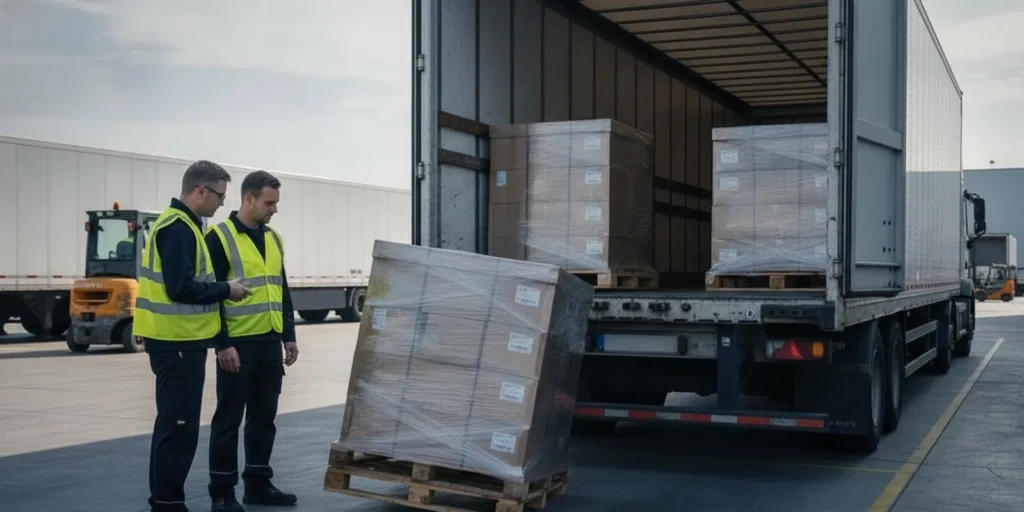
Broken pallets during transit can turn a routine delivery into a time-sensitive freight exception. Before deciding whether to continue, transfer, or return the shipment, get a clear picture of the load condition, the delivery requirements, and what can be handled safely at the current location.
What should you do first when pallets break in transit?
Start by stabilizing the situation, not by rushing to move freight. The right response depends on what has broken, how the product is supported, and whether the affected pallets can be accessed safely. A broken pallet does not automatically mean every item is damaged, but moving an unstable load without an assessment can make the problem worse.
- Stop and communicate. Ask the driver or onsite team to pause handling and report the exception to the dispatcher, broker, shipper, or receiving contact. Keep the carrier informed about the location and any delivery appointment at risk.
- Check for immediate hazards. Look for leaning or fallen freight, shifting product, damaged wrapping, leaking or exposed contents, and blocked access. Do not climb on freight or try to catch a moving load. If the scene appears unsafe, keep people clear and follow the site’s safety procedures.
- Record what is visible. Take clear photos from safe positions. Note the affected pallet count, the condition of the pallets and packaging, the trailer or equipment involved, and any visible product damage. Avoid moving items just to improve a photo.
- Confirm shipment needs. Identify the delivery deadline, consignee requirements, product handling needs, and whether the load can be worked where it is or must be transferred.
- Choose a recovery path. The practical options may include freight re-work, pallet replacement or restacking, cross-docking, transloading, short-term warehousing, or re-delivery, depending on the situation.
For a shifted load, details such as which pallets moved, whether the freight is leaning, and what equipment can reach the load help responders understand the exception. This guide to correcting a load shift covers related information to gather before arranging help.
Before anyone resumes work, identify who controls access to the trailer or dock and who can authorize handling. A driver may be able to provide a load description, but the shipper, carrier, broker, or receiver may need to approve re-work or a change in delivery plan. If several parties are involved, send one concise status update with the location, visible condition, and immediate request. This reduces the risk of one person directing a move while another is arranging an inspection or transfer.
How can you assess the damage without making it worse?
Separate what is known from what still needs inspection. A broken pallet may affect the base while the product remains intact, or the break may have allowed cases to fall, crush, or become exposed. Do not assume product is undamaged based only on the outside of the stack. Likewise, do not classify an entire shipment as unsalvageable before the responsible parties have assessed it.
Make a simple record that can travel with the exception report:
- Shipment reference, current location, and time the issue was found.
- Number of pallets affected and a short description of the visible condition.
- Whether product or packaging appears damaged, exposed, wet, or displaced.
- Photos of the full load and closer views, taken from safe angles.
- Any delivery window, customer instruction, or handling constraint that affects the response.
- Contact details for the people who can approve re-work, transfer, or a delivery change.
Keep the description factual. For example, “two pallet bases are broken, four cases are displaced, and the trailer is at the receiver’s yard” is more useful than “the whole load is ruined.” If product condition is uncertain, say so and ask the appropriate shipper or consignee contact how it should be evaluated. Do not make unsupported claims about whether goods are safe, compliant, or fit for sale.
When possible, record which part of the load is affected rather than describing the trailer as a single unit. Note whether the break is at the pallet base, whether the stack is still upright, and whether wrapping or straps appear to be holding product in place. This distinction can help the team decide whether the immediate problem is a need for pallet services, broader freight re-work, or a transfer to accessible equipment. It also gives the next person a baseline for checking whether the condition changes during handling.
A structured review can help teams pass clear information between the driver, dispatch, and the party authorizing work. See the freight inspection process guide for an overview of details to capture before re-work is arranged.
Which recovery option fits a broken pallet load?
The goal is to choose the least disruptive workable option while protecting people and cargo. The table below is a starting point, not a substitute for assessing the actual load, location, access, and delivery instructions.
| Option | When it may fit | What to confirm |
|---|---|---|
| Freight re-work or pallet services | The freight can be accessed and stabilized or repositioned at the current site. | Safe work area, pallet and handling needs, labor and equipment access, and authorization. |
| Cross-docking | The load needs a rapid transfer to another trailer or vehicle, potentially with re-work during the move. | Receiving dock availability, transfer equipment, timing, and compatible handling arrangements. |
| Transloading | Freight must move between transportation modes or equipment types. | Origin and destination details, cargo handling needs, equipment, and coordination among parties. |
| Short-term warehousing | The shipment cannot proceed immediately and needs temporary storage while next steps are arranged. | Storage duration, location, access, handling needs, and who will authorize release. |
| Re-delivery | The original delivery was rejected or cannot be completed after the load exception. | Receiver instructions, revised delivery plan, timing, and whether re-work is needed first. |
These options can overlap. A team might arrange pallet services before cross-docking, or transfer freight and then schedule re-delivery. The condition of the goods, the equipment available, and the receiving party’s direction should guide the sequence. We Fix Freight describes its freight re-work, cross-dock, and delivery solutions for urgent freight situations, while its on-site labor services page covers another possible support need.
Think through the location before choosing an option. If the trailer is at a facility with a usable dock and the load can be reached safely, re-work at that site may avoid an unnecessary move. If access is limited, the shipment needs different equipment, or the current location cannot support the required work, a transfer or transloading plan may be more practical. If the receiver will not accept the freight until its condition is reviewed, short-term warehousing may provide time to get instructions rather than sending the load onward without a confirmed plan.
Ask what each option is meant to accomplish. Replacing a broken pallet base or restacking can address an unstable unit; cross-docking moves freight between vehicles; short-term warehousing provides temporary storage while decisions are made. Re-delivery addresses the next attempt after a rejected or missed delivery, but it may depend on re-work first. These are not interchangeable services, and more than one may be needed to complete recovery.
What information helps arrange a timely response?
When you request help, share enough detail for a responder to understand the job before dispatch is coordinated. Incomplete information can lead to extra calls or a mismatch between the work needed and the resources sent. If a detail is unknown, label it unknown rather than guessing.
- Exact location: street address or facility name, city, state, and instructions for reaching the trailer or freight.
- Load description: commodity description, pallet count, affected quantity, and whether product is loose, leaning, or fallen.
- Photos: a wide view plus close views of broken pallet bases, displaced cases, wrapping, and any visible product damage.
- Equipment and access: trailer type, dock or yard access, and known limits on forklifts or other equipment.
- Required work: restack, repositioning, replacement pallets, transfer, storage, or another requested service, if already determined.
- Timing and authority: appointment deadline, contact who can approve the work, and who needs updates.
- Special handling: temperature, security, or other cargo-handling requirements that the team must know before work begins.
It can also help to clarify what should happen after the immediate correction. For instance, should the shipment continue to the original receiver, wait for an inspection, or go to a different location? Confirm who has authority to make that decision. If the freight is rejected, a dedicated re-delivery solution may be relevant once the next destination and instructions are clear.
Use a consistent call or message format so the important details are easy to find: “Shipment [reference], at [facility and address], [number] pallets affected, [visible condition], appointment [time], approval contact [name or role], requested next step [if known].” Attach the wide and close photos after the short summary. If the exact work has not been decided, describe the problem and ask what information is needed to assess it instead of requesting a service by guesswork.
For time-sensitive loads, state the deadline plainly and distinguish it from a preferred arrival time. Include any receiving-hour limits or instructions for checking in. Do not promise that a delivery can be recovered by a particular time before the work, equipment, and onward transportation have been coordinated. A clear, qualified update helps the shipment team make a decision without creating a new expectation that the responders cannot verify.
How do you coordinate the response across the shipment team?
Assign one person to keep the updates organized. That person can share the same factual status with the driver, carrier, broker, shipper, and receiver, while recording decisions and approvals. Avoid sending conflicting instructions to the person onsite. If a new issue appears during inspection or handling, pause and update the decision-makers before changing the plan.
Agree on a few practical checkpoints:
- Who can approve the proposed work and any change in destination.
- Who will tell the driver when to move or remain in place.
- How the team will confirm work is complete and record the resulting load condition.
- Who will communicate revised delivery timing to the receiver.
A simple update log can prevent repeated questions. Record the time of each update, who supplied it, what was observed, and what decision was made. Keep approvals in the shipment record and repeat the agreed next step to the onsite contact. If the repair reveals additional damage or the load cannot be handled as planned, pause and request a revised decision rather than treating the original approval as permission for any further work.
Freight incidents can involve multiple locations and parties. We Fix Freight coordinates urgent freight repair and logistics remediation through a nationwide network of more than 150 service agents and is available 24/7. Its coverage information can help teams understand its national service reach. For federal commercial motor vehicle safety information, consult the Federal Motor Carrier Safety Administration; follow applicable site procedures and instructions for the specific load.
How can freight teams reduce repeat pallet problems?
After the immediate exception is handled, use the incident details to improve the next handoff. Look at what was observed without guessing at a cause. Was the break noticed at pickup, during a stop, or at delivery? Did the load shift, or was only a pallet base visibly damaged? Which photos or updates were useful, and which details were missing?
Use those answers to improve shipment notes and escalation routines. Teams can agree on who receives the first alert, what information to capture, and how to request help when a pallet is broken, leaning, or shifted. Clear instructions make it easier to distinguish a local re-work need from a transfer or delivery problem.
A short after-action review can focus on what the team can control: whether the exception was reported promptly, whether the shipment reference and location were clear, whether the person with approval authority was reachable, and whether the chosen recovery path matched the site’s access and equipment. Record practical changes, such as adding an escalation contact or including special handling notes with dispatch information. Do not infer the cause of a broken pallet from limited observations; leave that determination to the appropriate parties.
For a service overview focused on pallet restacking, review the freight re-work service information. The right response still depends on the actual freight, location, and handling requirements. Avoid trying to prevent a delay by moving a visibly unstable load without an appropriate assessment.
Frequently Asked Questions
Can a shipment continue if one pallet is broken?
Possibly, but the decision depends on the load’s stability, product condition, handling requirements, and approval from the responsible parties. Have the condition assessed before deciding to continue, transfer, or hold the freight.
Should the driver restack broken pallets?
Do not assume the driver should handle the re-work. First confirm the load can be approached safely, identify who is authorized to approve the work, and arrange appropriate labor and equipment for the situation.
What photos should I send when requesting help?
Send a safe, wide view of the load and closer photos of the broken pallet, displaced product, and visible packaging or cargo damage. Include the shipment location and identify which pallets are affected. Do not climb on freight or enter an unsafe area to take pictures.
What if the receiver refuses the shipment?
Ask the receiver to state the reason and the next step they require, then share that information with the shipper, carrier, broker, or other authorized decision-maker. Once the destination and instructions are confirmed, determine whether re-work or re-delivery is needed.
Contact us to coordinate broken pallet freight recovery
If broken pallets during transit have put a delivery at risk, share the location, load condition, photos, and timing so the next step can be assessed.
A clear report helps the freight team coordinate an appropriate response and work toward getting the shipment moving again.