
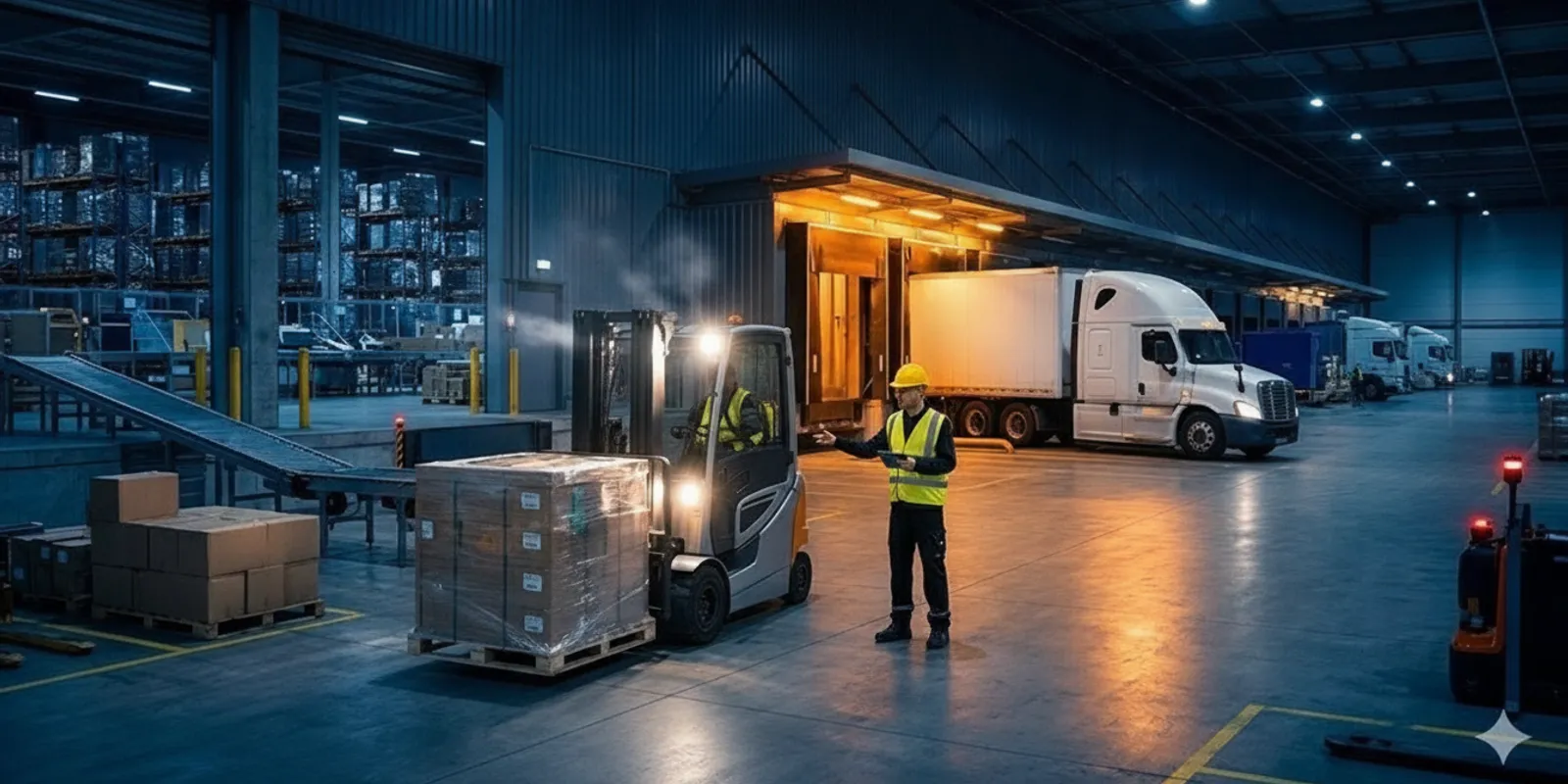
The cost of freight downtime is more than the time a truck, trailer, railcar, or shipment sits idle. A delay can affect delivery appointments, product condition, driver availability, customer commitments, and the next move in the supply chain. When a load is damaged, shifted, rejected, or stranded, a prompt, practical response can help limit the disruption and keep freight moving.
Contact us now for 24/7 emergency response
What does freight downtime really cost?
Freight downtime is the period when a shipment or transportation asset cannot continue as planned. The cause might be a fallen or leaning pallet, damaged packaging, a rejected delivery, a missed transfer, or a railcar that needs remediation. The direct expense is only one part of the impact. The delay may also consume time and capacity that were meant for other loads.
For a broker, that can mean coordinating between a customer, carrier, receiver, and repair provider while trying to protect the delivery commitment. For a shipper, production or replenishment plans may depend on the load arriving in usable condition. A carrier may lose productive equipment time while the freight is assessed or repositioned. A 3PL may need to manage the incident while maintaining service for other accounts.
These effects do not arrive as one simple line item. They can appear in different departments, invoices, and customer conversations, making the full cost easy to underestimate. A useful business case therefore considers the immediate charge, the time and capacity tied up, and the consequences that may follow if the shipment remains unresolved.
Which costs can follow a freight delay?
The exact consequences depend on the commodity, route, contract, timing, and cause of the disruption. Use the following as a checklist for assessing an incident, not as a guarantee that every cost applies to every load.
| Cost or impact | How it may arise | What to check |
|---|---|---|
| Transportation and handling | Extra movement, cross-docking, re-delivery, or freight re-work may be needed. | What work is required, and which provider or equipment is available? |
| Detention and asset time | A truck, trailer, railcar, or driver may remain tied up while the issue is assessed or resolved. | How long is the asset unavailable, and what is the next scheduled move? |
| Product condition | Delay can increase exposure to conditions that may affect time-sensitive or temperature-controlled freight. | What handling or storage conditions apply, and who can confirm the product status? |
| Delivery and customer commitments | A missed appointment or late arrival may require new coordination or affect the customer relationship. | What is the revised delivery window, and who needs an update? |
| Operational capacity | Staff spend time on incident calls and problem-solving instead of planned work; later moves may also be disrupted. | Which teams, loads, and appointments are affected downstream? |
| Recovery and administration | Teams may need to document damage, coordinate decisions, arrange services, and reconcile charges. | What records and approvals are needed to close the incident? |
How do freight delay costs cascade?
A freight problem can trigger a sequence rather than a single delay. For example, a load with shifted pallets may not be safe or suitable to deliver in its current condition. The receiver may hold or reject it. The carrier then has to wait for instructions, the broker has to coordinate a recovery plan, and the shipper may need to confirm how the product should be handled.While those decisions are pending, the trailer and delivery slot may remain unavailable. If the load requires restacking or pallet replacement, a qualified work location and labor have to be arranged. If the shipment cannot be repaired at the original site, it may need a transfer or short-term storage. Each additional handoff creates another opportunity for lost time, incomplete information, or a missed appointment.
Time-sensitive goods can bring product-condition concerns into the same chain. The delay itself does not prove that freight is spoiled or unusable, but it may make prompt assessment and handling instructions more important. The responsible parties should document the condition, follow the shipper’s requirements, and make product decisions through the appropriate customer or quality contacts.
Academic research on shipping response time and recovery costs discusses how a response can affect costs such as downtime and additional planning. It supports the general point that recovery time matters, but it does not provide a universal dollar value for a particular freight incident. Read the MIT research on shipping response time and recovery costs.
How can a team estimate the cost of freight downtime?
A useful estimate starts with facts that the people managing the shipment can verify. Do not try to force every consequence into an exact figure while the incident is still unfolding. Record the known charges and operational effects, then mark uncertain or potential impacts separately.
- Set the timeline. Record when the issue was discovered, when the shipment stopped moving, key decision points, when a recovery provider was contacted, and when freight was ready to continue. Include waiting periods between steps.
- List direct expenses. Gather actual or quoted charges for handling, rework, cross-docking, re-delivery, equipment, or storage where applicable. Keep confirmed costs separate from estimates.
- Track time and capacity. Note which driver, vehicle, trailer, railcar, dock slot, or staff time was committed to the incident. Ask operations what planned work was delayed or reassigned.
- Check service obligations. Review the shipment’s delivery window and customer requirements. Record any changed appointment, service escalation, or customer communication without assuming a contractual penalty applies.
- Assess product status with the right people. Record handling conditions and obtain direction from the responsible shipper, receiver, or quality contact when product condition is in question.
- Identify repeat causes. Note whether the disruption involved load stability, packaging, appointment coordination, equipment, or another recurring issue. That information can guide prevention without delaying immediate recovery.
For internal comparison, the team can track elapsed downtime, confirmed recovery spend, extra moves, and service outcomes across incidents. Compare like with like: a temperature-sensitive shipment, a dry load, and a railcar issue may have different operational risks and recovery options. The purpose is to improve decisions, not to present an unsupported average as a universal cost.
How does rapid emergency freight response reduce disruption?
Rapid response does not mean skipping assessment or promising that every load can be saved. It means getting the right facts and decisions moving early, then matching the problem to an appropriate service. A fast first conversation can help establish the shipment’s location, condition, immediate safety concerns, delivery deadline, and the people authorized to approve next steps.
Once the need is clearer, a response may involve freight re-work, pallet services, cross-docking, re-delivery, transloading, rail remediation, on-site labor, short-term warehousing, product disposal, or a specialized project. The suitable option depends on the load and instructions. For example, a stable pallet restack differs from moving freight to another trailer, while a rejected load may need a coordinated re-delivery plan.
WeFixFreight describes its service as a 24/7/365 emergency operation, coordinated through a nationwide network of more than 150 service agents. That network model is intended to connect a freight emergency with local service capacity and national coordination. Teams looking for a nearby option can review freight rework and re-delivery coverage and the available freight rework services.
For a pallet problem, emergency pallet restack service may be relevant when freight needs to be stabilized or rebuilt. When a load must move between vehicles or be transferred during recovery, explore cross-docking service options. For a load that cannot be delivered as planned, freight re-delivery support may be part of the solution. These links describe different service paths; they do not determine what a specific shipment requires.
How should you compare recovery options?
When a delay is active, compare options by whether they address the cause, the time needed to act, and what happens to the shipment next. The lowest immediate charge may not resolve the operational issue, while a broader service may be unnecessary if a focused repair is sufficient. Ask for clear, upfront information about the work and expected handoffs before authorizing the plan.
| Recovery path | May fit when | Questions to ask |
|---|---|---|
| Freight re-work or pallet services | Pallets are fallen, leaning, broken, shifted, or need restacking or repositioning. | Can the work be completed at the current location? What handling instructions apply? |
| Cross-docking | Freight needs a rapid transfer between vehicles or a temporary handling point. | Is an appropriate location available, and how will the onward move be coordinated? |
| Re-delivery | A delivery was rejected or the original appointment cannot be completed as planned. | What must change before a new delivery attempt, and who will confirm the appointment? |
| Transloading or rail remediation | A shipment needs a mode transfer or a rail-related issue requires attention. | What equipment, timing, and handling requirements apply to the transfer or remediation? |
| Short-term warehousing | Freight needs a temporary holding point while a next step is arranged. | How long is storage expected, and what conditions or access requirements apply? |
For a service overview, see freight rework, cross-dock, and delivery solutions. A recovery plan should also identify who owns communication with the receiver, who approves handling, and how the shipment will resume its route. Clear ownership reduces duplicated calls and makes it easier to update all parties when the plan changes.
How can freight teams build a practical emergency response plan?
Preparation helps teams act when an incident occurs outside normal business hours. Keep a concise shipment record accessible to the people authorized to respond. Include the load’s current location, carrier and receiver contacts, commodity and handling instructions, appointment details, and any known restrictions. For temperature-controlled or otherwise sensitive freight, include the correct escalation contact and the relevant monitoring information.
Agree in advance on who can approve recovery work and what information they need to make that decision. A broker may coordinate the parties, but the shipper or another authorized customer contact may need to direct product handling. Establish a process for documenting the condition and sharing updates so that operations, customer service, and the receiver are working from the same facts.
After an incident closes, review the timeline and outcome. Ask which wait could have been shortened, whether the chosen service addressed the actual cause, and what information was missing at the start. Use that review to improve contact lists, escalation steps, packaging or loading practices, and communications. A plan should support sound decisions, not assume that every disruption has the same solution.
Frequently Asked Questions
What is included in the cost of freight downtime?
Potential effects include recovery and handling charges, time spent waiting, equipment or capacity tied up, changed delivery plans, product-condition assessment, and extra coordination. Which costs apply depends on the shipment and incident. Separate confirmed expenses from possible downstream impacts.
Can rapid response eliminate freight delay costs?
No response can guarantee that all costs or delays will be avoided. Acting quickly can help teams assess the problem, coordinate a suitable service, and limit unnecessary waiting or extra handling. The result depends on the freight, location, availability, customer instructions, and cause of the disruption.
Which service should we request for a shifted or fallen pallet?
Describe the pallet condition, shipment location, delivery deadline, and any relevant handling requirements. Freight re-work or pallet restacking may be appropriate, but the situation needs to be assessed before a specific service is selected. Keep people clear of any unstable load and follow the site’s safety procedures.
What information helps start an emergency freight response?
Share the shipment’s current location, what happened, the visible freight condition, commodity and handling needs, delivery deadline, carrier and receiver details, and the contact who can approve next steps. Photos or documents can help clarify the issue when they are available and safe to collect.
Contact us to coordinate a freight response
Contact us now to discuss your freight emergency
When a shipment is disrupted, knowing the timeline, potential cost categories, and available recovery paths gives your team a clearer basis for action. A prompt assessment can help coordinate the next step and get freight moving again when the situation allows.