
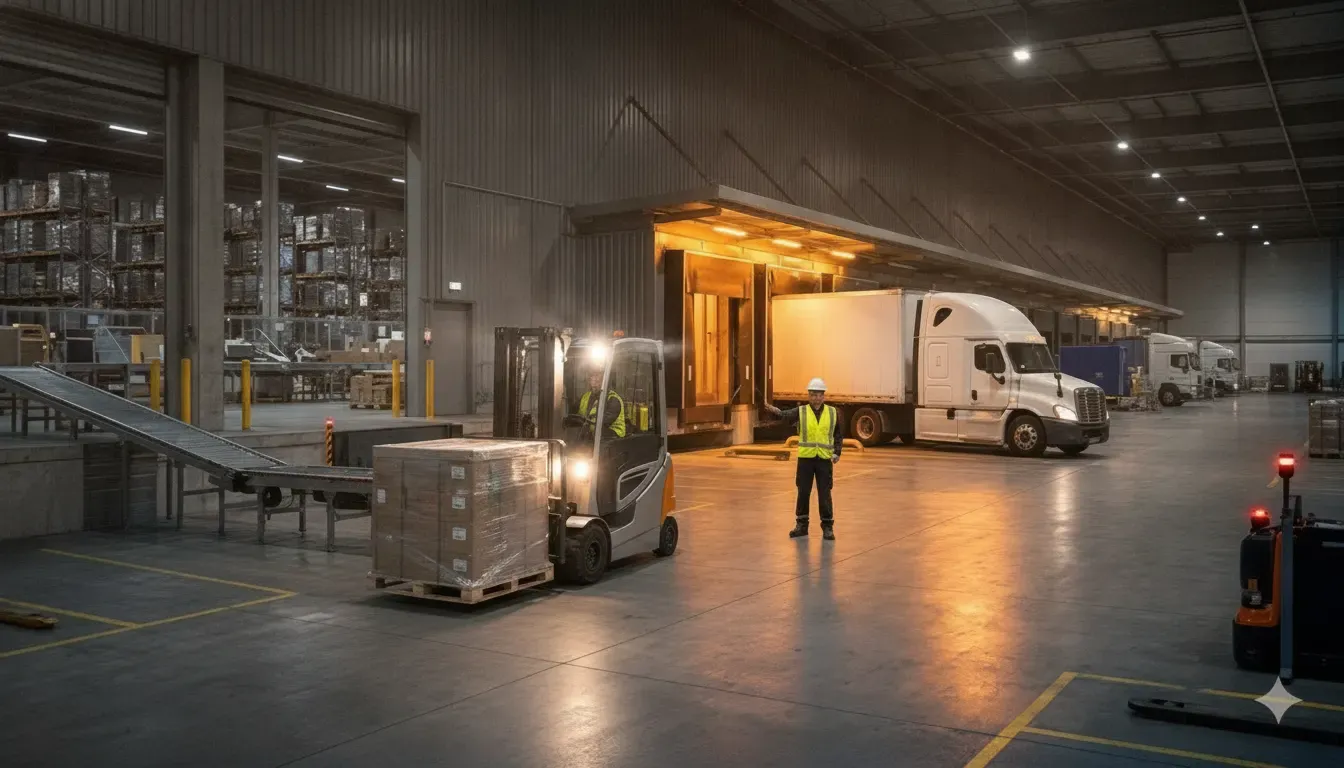
When a shipment cannot continue through its planned delivery point, finding dependable cross-docking services in Atlanta can protect the next appointment and keep freight moving across the Southeast. WeFixFreight coordinates urgent transfers for freight brokers, shippers, carriers, and 3PLs that need a practical response, not a long-term storage plan.
Contact us now for Atlanta cross-docking support.
Atlanta is a major freight crossroads, but a busy market does not automatically solve an emergency. The right response still depends on the load condition, the location of the truck, the outbound schedule, and the equipment or labor required. This guide explains how Atlanta cross-docking can work in a time-sensitive situation and how WeFixFreight coordinates support beyond the metro area.
Why Atlanta Is a Major Freight Hub
Atlanta is a major freight hub because it connects several high-volume Southeast routes and gives carriers access to regional, national, and intermodal distribution paths. That reach makes the area useful for direct transfers, but it also means a delay in Atlanta can affect delivery schedules across multiple states.
The metro area is connected by major routes such as I-75, I-85, I-20, and I-285. Freight moving through these corridors may be headed toward the Carolinas, Florida, Tennessee, the Gulf Coast, or points farther west. A rejected delivery, trailer problem, appointment change, or damaged load can therefore create more than a local delay. It can interrupt a multi-stop route or leave a carrier searching for a safe next move after normal business hours.
Cross-docking is especially useful when the freight is already sorted for its next destination and should not sit in storage. An Atlanta transfer can move cargo from an inbound trailer to an outbound vehicle, reduce unnecessary dwell time, and help a logistics team preserve the delivery plan. It may also be combined with rework, inspection, pallet handling, or short-term staging when the load needs more than a simple trailer-to-trailer transfer.
For a broader explanation of how direct freight transfer fits into an emergency logistics plan, review WeFixFreight’s cross-docking services guide. The Atlanta response is a local application of the same core principle: keep suitable freight moving while limiting extra handling and storage.
Cross-Docking Options in the Atlanta Metro Area
Atlanta cross-docking options vary by the freight, the urgency, the condition of the load, and the next transportation leg. A qualified response may use a standard cross-dock transfer, a transfer with on-site labor, or a coordinated combination of cross-docking and rework. The goal is to match the handling plan to the actual problem.
Common options include:
- Direct trailer transfer: Move pre-sorted, road-ready freight from an arriving trailer to an outbound trailer with minimal dwell time.
- Transfer with inspection: Check visible load condition, count or identify affected freight, and document issues before the next leg.
- Cross-docking with rework: Stabilize shifted or damaged pallets, replace compromised packaging when appropriate, and prepare the shipment for continued movement.
- Refrigerated or time-sensitive handling: Coordinate the transfer around temperature, appointment, and product-care requirements.
- Short-term staging: Use temporary space only when the outbound move cannot happen immediately, rather than defaulting to extended warehousing.
- Multi-stop coordination: Organize freight by destination when a trailer contains several delivery points or a route has changed.
Cross-docking is not the same as every kind of freight transfer. If cargo must move between transportation modes, such as from rail or a container to a truck, transloading services may be the better fit. If pallets have fallen, leaned, or shifted, a rework plan may need to come first. WeFixFreight can evaluate the situation and coordinate the combination of services required.
Before dispatch, the most useful details are the exact truck location, commodity, number of pallets or pieces, current load condition, next appointment, trailer type, and required delivery direction. Photos can help when a pallet collapse, leaning load, or packaging failure is involved. Clear information lets the dispatch team identify a suitable response without forcing the driver or broker to repeat the same facts to several providers.
| Situation | Likely response | Primary goal |
|---|---|---|
| Road-ready, pre-sorted freight. | Direct trailer-to-trailer cross-dock. | Limit dwell time and keep the next move on schedule. |
| Shifted, leaning, or unstable pallets. | Cross-dock combined with freight rework. | Stabilize the load before continued transportation. |
| Rail, container, or other mode change. | Transloading with the right labor and equipment. | Move freight safely between transportation modes. |
| Rejected delivery or missed appointment. | Inspection, staging, re-delivery, or transfer. | Protect the shipment while a new plan is arranged. |
When Cross Docking Services Atlanta Supports Emergency Recovery
Cross docking is most useful when the freight has a clear next destination and the main problem is a break in the transportation plan. The inbound trailer may be unavailable, the original receiver may reject the load, or a carrier may need to hand off the shipment before the next appointment. In each case, the transfer is not just a warehouse activity. It is a controlled change in the shipment’s next step.
That distinction helps a logistics team avoid choosing a facility based only on proximity. A nearby dock may not have the labor, equipment, hours, trailer access, or handling experience needed for the load. The right provider asks what must happen after the transfer. If the shipment needs to leave immediately, the outbound vehicle and timing matter as much as dock location. If the cargo is unstable, the provider must also plan for safe unloading, inspection, and pallet stabilization.
Atlanta requests can involve freight moving through the airport corridor, intermodal connections, distribution centers, or major highway routes around the metro area. The exact facility should be confirmed during dispatch rather than assumed from a broad city label. A load in Fairburn, Forest Park, McDonough, or another Southeast access point may need a different resource than a truck stopped near central Atlanta. Precise location data helps the network identify the practical response.
For brokers and 3PLs, early coordination also protects communication with the shipper and receiver. The team can document the condition of the freight, explain whether rework is required, and set expectations for the next carrier. For carriers, this reduces the pressure to improvise while a trailer is disabled or a delivery plan changes. For shippers, it provides a clearer path to recovery when the original routing no longer works.
How WeFixFreight Dispatches to Atlanta and the Southeast
WeFixFreight dispatches urgent freight support through a nationwide network of more than 150 service agents. For an Atlanta request, the central team reviews the location, freight requirements, timing, and available capabilities, then coordinates a qualified service option. This model combines local execution with one national point of coordination.
The dispatch process typically follows these steps:
- Receive the situation: The team gathers the load location, shipment details, urgency, and requested outcome.
- Classify the work: The response is assessed as a direct cross-dock, transfer with labor, rework, transloading, re-delivery, or another service combination.
- Identify an appropriate agent: WeFixFreight checks the network for proximity, equipment, dock capability, and handling experience that fit the request.
- Coordinate the handoff: The team aligns the inbound and outbound transportation plan, facility requirements, and on-site expectations.
- Track resolution: WeFixFreight maintains communication through the work so the broker, shipper, carrier, or 3PL understands what happens next.
WeFixFreight is available 24/7 and states that initial contact and agent identification can occur within two hours. Actual arrival and completion timing depend on the location, freight, facility access, equipment, traffic, and the scope of work. This distinction matters. A responsible emergency provider should confirm the situation before promising a time that the load conditions cannot support.
The Atlanta team can also serve as part of a broader Southeast response. A shipment may need a cross-dock in the metro area followed by re-delivery to another state. Or a transfer may need to coordinate with a carrier traveling through multiple corridors. The advantage of a national network is that the local request does not have to become a disconnected series of calls when the freight plan changes.
To understand the broader service sequence from initial request through coordinated resolution, see how WeFixFreight works.
Typical Emergency Scenarios Served in Atlanta
Atlanta cross-docking becomes urgent when a load can no longer follow its planned path but still has a reasonable route to recovery. The most common triggers include rejected deliveries, trailer or equipment problems, shifted pallets, missed appointments, and changes that require freight to move into another vehicle before the next delivery leg.
Examples include:
- A receiver rejects a load: Freight may need inspection, rework, a new delivery plan, or a transfer to keep the shipment from remaining at the wrong dock.
- A pallet shifts in transit: The load may need to be stabilized before it can safely continue. WeFixFreight’s freight rework services can be considered alongside a cross-dock response.
- A trailer becomes unavailable: Cargo may need to move to another trailer when equipment fails, a carrier changes, or the original vehicle cannot meet the next appointment.
- A time-sensitive load faces a schedule change: A direct transfer can reduce storage delay when the next carrier or destination is already known.
- A multi-stop route needs to be reorganized: Freight may need sorting, labeling review, or destination-based staging before it is dispatched again.
- A shipment requires a mode change: Transloading may be more appropriate when the next leg involves a different transportation mode.
Not every damaged or temperature-sensitive load should be moved immediately. The condition of the product, packaging, trailer, and facility must be considered before handling begins. The driver should not be left to improvise a recovery plan at the dock. A coordinated provider can help determine whether the next step is a direct transfer, rework, temporary staging, re-delivery, or another form of remediation.
Contact for Immediate Cross-Docking in Atlanta
When you need Atlanta cross-docking services, prepare the information that will help the response team act quickly: the current address or facility, truck and trailer details, commodity, pallet or piece count, load condition, delivery deadline, and the result you need. If the shipment is damaged or shifted, include clear photos when available and identify any safety, temperature, or handling concerns.
WeFixFreight provides quote-based service with clear, standardized pricing rather than publishing a one-size-fits-all price. The scope depends on the freight, labor, equipment, facility, timing, and transportation plan. A direct conversation helps establish what is needed before work begins and avoids treating every Atlanta request as the same type of move.
The company supports freight brokers, shippers, carriers, and 3PLs across the United States through its 24/7 network. An Atlanta request can remain local when that is the best answer. Or it can be coordinated with a broader Southeast recovery plan when the load is moving through multiple markets.
Contact us now to coordinate immediate cross-docking in Atlanta or across the Southeast.
Frequently Asked Questions About Cross-Docking Services Atlanta
What are cross-docking services in Atlanta?
Cross-docking services in Atlanta transfer freight from an inbound vehicle to an outbound vehicle with little or no intermediate storage. The service can support time-sensitive, pre-sorted, rejected, or disrupted loads that need a coordinated next move through the Atlanta metro area.
Can cross-docking help with a rejected delivery?
Yes. A rejected delivery may require inspection, rework, temporary staging, re-delivery coordination, or a direct transfer to another carrier. The best response depends on why the shipment was rejected, the condition of the freight, and the next available delivery option.
How quickly can WeFixFreight respond in Atlanta?
WeFixFreight operates 24/7 and states that initial contact and agent identification can occur within two hours. Arrival and completion depend on the exact location, load requirements, facility access, traffic, equipment, and scope of the requested work.
Is cross-docking the same as transloading?
No. Cross-docking generally moves freight from one vehicle to another with minimal storage. Transloading moves freight between transportation modes or handles a more involved transfer. A shipment may need either service, or both, depending on its route and handling requirements.
Who uses Atlanta cross-docking services?
Freight brokers, shippers, carriers, and 3PLs may use Atlanta cross-docking services when a load is time-sensitive. A delivery has been rejected, equipment has failed, or freight needs to move into another vehicle before continuing through the Southeast.