
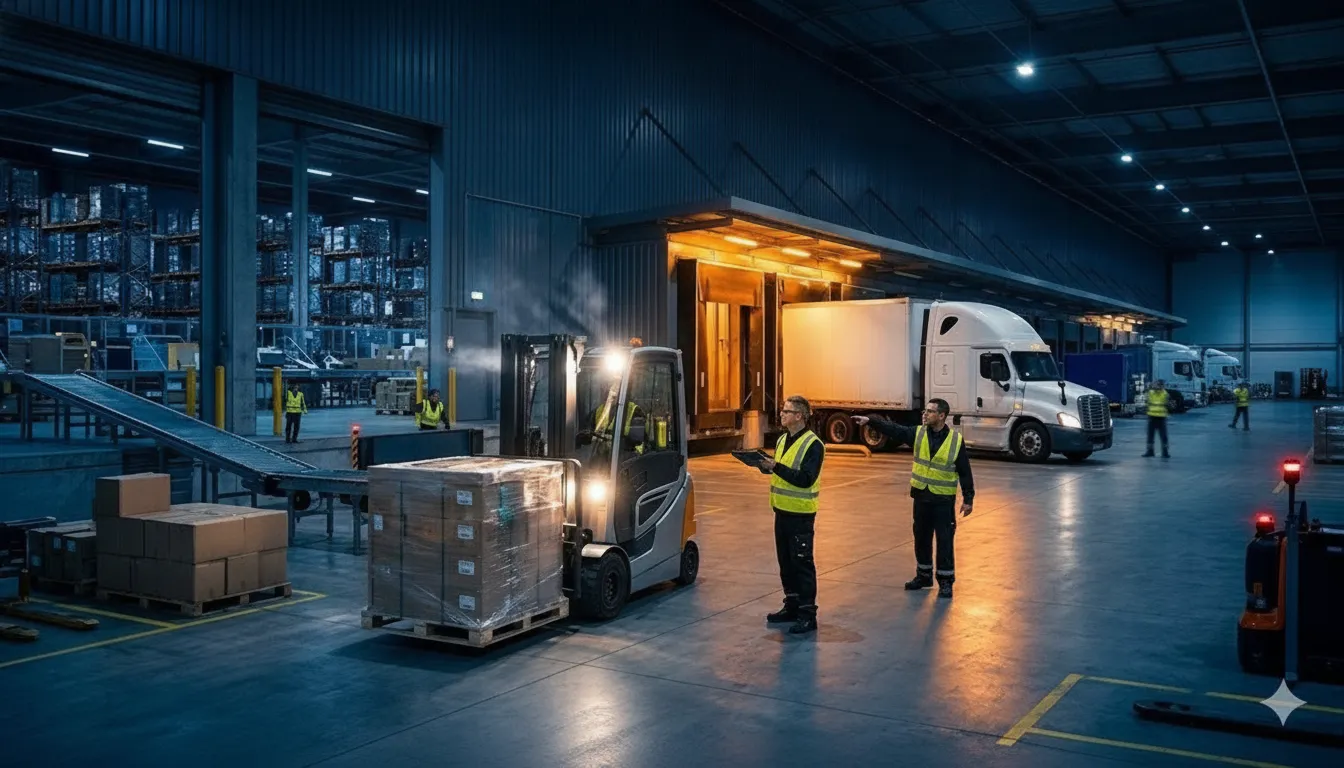
When a load is delayed, damaged, or facing a missed delivery window, the right transfer plan can protect both the freight and the customer relationship. The decision is not simply about moving goods quickly. It depends on the cargo condition, transportation mode, available equipment, handling requirements, and how much time remains. For a direct truck-to-truck response, the emergency cross-docking service guide explains the relevant service path.
Cross docking vs transloading comes down to the freight’s next move. Cross-docking transfers freight from an incoming truck to an outbound truck with little or no intermediate storage. Transloading changes the transportation mode or handling pathway, such as moving cargo between truck and rail. An emergency assessment should account for location, cargo type, delivery commitments, equipment, and special resources before selecting either service.
Understanding that operational distinction makes it easier to match the response to the problem. Whether the priority is a direct vehicle transfer or a more involved multimodal recovery plan.
What Is the Difference Between Cross-Docking and Transloading?
The simplest distinction is the movement involved. Cross-docking transfers freight from an incoming truck to an outbound truck, usually with little or no intermediate storage. Transloading moves cargo between transportation modes or changes the handling pathway. That may mean shifting freight between truck and rail when a terminal or route problem affects the original plan.
For an emergency load, that difference matters because the right response depends on the cargo condition, equipment, delivery commitment, and whether the shipment must change modes. Cross-docking services may fit a direct vehicle-to-vehicle transfer. Transloading services may fit a rail, terminal, container, or multimodal problem. For more detail on the direct-transfer option, review the emergency cross-docking service guide.
| Consideration. | Cross-docking. | Transloading. |
|---|---|---|
| Primary movement. | Incoming vehicle to outbound vehicle. | One transportation mode or handling pathway to another. |
| Storage. | Designed to keep freight moving without an intermediate storage delay. | May include temporary holding, sorting, consolidation, or re-palletizing when the situation requires it. |
| Common emergency trigger. | A damaged trailer, failed transfer, or urgent need to move a stable load to replacement equipment. | A rail or terminal disruption, intermodal issue, container transfer, or need to change the transport plan. |
| Best initial question. | Can the freight move directly from the current vehicle to another vehicle? | Does the freight need a different mode, terminal, equipment type, or handling plan? |
These services are not always separate. If freight is unstable or damaged, freight re-work may be needed before either transfer can proceed. A load can also pass through a transload point and then be cross-docked into outbound equipment. The practical decision is not which label sounds faster. It is which movement protects the cargo and preserves the delivery plan with the equipment and resources available at the location.
When Is Cross-Docking the Better Emergency Option?
Cross-docking is often the better emergency option when the freight is stable, already sorted, and ready to move from one vehicle to another without a storage stop. The goal is to preserve momentum, not create a new inventory process. An incoming trailer is unloaded, the shipment is checked and organized as needed, and the freight is transferred to outbound equipment for the next leg.
This approach is especially practical when the delivery window is tight. Refrigerated loads and other perishable goods may not tolerate an unnecessary holding period, while pre-sorted products can move efficiently when the receiving and outbound plans are already clear. A direct transfer can also help when replacement equipment is available and the original trailer cannot continue, but the freight itself remains suitable for movement. See our 24/7 cross-docking service for emergency transfer and recovery support.
Choose direct transfer when storage would add risk
In a cross docking vs transloading decision, ask whether the shipment needs a change in transportation mode or simply a safe, organized handoff between vehicles. If the load is moving from truck to truck, has a defined destination, and does not need to sit in a warehouse, cross-docking may be the cleaner fit. It can reduce unnecessary handling steps and keep freight aligned with its delivery commitment. The practical advantage is not a universal promise of faster delivery. It is a plan built around the condition of the cargo, the available equipment, the location, and the time remaining.
Cross-docking is less suitable when the freight is unstable or cannot be handled safely as received. Shifted, leaning, broken, or fallen pallets may need inspection, unloading, restacking, repositioning, or other freight re-work before the shipment is transferred. In that situation, the transfer is only one part of the response. Freight re-work can include unloading cargo from a damaged trailer and moving it to another vehicle, allowing the team to address the immediate equipment or pallet problem before onward transportation.
That distinction matters in an emergency. A load that looks like a simple equipment swap may require additional labor, replacement pallets, specialized handling, or a temporary holding plan. The right recommendation should account for cargo condition, delivery urgency, equipment, location, and special handling needs before anyone commits to a direct cross-dock.
When Does Transloading Make More Sense?
Transloading becomes the stronger option when the freight problem is not simply getting goods from one truck to another. It changes the transportation mode or handling pathway, which makes it useful when cargo must move between truck, rail, intermodal equipment, or another transfer point. It can also provide an alternate plan when a rail delay, terminal disruption, or equipment issue threatens the original movement.
For example, a shipment may travel by truck to a transload point, continue by rail, and then return to truck transportation for final delivery. That truck-rail-truck sequence is one reason transloading can extend rail access to destinations that are not directly rail-served. The exact route, facility, and available equipment still need to be confirmed for the shipment. BNSF describes this truck-to-rail-to-truck transload model as a way to connect rail movement with final-mile delivery.
Look for a mode change or terminal constraint
Transloading is a practical fit when a container, railcar, or terminal cannot continue through the planned path. Railcar delays, intermodal transfer problems, track interruptions, and terminal congestion can all require an alternate handling plan. In those cases, the operational question is not simply cross docking vs transloading. It is whether the freight needs a different mode, different equipment, or a different transfer point to keep the shipment moving. WeFixFreight identifies these rail and terminal situations as examples where transloading may be needed.
Use it when the load needs more than a direct handoff
Transloading can also make more sense when cargo must be removed from a container and placed into other equipment. The load may need sorting for different destinations or re-palletizing before onward movement. A brief holding period may be necessary if the next vehicle, rail connection, or receiving appointment is not immediately available. Container transloading services can support the transfer from containers to other equipment, while temporary storage or on-site labor may be considered when the freight cannot move immediately.
Handling requirements matter as much as the mode change. Product condition, pallet stability, dimensions, temperature requirements, loading equipment, and the receiving schedule should be assessed before selecting a facility or transfer plan. Not every location has every specialized capability, so confirm the resources required for the specific load. For 3PLs coordinating several shipments or delivery points, 3PL transloading services may provide a more flexible handling approach, subject to shipment and location assessment.
How Should You Choose Between the Two Services?
When deciding between cross-docking vs transloading during a freight disruption, start with the movement the shipment needs next, not with the service name. Use this checklist to organize the facts before selecting a handling plan:
- Check the cargo condition. If the freight is stable, properly secured, and ready to move, a direct transfer may be appropriate. If pallets are leaning, damaged, shifted, or unsafe to handle, plan for freight re-work before or during the transfer.
- Identify whether the transportation mode must change. A truck-to-truck handoff points toward cross-docking. If the shipment must move between truck, rail, container, terminal, or another equipment type, evaluate transloading instead.
- Decide whether storage is needed. Cross-docking is designed to keep freight moving between incoming and outbound vehicles with little or no storage. If the next move is not ready, include a temporary holding plan rather than forcing an unsafe or rushed handoff.
- Measure delivery urgency. Consider perishability, temperature requirements, appointment windows, customer commitments, and the consequence of additional delay. Tight windows favor a direct transfer when the cargo and equipment support it.
- Match the equipment to the load. Confirm trailer, container, rail, dock, lifting, refrigeration, loading, and securing requirements. The available equipment can determine whether the practical answer is cross-docking, transloading, re-work, or a combination.
- Pin down the location and access. Share the exact shipment location, facility restrictions, hours, dock access, and destination requirements. A nearby qualified resource still needs the right capabilities and resources for the specific load.
- Flag special handling requirements. Identify food-grade, temperature-sensitive, dimensional, hazardous, high-value, or otherwise specialized freight before dispatch. Do not assume every facility or service agent can handle every commodity.
- Plan for freight that cannot move immediately. If a truck, railcar, terminal, appointment, or receiving location is unavailable, ask about short-term warehousing as a temporary option. Then reassess the next transfer when the required equipment or destination is ready.
These details give a logistics coordinator a usable operating picture. WeFixFreight’s emergency assessment considers location, cargo type, special handling, time criticality, delivery commitments, equipment, and resource needs. Its services include cross-docking services, emergency transloading services, and freight re-work, so the recommendation can reflect the actual condition of the shipment rather than forcing every problem into one category.
Can Cross-Docking and Transloading Work Together?
Yes. An emergency response may use both services when the freight problem involves more than a simple truck-to-truck transfer. For example, a load may first need freight re-work because a trailer is damaged, pallets have shifted, or the cargo cannot be safely handled as-is. Once the shipment is stabilized, cross-docking can move it to outbound equipment, while transloading can change the transportation mode or handling path needed to complete delivery.
Start with the condition of the freight
The first decision is not whether cross-docking or transloading sounds more efficient. It is whether the freight is ready to move. WeFixFreight’s emergency assessment considers the location, cargo type, special handling needs, time criticality, delivery commitments, available equipment, and resource requirements. If the load is unsafe, inaccessible, or compromised, freight re-work may need to come first. That work can include unloading freight from a damaged trailer and transferring it to another vehicle.
After re-work, the operational path can be built around the shipment’s next constraint. A cross-dock may be appropriate when freight can move directly from incoming to outbound equipment. Transloading may be needed when the load must move between truck, rail, or another transportation mode, or when a terminal disruption requires an alternate plan. In some cases, a cross-dock transfer is one step inside a broader transloading or recovery sequence.
Coordinate the local work with the national response
Combining services requires more than finding an available facility. The location must have the right equipment, handling capability, and timing for the specific load. WeFixFreight uses centralized dispatch to identify a nearby qualified agent based on proximity, expertise, availability, and required resources. Its network includes warehouses, cross-dock facilities, trucking companies, logistics providers, and independent freight handlers, but capabilities can vary by agent and location.
WeFixFreight provides emergency freight repair and logistics remediation across the United States through a distributed network of more than 150 service agents. The network supports nationwide coverage and 24/7/365 availability, subject to matching the shipment with the appropriate local resources. For a rapid transfer or recovery need, its 24/7 cross-docking service can be considered alongside transloading, re-work, or other handling options.
The documented response commitment includes initial contact and agent identification within two hours. That is a commitment to begin coordination, not a promise that every location has every specialty or that the entire recovery will be completed within that window. Sharing the load’s exact location, condition, dimensions, equipment needs, and delivery deadline helps dispatch determine whether a combined response is practical.
Frequently Asked Questions
What is transloading?
Transloading transfers freight from one transportation mode to another at a transfer point. For example, a shipment may move from truck to rail and then return to truck for final delivery. It can also provide an alternate handling plan when rail or terminal disruptions interrupt the original route. Emergency transloading services can help coordinate that transfer during a freight disruption.
When can transloading reduce handling or transportation costs?
Transloading may improve cost efficiency when freight needs to use multiple modes, reach destinations that are not rail-served, or move through specialized equipment and operators. The right choice depends on the cargo, route, handling requirements, and delivery commitment. WeFixFreight assesses the situation before providing a quote, so pricing remains situation-specific rather than based on a generic figure.
Can cross-docking and transloading be used together?
Yes. A response may use transloading to change the transportation mode, then cross-docking to transfer freight directly into an outbound vehicle with little or no intermediate storage. If the load is damaged, shifted, or unsafe to move as-is, freight re-work may be needed before either transfer can proceed.
What information should I provide when requesting emergency help?
Share the freight location, cargo type, current condition, transportation mode, equipment involved, special handling needs, delivery commitment, and any available storage or labor constraints. These details help determine whether the load needs cross-docking, transloading, re-work, short-term warehousing, or a combined response.
Contact us about your freight emergency
When the right response depends on cargo condition, handling needs, and the delivery plan, a direct assessment can help you choose the appropriate next step. Contact WeFixFreight about your active freight emergency so our team can understand the situation and coordinate the service path that fits. Contact us now to get started.