
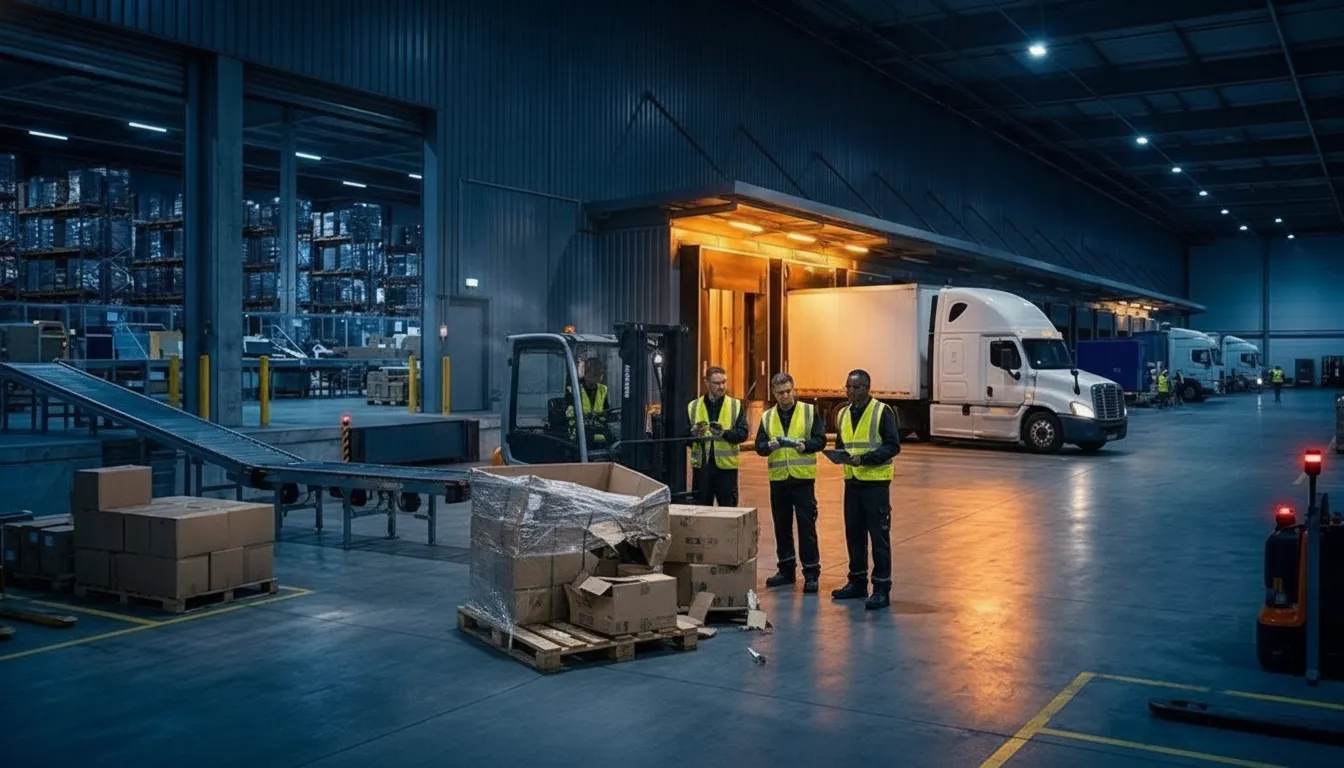
Product disposal in freight logistics is the controlled removal and final disposition of cargo that is damaged, contaminated, rejected, expired, or otherwise unsuitable for its intended delivery. For shippers and 3PLs, it is a freight-response decision, not simply a request for ordinary waste pickup. The team must first understand the cargo, condition, location, customer instructions, recovery options, and time pressure.
When a shipment cannot continue as planned, the right outcome may be re-work, temporary storage, salvage, donation when authorized, re-delivery, or disposal. This guide explains what product disposal means in a logistics setting, how it differs from general waste disposal, and how to evaluate the next step. For a broader service overview, see the freight disposal service nationwide guide.
What Is Product Disposal in Freight? A Plain-English Definition
Product disposal in freight logistics is the organized process of removing cargo from its planned transportation or delivery path and directing it to an appropriate final disposition. It is used when the product cannot reasonably be delivered in its current condition, the receiver will not accept it, the shipper has changed the instructions, or the cargo has become unusable for its intended purpose.
Product disposal can apply to an entire load or only part of a shipment. A response may involve separating damaged units from recoverable units, moving freight to a suitable handling location, coordinating labor, and documenting what was authorized and completed. The method depends on the cargo and the circumstances. Recycling, incineration, professional waste disposal, or removal of unwanted goods may be considered, but no single method is correct for every shipment.
The important distinction is that freight disposal begins with a logistics problem. The cargo may be sitting on a trailer, at a warehouse, at a cross-dock, at a rail location, or at a delivery site. The response must account for access, timing, equipment, labor, customer direction, and the next movement of any freight that remains usable.
Q: What is product disposal in freight logistics?
A: It is the coordinated removal and disposition of freight that is no longer suitable for its intended delivery or use. A shipper or 3PL should evaluate the cargo condition, authorized instructions, recovery options, location, time constraints, and applicable handling requirements before choosing disposal.
Why Freight Sometimes Cannot Be Reworked or Re-Delivered
Disposal is one possible response to a freight exception. It should not be assumed merely because a pallet is leaning or packaging is damaged. Some loads can be recovered through sorting, restacking, repackaging, or other freight re-work. Others cannot be restored to a condition the consignee or cargo owner will accept.
Common reasons a shipment may move toward disposal include:
- Severe physical damage: Crushed cases, broken containers, exposed product, or widespread load damage may make ordinary delivery impractical.
- Contamination concerns: A spill or exposure event can change how the affected freight must be handled. Do not assume that visibly clean units are acceptable without the appropriate customer direction.
- Rejection or changed instructions: A consignee, shipper, manufacturer, or other authorized party may direct that goods not be delivered, returned, or placed back into commerce.
- Expired or time-sensitive goods: A delay can affect whether cargo remains suitable for its planned destination. The cargo owner must determine the authorized outcome.
- Uneconomical or impractical recovery: Even when some units appear recoverable, the available time, labor, equipment, location, or handling requirements may make re-work or re-delivery impractical.
The operational question is not simply, “Is the freight damaged?” It is, “What outcome is authorized and workable for this cargo at this location?” That question keeps the team from disposing of recoverable product or attempting to move freight that should not proceed.
Regulatory Compliance in Freight Product Disposal
Product disposal can involve legal, environmental, hazardous-material, customer-contract, and jurisdiction-specific considerations. Requirements vary by product, condition, quantity, location, and disposal method. A freight-response provider can coordinate the operational work, but the responsible cargo owner and qualified advisers should confirm requirements that apply to the specific shipment.
A careful freight-disposal response should separate three questions:
- What is the cargo? Identify the product, packaging, quantity, condition, and any known special handling information.
- What is authorized? Confirm who can approve disposal, salvage, donation, return, re-work, or another disposition, and retain the instructions.
- How should the work be performed? Match the approved disposition to appropriate resources, facilities, equipment, labor, and documentation.
For load stability and safe material handling in a work area, teams can consult the applicable OSHA material-handling standard. This is not a substitute for cargo-specific environmental, hazardous-material, or jurisdictional advice. It is a reminder that a disposal response still requires controlled handling and a safe work environment.
Documentation should be practical and factual. Keep photographs, location details, cargo descriptions, customer instructions, authorization records, dispatch notes, and completion information together. Avoid making unsupported claims about certification, destruction, recycling, or legal compliance unless the responsible party has verified those facts.
How Product Disposal Differs from General Waste Disposal
General waste disposal usually starts with waste that has already reached a household, commercial, or industrial waste stream. Product disposal in freight logistics starts earlier, while cargo is still part of a transportation or delivery exception. The team must resolve the shipment, coordinate the site, protect any usable freight, and follow authorized instructions before the final disposition occurs.
| Consideration | Product disposal in freight logistics | General waste disposal |
|---|---|---|
| Starting point | Cargo affected by damage, rejection, contamination, changed instructions, or another freight exception | Waste already placed into an established waste stream |
| Primary decision | Whether to recover, hold, redirect, salvage, donate when authorized, or dispose of the cargo | How to collect and process material under the applicable waste service arrangement |
| Operational setting | Trailer, dock, warehouse, cross-dock, rail location, or delivery site | Residential, commercial, industrial, or municipal collection setting |
| Coordination needs | Shipment details, customer authorization, time pressure, labor, access, equipment, and disposition records | Pickup schedule, container type, service terms, and material requirements |
That distinction matters for brokers and 3PLs. Calling a general waste hauler may not solve the freight problem if the load first needs sorting, labor, temporary holding, a controlled transfer, or a documented decision from the cargo owner.
When to Choose Disposal vs Salvage vs Donation
The choice among disposal, salvage, donation, and recovery should follow the cargo owner’s instructions and the facts of the shipment. A simple decision framework can help teams organize the conversation:
- Choose re-work or recovery when: the product may remain usable and authorized handling can restore the load through sorting, restacking, repackaging, or another practical intervention.
- Consider salvage when: some value may remain, the cargo owner authorizes a salvage path, and the product can be separated and handled appropriately.
- Consider donation when: the cargo owner authorizes it and the product is suitable for the intended recipient and applicable requirements. Donation should never be assumed simply because a product is unwanted by one consignee.
- Choose disposal when: the cargo is not suitable for delivery or authorized recovery, and a responsible final disposition is required.
- Use temporary storage when: the decision is not ready, instructions are pending, or the load needs a controlled location for inspection and sorting. Short-term warehousing can be part of that response.
These paths can overlap. For example, a partial load may move to a controlled location, be sorted, receive re-work where appropriate, and then have only the unusable units disposed of. The best response protects recoverable product while giving the shipper or 3PL a clear way to close the freight exception.
What Shippers and 3PLs Should Gather Before Requesting Disposal
Early information improves the first operational decision. Before requesting product disposal support, gather as much of the following as possible:
- Current facility address, dock or trailer details, access instructions, and on-site contact.
- Product description, packaging type, quantity, pallet count, and known handling information.
- Photographs showing the affected units, packaging, pallet condition, leakage, or contamination concerns.
- Shipment status, including refused, rejected, delayed, held, recalled, or removed from the delivery plan.
- Customer or cargo-owner instructions, including who is authorized to approve the disposition.
- Deadline, appointment, detention, storage, or site-access constraints.
- Preferred outcome, such as re-work, salvage, donation, return, storage, or disposal.
If some details are not available, say what is known and what still needs confirmation. Do not ask a driver or warehouse employee to make a cargo-owner decision they are not authorized to make.
How We Fix Freight Coordinates a Product Disposal Response
Product disposal can require a coordinated freight response rather than a single pickup. We Fix Freight supports brokers, shippers, carriers, and 3PLs with 24/7/365 emergency coordination and a nationwide network of more than 150 service agents. The response starts with the load’s location, condition, cargo details, urgency, and requested outcome.
Depending on the situation, coordination may involve on-site labor, sorting, transfer activity, temporary holding, re-work, or removal of unwanted goods. The product disposal service is the relevant starting point when disposal is the authorized path. The broader freight disposal guide provides additional context on nationwide cargo-disposition support, while the coverage map explains the service-agent network’s nationwide reach.
Pricing is quote-based after the situation is assessed. We Fix Freight uses clear, upfront, standardized pricing without publishing one universal dollar amount for every load. The scope depends on the location, cargo, timing, labor, equipment, and requested service.
Q: What should a 3PL do first when a load may need disposal?
A: Secure the current shipment information, document the condition, identify the location and time constraints, confirm the authorized decision-maker, and request a coordinated assessment. Do not assume that damage means the entire load must be disposed of.
Frequently Asked Questions
Is product disposal the same as throwing away freight?
No. Product disposal in freight logistics is a controlled disposition decision involving cargo condition, customer authorization, location, timing, recovery options, and the appropriate handling path. It may include removal, recycling, incineration, professional waste disposal, or another authorized method.
Does damaged freight always need disposal?
No. Some damaged freight can be recovered through sorting, restacking, repackaging, or other re-work. Disposal should be considered only after the cargo, instructions, condition, time constraints, and recovery options have been evaluated.
Who authorizes product disposal?
The appropriate cargo owner, shipper, consignee, manufacturer, or other authorized party determines the disposition. The responsible party may depend on the shipment contract and circumstances. Confirm the decision-maker before authorizing disposal.
Can only part of a shipment be disposed of?
Yes. A response may separate unusable units from freight that can be recovered, held, redirected, or delivered. The scope depends on the inspection, instructions, and practical handling options.
How fast can product disposal support be coordinated?
We Fix Freight provides 24/7/365 emergency coordination through a nationwide network of more than 150 service agents. Timing depends on the location, cargo, condition, access, urgency, handling needs, and available resources.
Contact us to discuss the next step
If a shipment is damaged, rejected, contaminated, expired, or otherwise unsuitable for delivery, early coordination can help your team protect recoverable freight and choose an authorized disposition. Share the cargo details, current location, condition, and timing so the response can be assessed against the shipment’s needs.