
When a Hub Group intermodal shipment is delayed or cannot continue as planned, the right recovery option depends on the freight’s location, condition, access rules, and next transportation leg. Intermodal recovery may involve freight re-work, a transfer, or rail remediation, but the shipment’s mode alone does not determine the answer. First establish what has stopped the load and what must happen next.
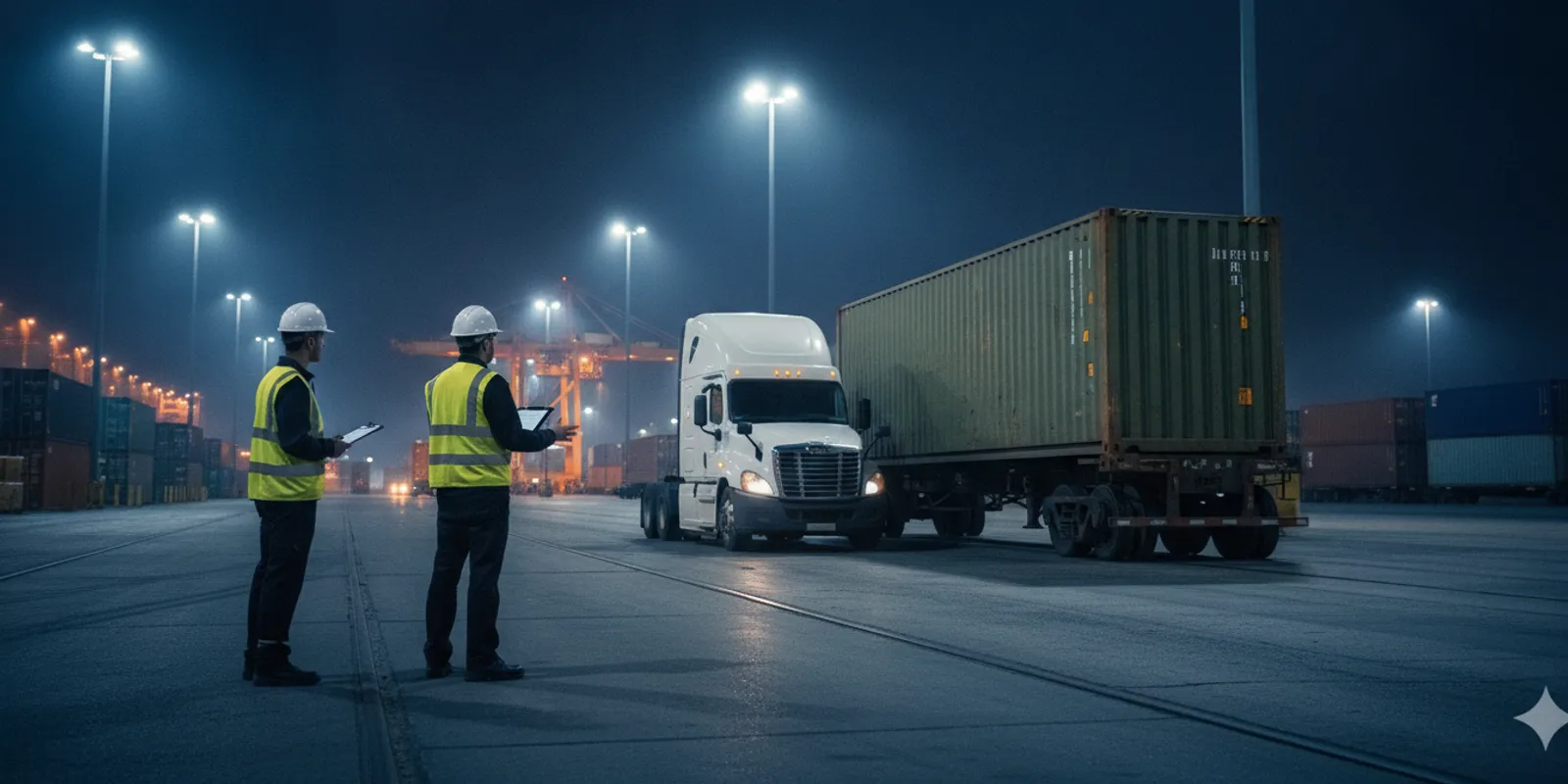
What does Hub Group intermodal mean for a recovery decision?
Hub Group is associated with intermodal transportation, but a recovery request should focus on the shipment exception rather than assuming one particular service will solve it. A load may be held at a rail terminal, waiting at a receiving site, or sitting in a container or trailer away from the point where the problem began. Those situations call for different access arrangements and handling plans.
Hub Group’s public filings discuss its intermodal business. For example, its 2018 quarterly filing reported intermodal gross margin and discussed factors affecting it. That filing provides company-specific business context, not a promise about a particular shipment, current service availability, or recovery timing. Read the SEC filing on Hub Group’s intermodal business.
For the shipment in front of you, identify the actual constraint: freight condition, access, equipment, delivery acceptance, or an unavailable onward move. A clear statement such as “the shipment is held at this terminal because the receiver rejected shifted pallets” gives the team something specific to assess. “Intermodal problem” by itself does not establish whether the load needs to be inspected, reworked, transferred, or simply rescheduled.
For background on how handling issues can arise during a multi-mode move, see intermodal freight shipping and pallet restacking. If a rail-side exception is involved, also consider the rail remediation service as one possible route.
When is an intermodal recovery path worth evaluating?
Evaluate an intermodal recovery plan when the issue can be addressed at or near the shipment’s current handoff point and a confirmed next leg is available. Examples include a load that needs pallet restacking before a carrier will accept it, freight that must move from one piece of equipment to another, or a rail-related exception that requires coordinated handling before the shipment can proceed.
Before selecting a path, check the following:
- Exact location: Get the facility name, street address, and a specific location within the site when available. A city-level tracking update may not be enough to arrange access.
- Control and permission: Find out which party controls the freight and who can authorize inspection, unloading, rework, or release. Ask about appointment, check-in, safety, and operating-hour rules.
- Available handling: Confirm that the site can support the requested task, cargo, and equipment. Do not assume that a nearby facility has the required labor or space.
- Onward plan: Identify who will provide the next vehicle or transportation leg, the destination, and any receiving-window requirements.
- Alternative route: Compare fixing the issue in place with cross-docking, transloading, re-delivery, or an approved holding plan. The shortest distance is not always the most workable choice.
If a load is unstable, has fallen pallets, or has damaged packaging, do not treat it as a routine transfer. Share the known condition and have the responsible parties confirm safe, authorized handling. The freight inspection process guide explains why an initial condition assessment helps define appropriate next steps.
Which recovery option matches the exception?
Choose based on the obstacle that prevents progress. The service names describe different kinds of work, and the right choice depends on what must happen to the freight and where it can happen.
| Shipment situation | Option to evaluate | Questions to settle first |
|---|---|---|
| Shifted, leaning, fallen, or broken pallet arrangement | Freight re-work or pallet services | What is affected, what work is authorized, and can the site safely support the task? |
| Freight must move between a container, trailer, or other equipment | Transloading or cross-docking | Where are both pieces of equipment, what transfer is needed, and who arranges the next leg? |
| Delivery was rejected or cannot be completed as scheduled | Re-delivery | Why was it rejected, what requirements changed, and when can the receiver accept it? |
| A rail-related exception has interrupted the move | Rail remediation | What is the precise rail location, who controls access, and what is the approved handoff? |
| Freight cannot leave immediately after work | Short-term warehousing or a confirmed holding plan | Can the site accommodate the cargo, for how long, and who owns the next move? |
For a mode-to-mode transfer, compare the shipment details with what transloading means and the transloading service. If the need is a rapid freight transfer, review the cross-docking service. These options are not automatically interchangeable. Specify what is being moved, between which equipment or locations, and what must happen after the transfer.
For more context on emergency transfer planning, the emergency cross-docking service guide can help frame the comparison. For a broader view of load transfer for trucks, focus on how equipment access and the final handoff will be managed.
What should you confirm before arranging a transfer?
A transfer adds handling and coordination. Before approving it, confirm that it resolves the original problem and that the new site and next carrier can support the plan. Work through these questions with the transportation and facility contacts:
- Where is the freight now? Record the full address, facility name, and specific yard, dock, or holding point if known. Identify the site contact who can confirm access.
- What is the equipment status? Note whether the freight is in a railcar, container, trailer, or another setting. Gather available equipment identifiers, release information, and seal details through the authorized contact.
- What is the observed condition? Describe the exception plainly: shifted pallets, damaged packaging, rejected delivery, or a needed transfer. Distinguish what is observed from what still needs inspection.
- What handling requirements apply? Share known cargo sensitivities, temperature needs, hazardous-material requirements, or special equipment needs. The responsible parties must determine which providers and locations are suitable.
- Who approves and owns the next step? Confirm who can authorize work, who arranges onward transportation, and who will notify the receiver of changed timing or instructions.
When the exception concerns rail-linked freight, the rail freight assistance overview offers related recovery context. For a shifted shipment, see the practical guide to responding to a shifted load. Use the specific details of the incident to decide which questions apply.
What information helps make the first request actionable?
Send the details that clarify the location, work required, and next move. If something is not yet known, label it as unconfirmed rather than delaying all communication while searching for it.
- Shipment reference, bill of lading, or identifier used by your team.
- Exact current location and a facility or site contact.
- Equipment type and status, including release or access details available to your team.
- A concise description of the exception and the number of affected pallets or units, if known.
- Photos of the condition and surrounding space, if taking them is safe and allowed by site rules.
- The requested outcome, such as restacking, repositioning, cross-docking, transloading, or another form of freight re-work.
- Known cargo handling instructions, site rules, appointment requirements, and access limitations.
- Destination, receiving hours, required delivery timing, and the party arranging onward transportation.
- Name and contact details for the person authorized to approve the work.
A useful first message might read: “The container is at the named facility. The receiver rejected the load because several pallets shifted. Access approval is being confirmed. We need an assessment for an authorized restack and a plan to dispatch to the receiving location.” This separates known facts from pending approval and gives the responding team a clear outcome to evaluate.
How can you compare the likely trade-offs?
Compare each option against the same practical questions. How soon can the freight be accessed? Does the proposed location support the actual work? Who authorizes and performs each step? What labor or equipment is needed? How will the shipment leave afterward? What could disrupt the handoff?
For example, a nearby transfer site may look convenient, but it is not a fit if it cannot accept the equipment or perform the needed work. Rework where the shipment is held may avoid an extra move if access is permitted and the right resources can reach it. Conversely, a transfer may be necessary when the existing location cannot support the work or the freight cannot remain there. These are decision points to verify, not assumptions to make from a map.
Teams can use a short comparison record: write down each option, the confirmed access path, required handling, estimated sequence of handoffs, onward transportation owner, and unresolved questions. If one option has a critical unknown, such as site permission or receiver availability, resolve that before treating it as the preferred plan. Keep the current transportation contact and site contact aligned when the chosen path changes.
WeFixFreight coordinates urgent, on-demand freight repair and logistics remediation through a nationwide network of more than 150 service agents, with 24/7 availability. Depending on the circumstances, a request may involve freight re-work, cross-docking, re-delivery, transloading, rail remediation, on-site labor, short-term warehousing, specialized projects, or product disposal. For related guidance on damaged freight repair, identify the observed condition and the decision that remains before selecting a service.
What sequence keeps the recovery coordinated?
A simple sequence helps operations, the facility, and transportation partners work from the same information. Begin by checking whether the freight and equipment are secure and whether there is an immediate site or safety concern. Follow the facility’s procedures, and do not ask people to handle freight before authorization and suitable resources are in place.
- Locate and identify. Match the shipment reference to its equipment and current holding point. Verify the location with someone who has direct visibility.
- Define the exception. Separate the observed condition from the intended result. “Pallets are leaning” is a condition; “reposition the affected pallets so the shipment can continue” is a proposed outcome requiring assessment and approval.
- Confirm decision-makers. Identify who can authorize site access and work, who coordinates transport, and who understands local rules. Share material changes with each contact.
- Select a workable first action. Decide whether the freight may be corrected in place, needs a transfer, or needs a holding plan. Verify that the selected location can perform the actual task.
- Close the handoff loop. Confirm destination, equipment plan, receiver instructions, and who will report completion. Pass updated handling and delivery details to the next party.
If access is denied, the receiving window closes, or the cargo differs from the reported condition, pause and update the decision-makers before launching the next leg. State what changed, what remains authorized, and who owns the next action. This keeps the recovery from turning into disconnected instructions.
Frequently asked questions
Does intermodal automatically mean freight must be transferred?
No. Intermodal refers to movement involving multiple transportation modes; it does not establish that a transfer is required. Identify what stopped the shipment and whether the issue can be resolved at its current location.
Can freight be reworked at any rail or terminal location?
Do not assume so. Confirm access, authorization, site rules, available labor and equipment, and cargo requirements with the responsible parties before arranging work.
How do I choose between cross-docking and transloading?
Describe the equipment, transfer need, location, and next transportation leg. Then confirm which process and site fit the freight and the approved plan. The service label alone does not decide the right approach.
What if pallets have fallen or the load is unstable?
Report the condition and exact location. Follow site safety procedures and do not direct unqualified people to handle an unsafe load. Confirm suitable, authorized freight re-work before planning further movement.
Get the next freight move started
A precise location, a clear description of the exception, confirmed authorization, and a workable onward plan help teams evaluate whether intermodal recovery is the right choice for a disrupted shipment.