
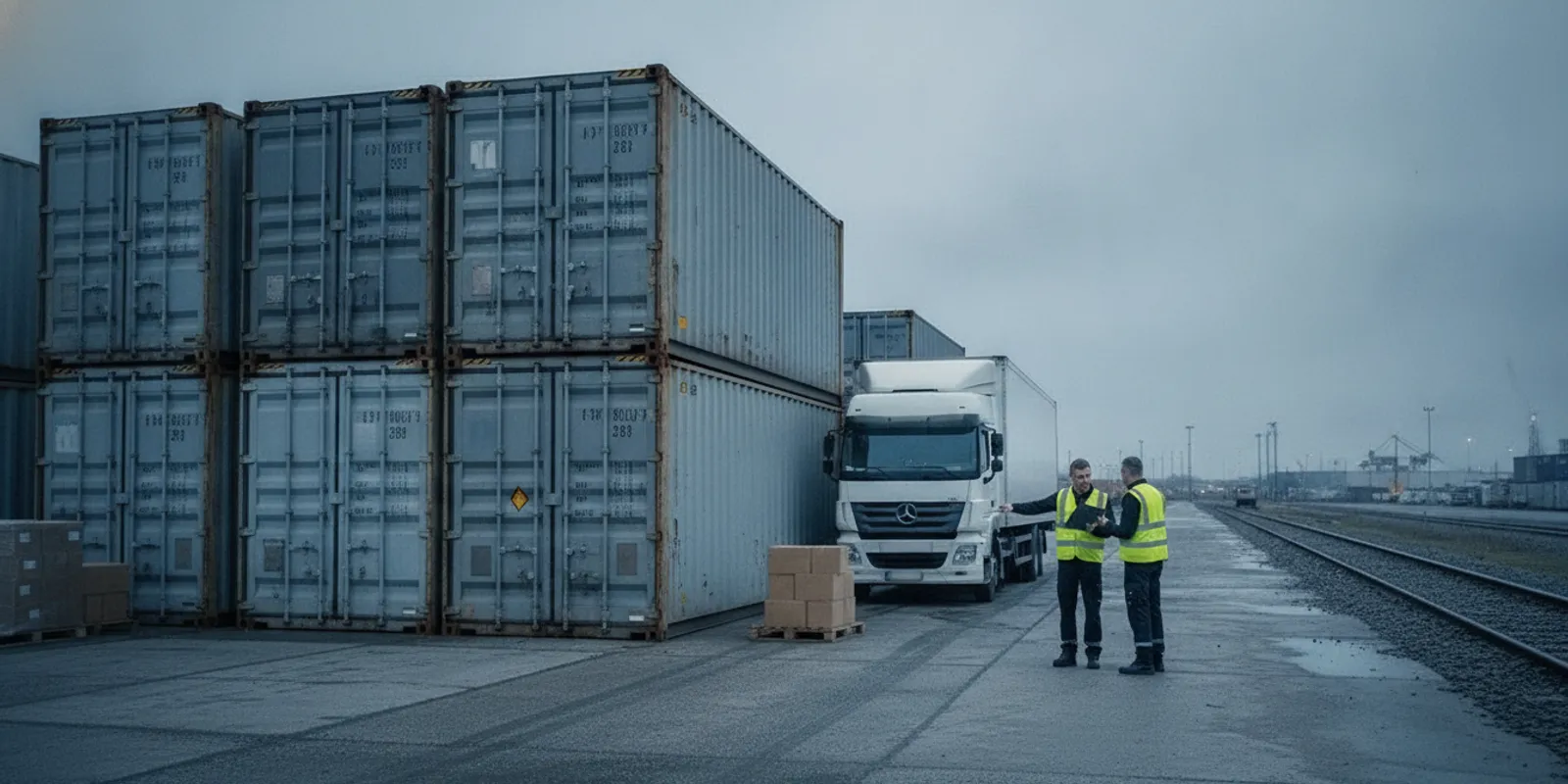
A rail delay can leave a shipment, its delivery appointment, and the next leg of transportation out of sync. Rail transloading may help move freight from one transportation mode or piece of equipment to another, but it is not an automatic fix for every disruption. Use this checklist to assess the load, confirm what the transfer must accomplish, and coordinate the next step before freight moves.
What should you confirm before arranging rail transloading?
Start by defining the problem. A late rail arrival, a damaged load, an unavailable destination, and a missed delivery appointment may all require different responses. Write down what has happened, what remains uncertain, and what deadline matters most. This keeps the conversation focused on the decision at hand rather than on assumptions about what a terminal, carrier, or receiver can do.
For a rail-specific freight problem, distinguish freight-side assistance from repair to rail equipment or infrastructure. Rail remediation services address freight-side coordination and remediation needs; they should not be confused with track, locomotive, or railcar mechanical repair. If the likely next step is moving cargo between modes, review the company’s transloading service information as well.
- Identify the shipment: Record the bill of lading or other shipment reference, commodity, piece count, and the railcar or container identifier available to you.
- Locate the freight: Confirm the last known location, who has custody, and which party can authorize access or movement.
- State the deadline: Note the delivery appointment, customer commitment, expiration of a receiving window, or other time-sensitive constraint.
- Describe the disruption: Separate confirmed facts from estimates. Note whether the rail movement has stopped, been redirected, or simply fallen behind schedule.
Research has examined how rail accidents can disrupt freight flows, underscoring why a team should identify which shipments and downstream moves are affected rather than treating a rail interruption as an isolated schedule change. Read the study on freight-flow disruption risks.
Step 1: Check cargo condition and handling needs
Before choosing a transfer, establish whether the freight is safe and suitable to handle. Ask the person with access to inspect the shipment, where possible, and request clear photos of the cargo, packaging, load position, and any visible damage. Do not infer that goods are undamaged simply because an outer container looks intact.
- Are cases, pallets, or other units visibly broken, leaning, shifted, or exposed?
- Does the load appear stable enough to move, or is freight re-work needed before transfer?
- Are there special handling, temperature, segregation, or equipment needs that the receiving operation must know?
- Is the piece count consistent with the shipment records, or should the discrepancy be documented before release?
- Who can confirm the cargo condition and approve a proposed handling method?
Keep observations factual. Record what was seen, when it was seen, and who supplied the information. If the load needs inspection or rework, allow that work to be coordinated before assuming it can go directly to another vehicle. A freight inspection process overview can help teams think through the information to collect before remediation.
Step 2: Decide what the transfer must accomplish
Rail transloading can be considered when the freight needs to move from rail equipment or a container to another mode, vehicle, or handling arrangement. First define the desired outcome. Is the goal to continue toward the original receiver, redirect the shipment, separate freight for different destinations, or move cargo to a temporary holding point while a delivery plan is confirmed?
Do not treat transloading, cross-docking, and warehousing as interchangeable terms. Transloading is a transfer between transportation modes or equipment. Cross-docking focuses on transferring freight through a facility with little or no storage. Short-term warehousing involves temporary storage. The right arrangement depends on the shipment, timing, cargo handling needs, and confirmed service availability. This emergency cross-docking guide explains a related transfer option, while questions to ask when evaluating a transload facility can help with site-fit considerations.
| Option to consider | Possible fit | Confirm before proceeding |
|---|---|---|
| Rail transloading | Freight needs a coordinated transfer from rail or container equipment to another mode or vehicle. | Access, cargo and equipment fit, handling plan, timing, custody, and onward transportation. |
| Cross-docking | Freight needs a rapid transfer through a facility, with minimal or no storage planned. | Inbound and outbound timing, dock and labor availability, piece count, and delivery plan. |
| Temporary storage | The next move or receiving window is not yet ready and a holding arrangement may be needed. | Storage duration, cargo requirements, access, responsibility, and release instructions. |
| Freight re-work | The load needs attention, such as restacking or repositioning, before it can continue. | Condition, scope of work, authorization, and how the freight will be checked afterward. |
This comparison is a planning aid, not confirmation that a particular facility or service is available. WeFixFreight coordinates urgent freight support through a nationwide network of more than 150 service agents. A proposed option still needs to be checked against the location, freight, timing, and service requirements for the specific shipment.
For example, imagine a rail shipment that is behind schedule and has missed its original receiving window. If the cargo is intact but the receiver cannot accept it until the next day, an immediate transfer to another truck may only move the problem to a new location. The team should first confirm whether the receiver can provide a new appointment, whether an interim holding plan is permitted, and who will authorize any additional handling. If the freight is unstable, the priority changes: assess the load and determine whether re-work must happen before onward transportation. The transfer choice follows the verified condition and delivery plan, not simply the fact that a rail delay occurred.
Step 3: Verify access, equipment, and timing
A workable transfer depends on more than finding a location on a map. Confirm the practical handoffs before committing to a plan. The party arranging the move should establish who can authorize access, who controls the freight at each stage, and what information the receiving party needs to accept the load.
- Access and release: Who controls the railcar, container, terminal, or facility? What release, appointment, or other approval is required?
- Equipment: What equipment will hold the freight before and after the transfer? Does the cargo require specific loading or unloading capabilities?
- Labor and handling: Is on-site labor needed? Are there instructions for pallets, packaging, load sequence, or special handling?
- Schedule: Confirm the expected arrival, transfer window, receiving hours, and departure plan. Ask which times are confirmed and which are estimates.
- Next leg: Identify the carrier or party responsible for onward movement, the destination, and the person receiving status updates.
For a broader look at where service is coordinated, consult the freight rework and re-delivery coverage information. Coverage is only one part of the decision: the exact service, cargo needs, and timing still require confirmation for the shipment in question.
It helps to map the move as a series of handoffs. Write down who releases the railcar or container, who arranges the transfer, who receives the freight at the next location, and who books the onward carrier. Then confirm what event marks completion at each stage: a release confirmation, a checked piece count, a signed receipt, or a departure update. This makes gaps visible before the shipment is in motion. If one party cannot confirm its role or the receiving window, pause to clarify the sequence rather than assuming another participant will fill in the missing step.
Step 4: Get approvals and document each handoff
Before freight is unloaded, repositioned, reworked, or redirected, clarify who has authority to approve the action. Depending on the shipment, that may involve the shipper, broker, carrier, consignee, or another responsible party. Identify one person to communicate the current plan and keep the relevant parties aligned.
At minimum, document:
- Shipment reference, identifiers, commodity, and available piece counts.
- Current location and the party with custody or access authority.
- Photos and written notes about visible cargo condition before handling.
- The requested scope of work and the party approving it.
- Planned origin and destination of the transfer, plus expected handoff times.
- Names or roles of the parties responsible for pickup, transfer, and onward movement.
- Any exception, count difference, damage observation, or change to the plan.
Ask for an update when a handoff is complete, not only when the entire shipment reaches its destination. If the plan changes, capture who approved the change and notify the next party before freight is moved under outdated instructions. When rail service interruption also affects a delivery appointment, consider whether re-delivery support belongs in the recovery plan.
A simple shared status note can prevent conflicting instructions. Include the time of the latest update, the person providing it, what has been completed, what remains open, and the next decision deadline. For instance, “freight located; receiving appointment not yet confirmed; consignee contact is checking availability by 2 p.m.” is more actionable than “transfer pending.” Update the note when a release is approved or an appointment changes. If different parties keep their own records, send the same concise update to each decision-maker so the driver, facility, and receiver are not working from different versions.
Step 5: Coordinate the sequence and the fallback
Make the response plan in sequence: locate and assess the freight, confirm permissions, choose the transfer or remediation option, align equipment and labor, and confirm the onward move. Assign an owner to each action and agree on when the next status check will happen. That reduces the risk of one party expecting a pickup while another is still waiting for release approval.
Also agree on a fallback. If the first transfer window is missed, if cargo condition changes, or if the receiving party cannot accept the load, who makes the next decision? Possible alternatives may include a different delivery arrangement, re-work before transfer, or temporary storage, but each must be confirmed for the actual shipment. Avoid promising a specific result until availability, scope, and authorization have been checked.
When requesting support, share the facts in one concise briefing: where the freight is, what happened, what it contains, its condition, the time constraint, who can approve handling, and the outcome you need. Include photos and shipment identifiers if available. WeFixFreight provides 24/7 emergency freight response and coordinates through its nationwide service-agent network, but each proposed service and timing must be matched to the circumstances of the job.
What mistakes can delay a rail transfer?
- Assuming the freight is ready to move. A load that is unstable or damaged may need assessment and freight re-work first.
- Using an unconfirmed appointment or release. A plan is not complete until the parties controlling access and receiving the freight confirm their roles.
- Leaving the next leg undefined. A successful transfer does not solve the disruption if no one is responsible for onward transportation.
- Sharing only a general description. Shipment identifiers, photos, piece counts, and specific deadlines help others assess the request.
- Confusing a service category with a confirmed solution. Transloading, cross-docking, storage, and re-work each require confirmation of fit and availability.
One more preventable problem is changing the destination or handling instructions without reaching every party who needs to act on the update. A changed plan should be recorded with the approving party and sent to the people managing release, pickup, receiving, and the next transportation leg. Check that each person has the same current version before the freight is handled. This last confirmation is especially useful when timing is tight and several organizations are coordinating by phone or email.
Frequently asked questions
When should a team consider rail transloading?
Consider it when the shipment needs to move from rail or container equipment to another mode or vehicle and the transfer can support the delivery plan. First confirm cargo condition, access, approvals, equipment fit, timing, and onward transportation.
Is rail transloading the same as cross-docking?
No. Transloading describes transferring freight between transportation modes or equipment. Cross-docking is a facility-based transfer designed to move freight through with little or no storage. A disruption may call for one, the other, or a different arrangement, depending on the shipment and confirmed availability.
What information should I have ready when I request help?
Have the shipment reference, freight location, commodity and piece count, railcar or container identifier if available, photos, cargo condition, deadline, access or release contact, and requested outcome. State which details are confirmed and which still need verification.
Does a transfer plan automatically resolve cargo damage or delivery problems?
No. A transfer addresses movement, but damaged or unstable freight may need assessment or freight re-work, and a missed delivery may require a separate delivery plan. Confirm the scope and approvals for each part of the response.
Contact us to coordinate a rail transloading response
If a rail disruption has left freight waiting on an urgent next step, share the shipment details, cargo condition, location, and time constraint so the response can be assessed. Review rail remediation support or contact the team to discuss the service needs for your shipment.
A clear assessment and confirmed handoffs help freight teams choose a practical next move without losing sight of the cargo, timing, and delivery commitment.