
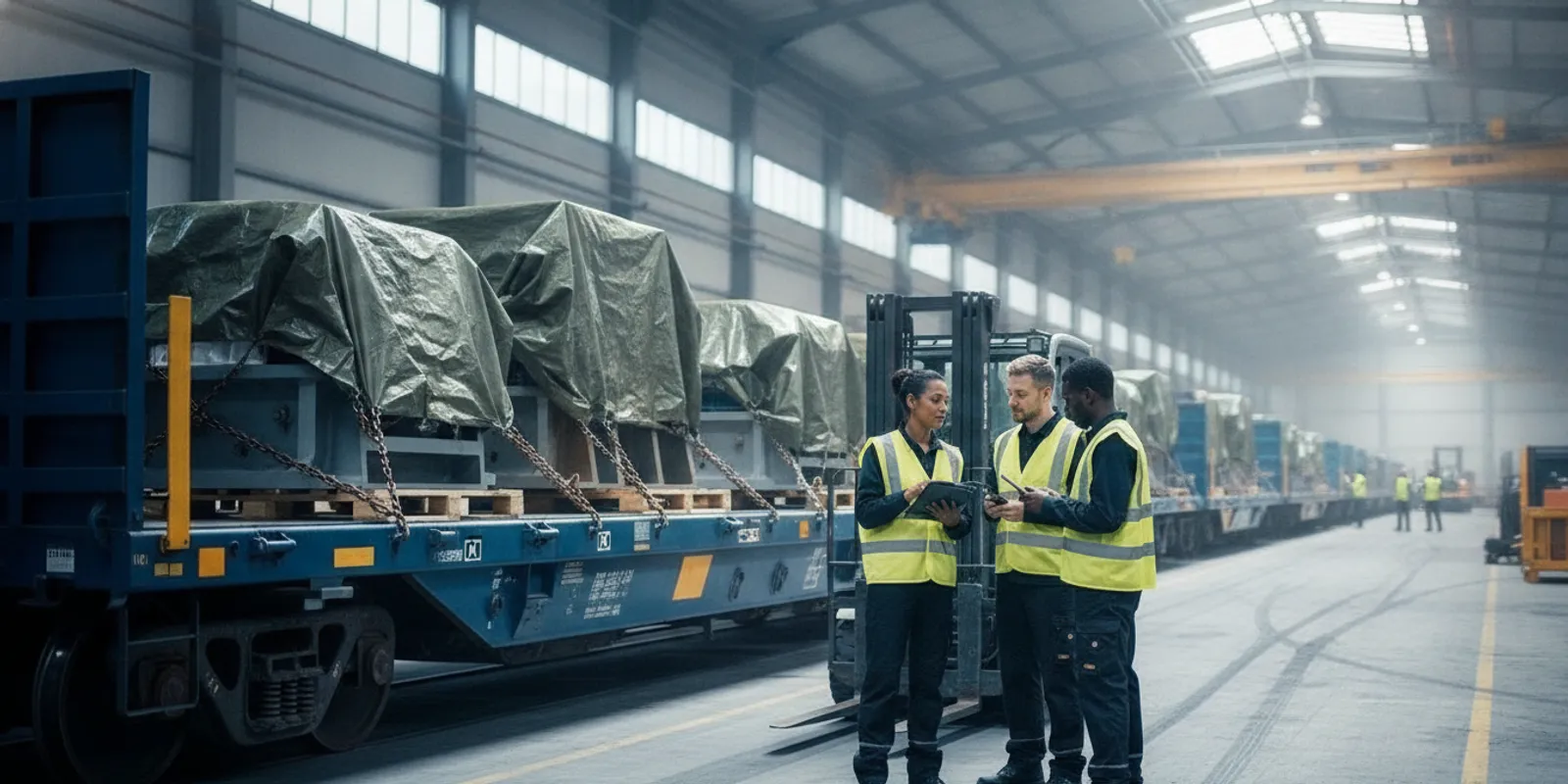
When searching for railcar repair companies, first identify whether the problem is with the railcar, the freight, or both. A mechanical issue with the car calls for qualified rail equipment repair; damaged, shifted, or stranded cargo may need freight-side rail remediation and transfer coordination. Knowing the difference helps your team route the incident without delaying the next decision.
What does a railcar repair company handle?
A railcar repair company focuses on the rail equipment itself. Depending on its qualifications and the job, that can mean inspecting, maintaining, or repairing a railcar’s mechanical components and structure. Examples may include wheel and running-gear concerns, brakes, couplers, or damage to the car body. The exact work and authority depend on the provider, equipment, location, and applicable railroad or regulatory requirements, so confirm scope directly rather than assuming every provider handles every repair.
These providers work on the asset that carries freight. Their immediate questions are likely to include which railcar is involved, where it is located, what equipment issue was observed, whether the car can safely move, and who controls access or repair authorization. If the car is unsafe or not permitted to move, cargo plans must account for that restriction.
Mechanical repair is not the same as unloading, inspecting, repalletizing, or transferring cargo. Those freight-side tasks require a separate plan and appropriate labor or facilities. One real-world example of the distinction is an EPA facility profile that describes a railcar service facility handling mechanical repairs and maintenance of freight cars, including steel fabrication, welding, and cutting. That describes the facility’s work, not a universal list of services provided by every railcar repair company.
What is freight-side rail remediation?
Freight-side rail remediation addresses the shipment and the steps needed to recover it when a rail incident disrupts normal movement. The railcar may be mechanically sound, but cargo can be shifted, damaged, inaccessible, or delayed. Or a mechanical problem can leave freight stranded and force a transfer plan. The remediation question is: what needs to happen to the freight so the shipment can move safely and the delivery plan can continue?
Depending on the situation, the freight response may involve cargo assessment, on-site labor, freight re-work, pallet services, transloading, cross-docking, short-term warehousing, or coordination with other parties. Not every incident needs all of these. The right approach depends on the condition and packaging of the goods, equipment access, destination requirements, time constraints, and approvals from the responsible parties.
We Fix Freight provides rail remediation services for freight-side and intermodal challenges. This is not a claim to provide mechanical railcar repair. When the problem is with the railcar itself, involve the appropriate rail equipment repair resource and coordinate freight work around its instructions.
How can you tell which kind of help you need?
Start by separating the equipment condition from the freight condition. A car with a reported mechanical defect, damage, or movement restriction points toward the railcar owner, railroad, or qualified repair resource for direction. Freight that is leaning, shifted, exposed, damaged, or needs to be transferred points toward a freight handling and remediation plan. In a mixed incident, both tracks may be needed, with one party coordinating the sequence.
| Situation | Likely lead | Key first question |
|---|---|---|
| Reported defect or damage to railcar equipment | Railroad, railcar owner, or qualified mechanical repair provider | What inspection, authorization, or movement restriction applies? |
| Cargo is shifted, damaged, or needs repacking | Freight-side remediation provider and shipment decision-makers | Can the freight be safely accessed, inspected, and reworked here? |
| Car cannot move and cargo must be recovered | Joint coordination between equipment and freight-side teams | When and how can the cargo be accessed or transferred? |
| Freight must move to another mode or trailer | Transloading or cross-dock coordination, subject to site and cargo needs | What equipment, labor, destination, and timing are available? |
This table is a triage aid, not a substitute for safety instructions, railroad rules, or a qualified inspection. Do not assume a car is safe to enter, load, unload, or move because the freight looks accessible. Follow directions from the responsible railroad or equipment authority and use appropriately qualified personnel.
Consider a car reported with a damaged component while its load appears undisturbed. The first priority is to find out whether the railroad or car owner has restricted movement and who can inspect or release the equipment. Freight handling may not be necessary if the car can be repaired and continue with its load intact. In contrast, a mechanically sound car with cargo shifted inside may need a cargo assessment and rework plan, not a mechanical repair call. If both conditions are present, do not let the cargo schedule override equipment access instructions; set an order of operations with the responsible parties.
What should you do first when a rail shipment is disrupted?
- Confirm the location and control point. Record the terminal, siding, yard, or other known location, plus the railcar identification and shipment reference. Establish who controls access and who can authorize work.
- Describe the observed issue, not a guess. Separate what is known about the car from what is known about the cargo. For example, report a movement restriction as reported, and describe visible freight shift or damage without diagnosing a mechanical failure.
- Ask about safety and access before dispatching labor. Confirm whether the car may be approached or opened, whether the freight can be accessed, and what site rules apply. If there is an unknown hazard or restricted area, wait for direction from the responsible authority.
- Identify the shipment outcome. Decide whether the priority is to restore the railcar, recover the freight, transfer it to another mode, rework the load, protect it temporarily, or combine steps. The shipper, broker, carrier, railroad, and receiver may each need to approve parts of the plan.
- Coordinate providers around the sequence. A mechanical repair resource may need to inspect or release a car before cargo work can start. In other cases, freight transfer may be possible only at a designated location with suitable handling equipment. Avoid booking a freight operation until access, authority, and scope are clear.
- Document the condition and decisions. Keep time-stamped notes, photographs when permitted, shipment details, instructions, approvals, and the names or roles of decision-makers. Follow customer and site procedures for claims and evidence.
A structured freight inspection process can help teams describe cargo condition before choosing a rework or transfer option. If the decision is to move freight between transportation modes, review the available transloading service approach and confirm that the site, equipment, and cargo requirements fit the job.
When does a freight transfer or rework make sense?
Freight-side work is worth considering when the cargo condition or the disruption prevents the shipment from continuing as planned. A load may need to be repositioned, restacked, inspected, or transferred to a different vehicle. If cargo is intact but needs a direct transfer between inbound and outbound equipment, a cross-docking option may fit, subject to facility capability, handling requirements, timing, and authorization. Cross-docking is not a substitute for mechanical repair of a railcar.
Other situations call for a different service. Freight re-work can address handling or packaging needs. Short-term warehousing may be relevant when cargo cannot move immediately and temporary storage is suitable. Product disposal is a separate decision and should follow the cargo owner’s instructions and any applicable requirements. Avoid treating a damaged or delayed shipment as automatically fit for transfer, storage, or disposal; confirm its condition and the decision-maker’s direction.
Rail terminals and other freight nodes also have operational constraints. Research on rail terminal performance identifies inspection and repair as elements of terminal efficiency and network capacity. In a disruption, this is one reason to coordinate the freight plan with the equipment and terminal teams rather than treating cargo handling as an isolated task.
Before selecting a transfer, check the practical handoffs. Where will the freight be unloaded, and is that location approved for the work? What equipment is needed to handle the commodity and its packaging? Is there a suitable truck, trailer, or onward rail movement available after the transfer? Who will accept the freight at the next point, and what condition or paperwork will they require? These questions can expose a plan that sounds workable in principle but lacks a facility, authorization, or receiving party. Resolve those gaps before mobilizing labor, especially when multiple carriers or terminals are involved.
How should you choose a provider?
Do not choose by a broad label alone. Ask prospective providers to state exactly what work they perform and what they do not. For mechanical work, verify that the provider is qualified for the specific equipment and authorized to work at the relevant location. For freight-side response, confirm experience with the cargo handling task, available labor and equipment, geographic reach, response coordination, and the ability to work within site rules.
- Scope: Is the need mechanical inspection or repair, cargo assessment, rework, transfer, storage, or multiple services?
- Authority: Who can authorize access, movement, repairs, and cargo decisions?
- Location: Can the provider serve the actual terminal or site, and what access arrangements are required?
- Handling needs: Does the freight require special equipment, controlled conditions, or specific packaging procedures?
- Coordination: Who will communicate updates and align the repair, freight, and onward transportation steps?
- Commercial terms: Request scope and pricing details before work begins, and clarify what could change if the condition differs from the initial report.
It helps to request a simple division of responsibilities before approving the response. For example, identify who obtains railroad access, who confirms the repair status, who makes the cargo disposition decision, and who arranges onward transportation. Ask how updates will be shared if inspection changes the expected scope. A provider should be able to explain its own role and identify decisions that belong to the shipper, carrier, railroad, receiver, or another authority. This avoids treating a single dispatch call as approval for every part of the operation.
For emergency freight issues, a coordinated network can help locate an appropriate response without requiring the shipper to build a provider list from scratch. We Fix Freight describes its model as a nationwide network of more than 150 service agents, with 24/7 availability. Learn more about its 24/7 rail freight assistance and its broader freight service coverage. Availability and the right service depend on the specific location and job details, which should be confirmed when requesting help.
What information helps coordinate a rail response?
Prepare a concise incident brief before calling. It does not need to answer every technical question. It should give responders enough context to route the request and identify what remains unknown.
- Current location, railcar number if available, and shipment or container identifiers.
- Commodity description and any handling constraints or declared hazards.
- What happened, when it was noticed, and what is confirmed versus unverified.
- Observed equipment condition and reported movement or access restrictions.
- Observed freight condition, including load shift, damage, packaging, and accessibility.
- Photos or inspection notes, when permitted by site rules.
- Contact details and decision-making roles for the shipper, broker, carrier, receiver, railroad, and site.
- Desired next step, delivery deadline, and any approved alternative destination or transfer plan.
Share only information needed to coordinate the response, and follow customer, facility, and safety policies. A provider can then clarify what it can handle, what other parties must be involved, and what approvals are needed before dispatch or work starts.
Frequently Asked Questions
Do railcar repair companies repair damaged freight?
Not necessarily. Railcar repair companies focus on rail equipment, while damaged freight may require cargo inspection, freight re-work, transfer, or another freight-side service. Ask each provider to confirm its scope.
Can freight remediation fix a defective railcar?
Freight remediation addresses the shipment, not mechanical railcar defects. If equipment is damaged or restricted from moving, contact the railroad, railcar owner, or an appropriately qualified mechanical repair resource. Coordinate cargo recovery with that party’s safety and access instructions.
What if both the railcar and the cargo are affected?
Coordinate both workstreams. The equipment authority should direct inspection, repair, and movement decisions, while the freight-side team can plan cargo assessment or transfer once access and authorization are established.
Does every stranded rail shipment need transloading?
No. The shipment may be able to continue after an equipment issue is resolved, or another solution may fit better. Transloading is one possible freight transfer option when the cargo, site, equipment, approvals, and onward route support it.
Contact us to coordinate a rail freight response
If the disruption involves cargo that needs assessment, rework, or transfer, share the shipment location and known condition so the right freight-side next step can be discussed. We Fix Freight is available around the clock for urgent freight coordination.
Start with the facts you can confirm, keep equipment and cargo responsibilities distinct, and coordinate the two whenever a rail incident affects both.