
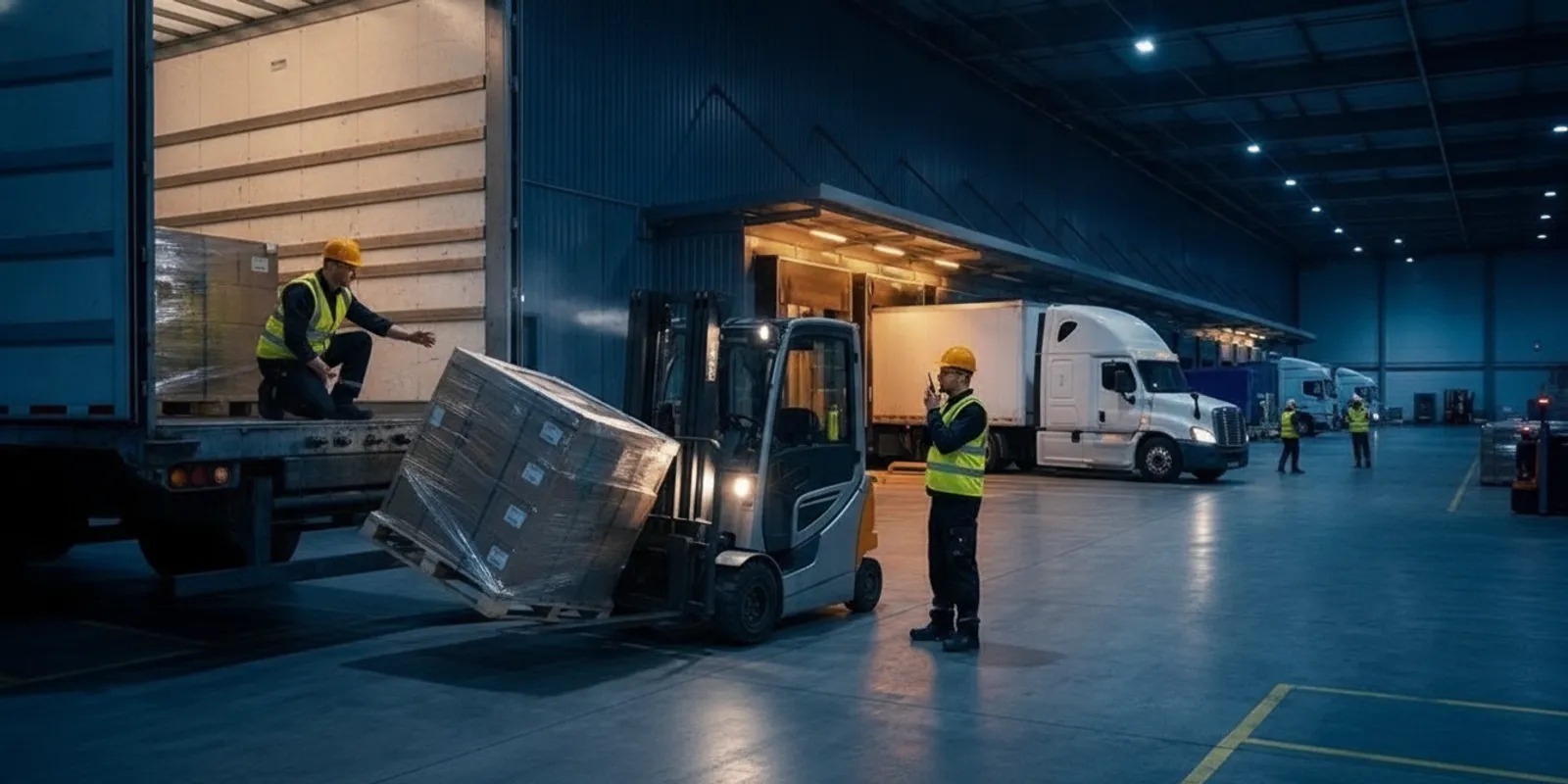
When you find shifted pallets in a load, the immediate goal is to prevent an unsafe move, establish what has changed, and coordinate the next step with the people responsible for the shipment. A carrier, broker, shipper, or 3PL can use this action plan to organize a response without guessing whether the freight can continue as-is.
Contact us now to coordinate a response
What should you do first when pallets shift in a load?
Pause the planned move and get the right people aligned. Do not ask a driver or warehouse worker to push, pull, climb on, or unload an unstable load without an appropriate plan and qualified help. The exact response depends on the cargo, trailer, location, equipment, and how much the load has moved.
Start with a short incident update. Share the known facts with the carrier, broker, shipper, receiver, and any facility contact who needs to approve work. If the truck is in a location where it cannot safely remain, the carrier should follow its safety procedures and coordinate with the appropriate site or roadside contacts. Avoid making assumptions about whether the load is safe to travel based on one photograph.
- Pause and secure the decision process. Tell the responsible operations contacts that the load has shifted. Confirm the driver’s current location and whether the vehicle is parked in a suitable place for assessment.
- Identify immediate hazards. Note any leaning stacks, broken pallets, damaged packaging, loose product, blocked access, or signs that the freight could move further. Keep people clear of a potential fall zone.
- Establish who can authorize the next move. Clarify who represents the cargo owner, who controls the equipment, and who can approve rework, transfer, return, or delivery changes.
- Set a communication owner. Choose one person to collect updates and share decisions so the driver, facility, and shipment team are not working from conflicting instructions.
Federal cargo securement rules address preventing cargo from shifting during transportation. The applicable requirements depend on the circumstances and cargo, so do not treat a general article as a substitute for reviewing the rules and your operating procedures. See 49 CFR Part 393, Subpart I for the federal cargo securement requirements.
What information helps the team choose a recovery plan?
Collect enough detail to describe the problem and make a practical plan. You do not need to resolve every unknown before asking for help, but missing basics can lead to delays, repeat calls, or a crew arriving without the right equipment.
- Location: Give the address, facility name, dock or yard instructions, and a reliable site contact. If the truck is en route, identify a safe, approved place where the response can take place.
- Shipment and equipment: Share the shipment reference, trailer or container type, approximate number of pallets, and whether the load is at a dock, yard, roadside location, or rail facility.
- What shifted: Describe which pallets moved, where they are in the load, whether anything fell, and whether product or packaging appears damaged. Use observations rather than conclusions.
- Access and handling needs: Explain what equipment is available, whether a dock or forklift can be used, and whether the site has restrictions on personnel, hours, or vehicle access.
- Time and delivery constraints: State the next appointment, receiving window, driver hours or dispatch constraints known to the team, and whether the delivery has been refused or placed on hold.
- Approvals and instructions: Identify who can authorize freight handling, a transfer, a new destination, or a change to the delivery plan. Record the decision and the person who gave it.
Photos can help communicate the condition, but they should be taken only when it is safe and permitted. A wide view can show the trailer and overall load; closer views may show the shifted area, pallet condition, and any fallen product. Avoid entering a hazardous area to get a better image. Share the images through the approved channel and label them with the shipment reference and time.
It helps to send an organized first update rather than a series of incomplete messages. For example: “Trailer at [facility and dock], shipment [reference], two pallets leaning near the rear, no product reported on the ground, receiver appointment at [time], site contact [name]. We are holding movement pending assessment and approval.” Replace each bracket with confirmed details, and clearly mark anything that is not yet known. This gives dispatch and the cargo decision maker a usable snapshot without presenting an assumption as a verified fact.
When the needed work may involve pallet restacking or other freight re-work, review the available freight re-work service information and explain the observed issue when requesting assistance. For a load that needs labor at its location, the on-site labor service page can help clarify that type of request.
Which recovery option fits a shifted pallet load?
The best option is the one that addresses the condition, fits the location, and is approved by the responsible shipment parties. The table is a starting point for organizing the decision, not a substitute for a site assessment or the customer’s handling requirements.
| Situation | Possible response | What to confirm first |
|---|---|---|
| Pallets have moved, but the load can be accessed safely at a suitable facility | Freight re-work, such as a controlled restack or pallet services | Work scope, access, labor and equipment needs, cargo-owner approval, and whether damaged materials need replacement |
| The shipment must move to a different vehicle or transfer point | Cross-docking or transloading | Receiving location, transfer equipment, handling instructions, shipment documents, and the next transportation plan |
| The load cannot be delivered as scheduled or the receiver will not accept it | Re-delivery coordination or an alternate delivery plan | Receiver requirements, revised appointment, authorization, and where the freight can wait safely |
| The freight is at a rail or intermodal location | Rail remediation or a coordinated freight transfer | Facility rules, access permissions, equipment availability, and the party authorized to release the shipment |
| Freight needs temporary holding while decisions are made | Short-term warehousing, if appropriate and available | Storage conditions, timing, handling instructions, and the approved next destination |
Use the table to narrow the question, not to select a response by label alone. A load that appears to need a restack may also require an inspection of packaging or a new delivery appointment. A transfer may solve an access problem, but only if the receiving site can accept the freight and the shipment documents and handling instructions support the move. If timing is tight, ask each party to state what it must approve before the next step can begin.
A restack is not automatically the right answer. If the freight cannot be accessed safely, if product condition is uncertain, or if a transfer is needed to reach a workable site, the response may require a different sequence. For a broader look at nearby load-shift response considerations, see the guide to finding load-shift help. We Fix Freight also coordinates services such as cross-docking when a freight transfer is part of the recovery plan.
How do you coordinate the response across the shipment team?
Use a simple sequence and keep decisions visible. A shift in the load can affect several parties at once: the driver needs clear instructions, the carrier manages equipment and dispatch, the broker coordinates the customer relationship, and the shipper or receiver may control handling or delivery approval.
- Confirm the current status. Ask whether the vehicle is stationary, whether the freight is still contained, and whether a facility has accepted the load for inspection or work. Keep the team updated if the location changes.
- Agree on the decision maker. Record who can approve handling and who can approve changes to destination or delivery. When instructions conflict, pause the action and resolve the discrepancy before work begins.
- Describe the requested result. State whether the priority is to restore a stable load, move freight to another trailer, hold the shipment temporarily, or arrange a new delivery attempt. Do not request a vague “fix” without explaining the operational objective.
- Coordinate arrival and access. Confirm the facility address, gate or dock process, hours, contact person, vehicle access, and any equipment or labor constraints before dispatch.
- Share completion details. Ask for an update when work is complete, including the outcome, any remaining limitations, and whether the freight is ready for the next move. Relay that information to the people approving dispatch and delivery.
For a shipment that cannot proceed directly to its intended receiver, make sure the next move is agreed before the driver departs. Confirm the destination, appointment, paperwork, and who will receive status updates. It can help to separate the decision into three questions. Is the current location suitable for assessment or work? Can the requested work be completed there with available labor and equipment, or does the freight need to move to another site? What approvals and records are needed before the carrier resumes transportation? Answering these in order helps prevent scheduling a transfer before confirming its destination or starting work before the cargo owner has authorized it.
Keep a short written timeline as the situation changes. Record when the shift was reported, where the truck was, who was notified, what instructions were given, and when a new plan was approved. Include the exact time zone when stakeholders work across regions. For example, an entry such as “10:20 a.m. Central, receiver placed delivery on hold; broker notified; awaiting cargo-owner direction” is more useful than “receiver called.” This supports handoffs between dispatch shifts and helps prevent the driver from receiving outdated directions. If new damage or an obstacle appears, update the decision makers and reassess the plan. If delivery is rejected, the re-delivery service information may be relevant to planning the next attempt.
Before confirming a dispatch, match the requested work to the site conditions. Check that the facility knows what is arriving, that access instructions have reached the driver, and that the necessary approval is documented. If any of those details remain open, say so plainly and assign someone to resolve them. This reduces avoidable waiting caused by a missed gate instruction, an unavailable dock, or uncertainty about who can release the freight.
We Fix Freight describes its network as serving customers nationwide through more than 150 service agents and offering 24/7 availability. For a time-sensitive exception, share the full location and shipment details when contacting the team. You can also check the freight re-work and re-delivery coverage information and the company’s freight services overview to identify the type of support that may fit.
How can freight teams reduce repeat pallet shifts?
Prevention starts with noticing patterns and making the handoff clearer. A single shift may have several contributing factors, and a photo taken after arrival may not reveal when or why it happened. Use the information available to identify practical follow-up actions without assigning blame before the facts are known.
- Record where the shifted pallets were positioned and whether nearby freight also moved.
- Share recurring pallet, packaging, or loading concerns with the shipper and loading facility.
- Review loading and cargo-securement procedures with the people responsible for the shipment and equipment.
- Make sure the carrier and receiver know whom to contact when the load condition changes in transit.
- Use clear dispatch notes for approved stops, facility access, handling limits, and delivery changes.
When a pattern appears across loads, compare records with the people who can address each part of the process. A recurring issue near the same position in a trailer may warrant a review of loading practices; repeated packaging damage may call for a conversation with the shipper; recurring confusion after a shift may point to a gap in notification or approval steps. These are prompts for investigation, not proof of a single cause. Keep the follow-up specific: identify the observation, the person or team asked to review it, and the action they agree to take.
These steps help the shipment team respond with better information the next time an exception occurs. They do not guarantee that freight will never move, but they can reduce confusion and make responsibility for decisions clearer.
Frequently Asked Questions
Can a driver continue with shifted pallets in a load?
That decision depends on the load condition, equipment, applicable securement requirements, and carrier procedures. Do not assume the load is safe to travel because the vehicle can move. The responsible carrier and shipment parties should establish whether the load needs assessment or corrective work before it continues.
Should the freight be unloaded immediately?
Not necessarily. Unloading or handling a shifted load without a suitable location, equipment, authorization, and plan can create additional risk or damage. First determine whether the site is appropriate and who can approve the work.
What if the receiver refuses the shipment?
Ask the receiver to state the reason and any conditions for acceptance, then notify the carrier, broker, and shipper. Confirm who can approve a re-delivery, transfer, temporary hold, or other destination before dispatching the truck elsewhere.
What should I include when asking for help?
Provide the exact location, shipment reference, equipment type, approximate pallet count, description of what shifted, safe access details, relevant photos, time constraints, and the name of the person authorized to approve work. Mention any special handling instructions known to the team.
Contact us to coordinate shifted freight recovery
Contact us now to discuss the load and next step
Clear details and timely coordination can help your team choose a practical response and move the shipment toward its next approved step.