
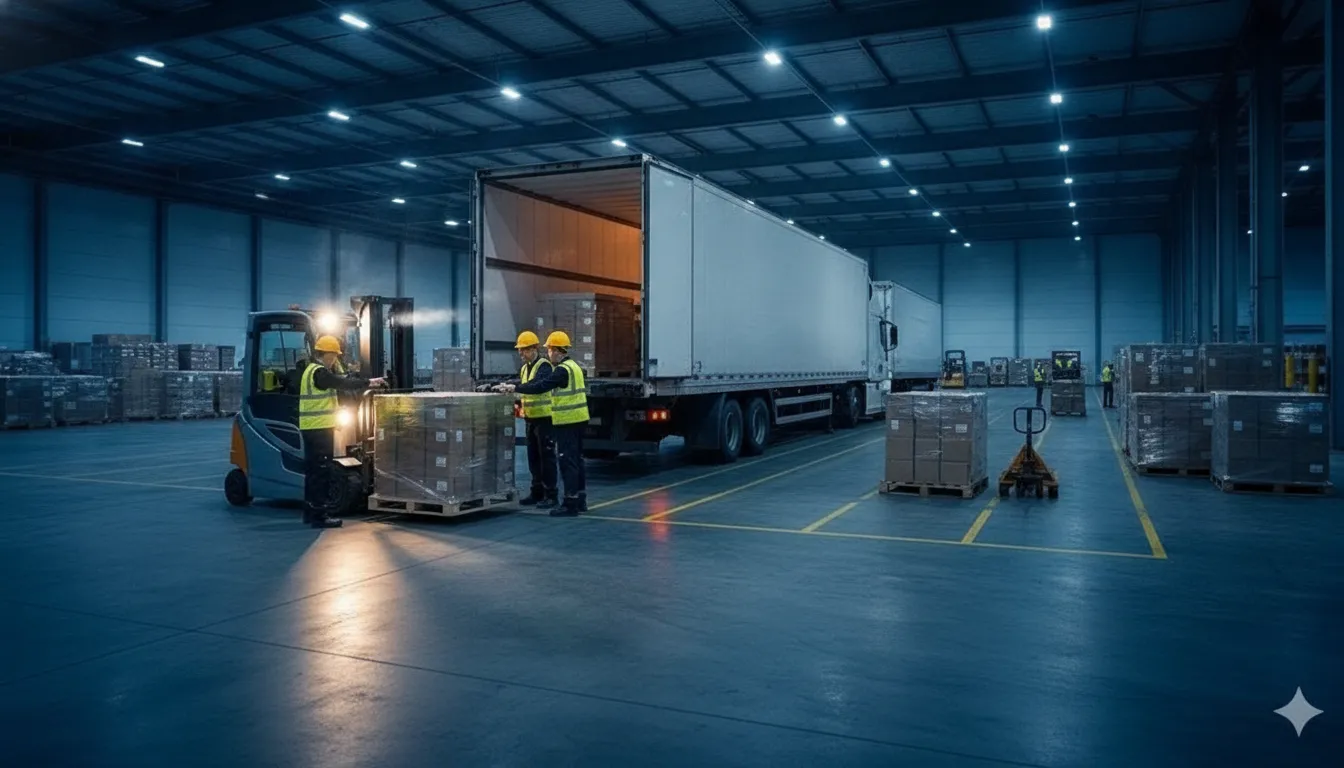
A load that needs more than ordinary unloading can quickly become a coordination problem. Freight may arrive shifted, damaged, rejected, or unable to move forward, leaving brokers, carriers, shippers, and 3PLs to decide what happens next while equipment and delivery commitments remain at risk.
When someone asks what is a lumper, they are usually asking about facility labor that helps load or unload freight. That routine support is not automatically the same as emergency freight recovery. If the shipment needs stabilization, rework, transfer, storage, or a new delivery plan, the right solution depends on the load condition and the next safe move.
The practical question is not only who can unload the trailer. It is whether the freight can continue safely and efficiently, or whether it needs a coordinated recovery path. Start by separating routine dock work from the situations that call for specialized freight re-work, cross-docking, transloading, re-delivery, or other on-site support.
What Is a Lumper When the Load Needs More Than Unloading?
A lumper is generally a third-party worker hired to load or unload freight at a warehouse, distribution center, or similar facility. The facility, carrier, broker, shipper, or receiver may arrange that labor according to the shipment and dock process. In a routine situation, the assignment is straightforward: handle freight within the facility’s normal workflow and prepare it for its next stage.
The operating question changes when the freight itself has a problem. A shifted pallet, fallen product, damaged packaging, rejected delivery, or compromised trailer may require assessment and coordinated recovery rather than ordinary unloading. The label “lumper” does not automatically mean the crew is equipped, authorized, or expected to stabilize freight, repair packaging, document damage, or coordinate the next transportation move.
That is the boundary between routine facility labor and freight recovery. If the load needs corrective handling before it can move, freight rework services may be the more precise fit. If the work must happen at the shipment’s location, on-site freight labor can be coordinated around the condition of the load, facility restrictions, and the next step in transit. In other cases, the practical solution may involve transfer, temporary holding, or another logistics service.
Safety also deserves a clear handoff. OSHA says workers loading and unloading materials should receive instruction in procedures appropriate to the material they handle. And it identifies powered industrial trucks as a key loading and unloading standard. Before dispatching labor, confirm what work is needed, who can authorize it. What equipment and site access are available, and whether the response requires more than a standard dock assignment. That early distinction helps operations teams avoid treating an urgent recovery problem as an ordinary unload.
When Is Routine Lumper Labor Not Enough?
- Check whether the freight is still stable. A routine unloading assignment may be appropriate when the load is intact, accessible, and ready to come off the trailer. Escalate when pallets have shifted, fallen, leaned, or collapsed, or when product has moved into a position that makes ordinary unloading unsafe. The immediate need may be freight rework, such as restacking or re-palletizing, rather than simply removing cartons.
- Separate damage from ordinary handling. Broken pallets, crushed packaging, exposed product, or suspected load damage call for an assessment and a recovery plan. That can include sorting, securing, repackaging, or transferring freight. Routine lumper labor is not automatically equipped or engaged to diagnose and correct a damaged shipment. Use emergency freight rework when the load needs stabilization before it can safely continue.
- Treat unsafe equipment or conditions as a stop signal. Do not improvise around a damaged trailer, unstable dock setup, blocked access, or equipment problem. OSHA notes that damaged suspension-type trailers may not support the weight of a powered industrial truck. And it says workers should receive instruction in safe procedures suited to the materials they handle. Review OSHA’s loading and unloading safety guidance, and defer operational safety decisions to qualified site personnel. This is practical safety context, not legal advice.
- Escalate a rejected or failed delivery. If the receiving location refuses the shipment, the next requirement may be freight re-delivery, temporary holding, or another routing decision. Unloading labor alone does not resolve the commercial or logistical problem created by a rejection.
- Respond differently when time matters. A missed appointment, vehicle issue, or urgent customer deadline may require coordinated on-site freight labor, emergency transfer, or another recovery service. The goal is to identify the right intervention quickly, not to stretch a routine lumper assignment beyond its purpose.
Which Freight Recovery Path Fits the Shipment?
The right recovery path depends on what has happened to the load and what must happen next. A shifted pallet that can be stabilized at its current location needs a different response from a rejected shipment that must move again. Or freight that needs a temporary holding point before its next appointment. Treat the choice as an operational decision, not as a search for a generic unloading crew.
| Recovery path. | Best fit. | Operational objective. | Relevant support. |
|---|---|---|---|
| Freight re-work. | Shifted, fallen, damaged, or unstable freight. | Correct the load, restore packaging or pallet configuration, and prepare it for safe onward movement. | Freight rework services. |
| Cross-docking. | Freight needs to move from an incoming vehicle to an outbound vehicle with little or no storage. | Transfer the shipment quickly when the original equipment or route is no longer workable. | Emergency cross-docking service. |
| Transloading. | Freight must change vehicles or transportation modes. | Move the shipment between equipment or modes while coordinating the next leg. | Nationwide transloading support. |
| Re-delivery. | A delivery was rejected, failed, or needs to be attempted at another time or location. | Coordinate the next delivery movement instead of treating the problem as unloading alone. | Freight re-delivery. |
| Short-term warehousing. | Onward movement is delayed and the shipment needs a temporary holding point. | Protect continuity while the next appointment, vehicle, or receiving instruction is arranged. | Short-term warehousing. |
These paths can also work together. For example, a load may need re-work first, then cross-docking into replacement equipment. A rejected delivery may require temporary warehousing before re-delivery. The useful question is not simply, “What is a lumper?” Ask instead: What condition is the freight in, where is it now, and what is the next viable movement?
When the situation involves damaged or unstable freight, share the location, load condition, photos, pallet or piece count, facility limits, and delivery objective. That information helps match the shipment to the appropriate recovery service and avoids sending routine unloading labor to a problem that requires broader freight remediation.
What Should You Confirm Before Dispatching Help?
A clear intake prevents a routine unloading request from being sent to a crew that needs a different recovery plan. Before dispatch, assemble the facts below and identify the next operational decision, not just the labor task.
- Confirm the exact location. Provide the facility name, street address, dock or gate instructions, and a reliable on-site contact. If the load is at a truck stop, roadside location, customer yard, or alternate facility, say so. The worksite determines access, equipment, staging, and who must authorize entry.
- Describe the load condition. State whether pallets are shifted, leaning, fallen, broken, wet, damaged, or blocking access. Explain whether the trailer can be opened safely and whether anyone has already entered it. Do not ask a crew to improvise around an unstable load without flagging the risk.
- Send photos and counts. Share clear images of the trailer interior, affected pallets, product, packaging, and any visible trailer or dock issue. Include the number of pallets, cases, pieces, or rows involved, plus the total shipment count when known. Photos support a more accurate scope, but they do not replace an on-site safety assessment.
- Identify facility constraints. Confirm dock height, available doors, forklift or pallet-jack access, floor space, receiving hours, security requirements, and any restrictions on equipment or outside labor. Note whether the facility can provide equipment or whether on-site labor and handling resources must be coordinated.
- Verify the appointment. Record the delivery, receiving, inspection, or rework appointment and the latest acceptable arrival time. If the shipment is rejected or the facility has placed it on hold. Document who made that decision and what condition must be met before the load can move.
- Confirm approval and authority. Identify the broker, shipper, carrier, receiver, or claims contact who can approve the proposed scope. Make sure the person requesting help understands whether the need is rework, transfer, re-delivery, or another recovery path.
- Define the next move. State what should happen after the load is made safe or accessible: continue delivery, rework and reload, cross-dock, transload, return, or hold temporarily. A crew can then plan toward the shipment outcome instead of stopping after the immediate obstruction is removed.
- Preserve the documentation. Keep the dispatch request, photos, counts, condition notes, appointment details, approvals, and completion records together. Record changes to scope and who authorized them. This gives every party the same reference when custody, damage, or the next movement is reviewed.
How Does Nationwide Freight Recovery Reduce Downtime?
When a shipment problem occurs far from your usual vendors, the main challenge is often coordination. WeFixFreight uses an asset-light, network-based model to connect customers with more than 150 independent service agents across the United States. That reach gives brokers, shippers, carriers. And 3PLs a practical way to look for help at the shipment’s location instead of trying to move a troubled load to a preferred market first.
Availability also matters when a trailer is delayed overnight, a delivery is rejected after business hours, or a load becomes unstable during a long route. WeFixFreight provides emergency response 24/7/365. This does not mean every job has the same response or completion time. Site access, load condition, facility rules, equipment, approvals, and the next transportation step can all affect the work. The value is having a coordinated channel for evaluating the situation and identifying an appropriate recovery path at any hour.
That path may involve freight re-work, cross-docking, transloading, re-delivery, short-term warehousing, or another documented service. For an overview of the available options, review WeFixFreight’s nationwide freight recovery services. If the immediate need is labor at a specific warehouse, truck stop, distribution point, or other location, on-site freight labor may be the more relevant starting point.
Before dispatch, share the location, shipment condition, photos or counts when available, facility constraints, appointment details, and the intended next move. Clear information helps the network determine whether the priority is to stabilize the freight, transfer it, hold it temporarily, or arrange another delivery step. That focused coordination can reduce avoidable handoffs and help get freight back on the road without treating routine unloading labor as a substitute for emergency recovery.
Lumper Services vs. Freight Rework: A Practical Decision Guide
The practical question is not which label sounds familiar. It is whether the shipment needs routine facility labor or a coordinated response to an exception. A lumper is generally arranged to load or unload freight within a warehouse or distribution workflow. Freight rework addresses a problem with the shipment, such as shifted pallets, damaged packaging, or freight that cannot continue in its present condition.
Use this quick guide when deciding what to request.
- Routine dock handling: If the facility has a defined unloading or loading requirement and the freight is otherwise ready to move, ask the facility about its approved lumper process.
- Freight that is unstable or damaged: If pallets have shifted, fallen, or need corrective handling before movement, request freight rework services rather than assuming routine unloading labor covers the entire job. The scope may need to account for the freight condition and the next transportation step.
- Freight needs a rapid vehicle-to-vehicle transfer: When the shipment must move from an inbound trailer to an outbound vehicle with little or no intermediate storage, review an emergency cross-docking service path.
- Freight must change vehicles or transportation modes: If the recovery plan involves transferring cargo between equipment or modes, nationwide transloading support may be more appropriate than a dock labor request alone.
- The receiver will not accept the shipment: A rejected load may need a documented next move, not simply another unloading attempt. Consider freight re-delivery when the shipment must be redirected to complete delivery.
Before dispatch, confirm the load condition, facility rules, authorized work, and intended next move. That information helps separate a routine labor request from a freight recovery plan and reduces the risk of sending the wrong type of help to the dock.
Frequently Asked Questions
When should I use freight recovery instead of routine lumper labor?
Use routine lumper labor for planned loading or unloading when the shipment and facility are operating normally. Consider freight recovery when pallets have shifted, freight is damaged or rejected, a trailer needs rework, or the load must be transferred quickly to protect delivery plans. The right response may involve rework, cross-docking, transloading, re-delivery, or short-term warehousing rather than unloading alone.
Can a lumper service handle a shifted or damaged load?
It depends on the provider, the facility, the freight condition, and the equipment required. Do not assume that a conventional lumper assignment includes emergency remediation. First document the load condition, identify immediate safety concerns, and confirm whether the available team can safely perform the required work. A specialized freight recovery provider can help coordinate the appropriate path when routine dock labor is not enough.
What information should I provide when requesting help with a freight problem?
Share the shipment location, trailer or container status, appointment or delivery deadline, freight type, pallet count, visible damage, and the specific outcome needed. Photos can help clarify shifted or unstable freight. Also identify whether the load needs rework, a transfer, re-delivery, on-site labor, or temporary storage. Complete information helps the response team assess the situation and route the right service.
What safety issues should be checked before unloading a damaged trailer?
Inspect the trailer, freight stability, dock conditions, and equipment before work begins. OSHA notes that damaged suspension-type trailers may not support the weight of a powered industrial truck. And it says workers should receive instruction in safe procedures appropriate to the material they handle. Review the loading and unloading plan with the responsible facility team before proceeding: OSHA loading and unloading guidance.