
When a shipment cannot wait for a warehouse appointment, every extra touch adds delay, handling risk, and cost. Cross-docking keeps freight moving by coordinating an immediate transfer between inbound and outbound transportation.
Contact us now for emergency cross-docking support.
In simple terms, what is cross docking in freight logistics? It is the practice of unloading goods from an arriving truck or railcar and loading them onto outbound transportation with little or no storage in between, according to TechTarget.
This approach can help brokers, shippers, carriers, and 3PLs reduce dwell time while keeping freight aligned with its next destination. The definition becomes clearer when you look at what happens inside the operation, from scheduling and dock coordination to the final outbound move. For an in-depth look at this exact service, see our guide to cross-docking services.
What Is Cross Docking in Freight Logistics? A Plain-English Definition
What is cross docking in freight logistics? It is the process of unloading goods from an inbound truck or railcar and loading them directly onto outbound equipment with little or no storage in between. Instead of putting freight away for later retrieval, a cross-dock facility acts as a transfer point that keeps shipments moving toward their next destination.
How cross-docking differs from ordinary warehousing
Traditional warehousing holds inventory for days, weeks, or longer. Cross-docking is organized around speed and coordination. Freight may be sorted, staged briefly, inspected, or moved across the dock. The objective is to transfer it to the correct outbound vehicle rather than place it into long-term storage. Industry guidance commonly describes cross-docking as a way to remove the warehousing function, which can accelerate distribution and reduce inventory-holding requirements. TechTarget’s cross-docking definition provides additional background on the model.
In practical terms, the difference is measured in time:
- Cross-docking: Freight typically remains at the facility for hours while teams coordinate the transfer.
- Warehousing: Inventory is stored for days or weeks, then picked and prepared for a later shipment.
That shorter dwell time can help a shipper keep freight on schedule, but it also leaves less room for mistakes. Inbound appointments, dock assignments, pallet identification, and outbound dispatches must line up closely.
What happens to freight at a cross-dock
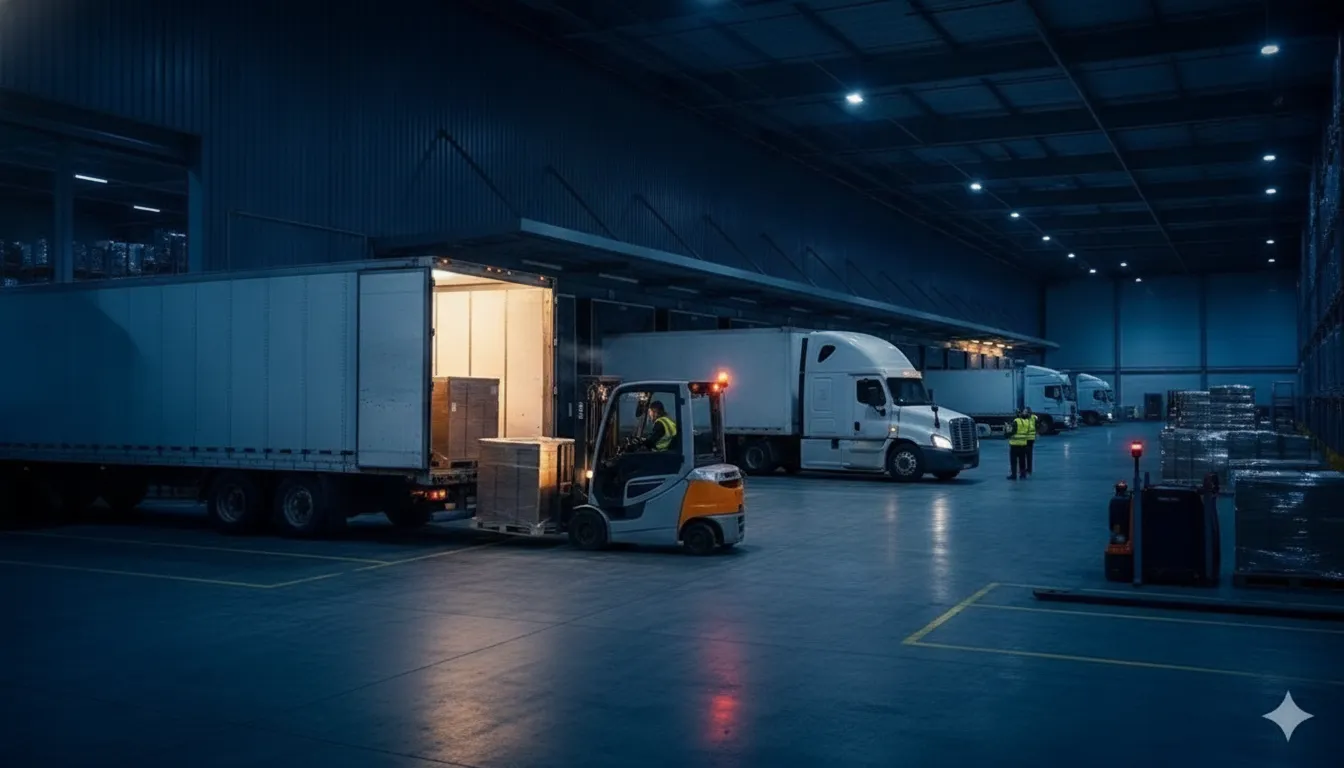
A cross-dock is a strategic node in a distribution network, not simply an empty warehouse. An inbound load may be unloaded, counted, sorted by destination, and consolidated with freight from another arrival. Smaller shipments can be combined into a more complete outbound load, while a large shipment can be separated for regional delivery. The facility may also transfer freight between modes, such as rail to truck, when the shipment requires cross-docking services or related transloading support.
The exact handling depends on the shipment and the service plan. Some freight moves from one dock door to another with minimal handling. Other loads need pallet repositioning, sorting, rework, or a controlled transfer because the original load is damaged or cannot continue safely. In every case, the goal is to preserve shipment accuracy while limiting unnecessary touches.
Why the definition matters during a freight disruption
For brokers and shippers, cross-docking can be a practical recovery option when freight needs to keep moving but the original transportation plan has broken down. A shipment may need a new trailer, a different route, a transfer between modes, or a quick destination sort. Cross-docking provides the operating point for that change without automatically committing the freight to extended storage. During a disruption, the goal of a skilled team is to organize the transfer quickly and keep the load moving toward its destination.
The model works best when the parties share accurate load details and communicate timing clearly. A cross-dock is not a substitute for planning. It is a coordinated handoff that helps reduce delay, avoid extra storage steps, and keep the next move visible.
How Cross-Docking Works: The Step-by-Step Process
Cross-docking depends on timing, accurate information, and disciplined handoffs. Freight moves from an inbound trailer to an outbound vehicle with little or no storage. Each participant must know what is arriving, where it belongs, and when it must leave. The process typically follows these steps.
Plan the inbound and outbound movement
- Schedule the freight and share shipment details. Carriers, suppliers, brokers, and distributors coordinate arrival windows, shipment contents, pallet counts, destinations, and special handling needs. Advanced scheduling and communication help ensure the cargo is ready for immediate transfer rather than waiting on the dock. Amazon’s cross-docking guidance identifies scheduling and communication as core operating requirements.
- Synchronize dock doors and equipment. The facility assigns inbound and outbound doors, labor, forklifts, and staging space so freight can move through without creating a bottleneck. Effective dock-door management synchronizes arriving freight with the vehicles that will carry it onward.
- Coordinate the schedule through a TMS. An integrated transportation management system helps align inbound and outbound truck schedules, update arrival information, and coordinate changes when a carrier is early, late, or rerouted. The TMS gives operations teams a shared view of the planned movement.
Transfer, verify, and track each load
- Unload and transfer freight directly. Workers unload the inbound vehicle, identify each pallet or shipment, and move it to the assigned outbound door or staging position. The freight may be consolidated with other shipments or sorted for separate regional destinations. The goal is a controlled transfer, not long-term storage.
- Document every pallet and exception. Scans, bills of lading, counts, condition notes, and departure records establish what entered and exited the facility. Accurate documentation and tracking protect shipment visibility and make discrepancies easier to resolve.
Keep the data flow connected
- Transmit status updates to trading partners. Cross-docking moves quickly, but that speed requires robust IT infrastructure. Shipment, scan, appointment, and departure data must flow between carriers, brokers, suppliers, distributors, and the TMS. If the physical transfer is fast but the data is delayed or incomplete, teams can lose visibility and create delivery errors. Maersk explains the IT demands behind cross-docking.
What Is Cross Docking in Freight Logistics vs. Warehousing?
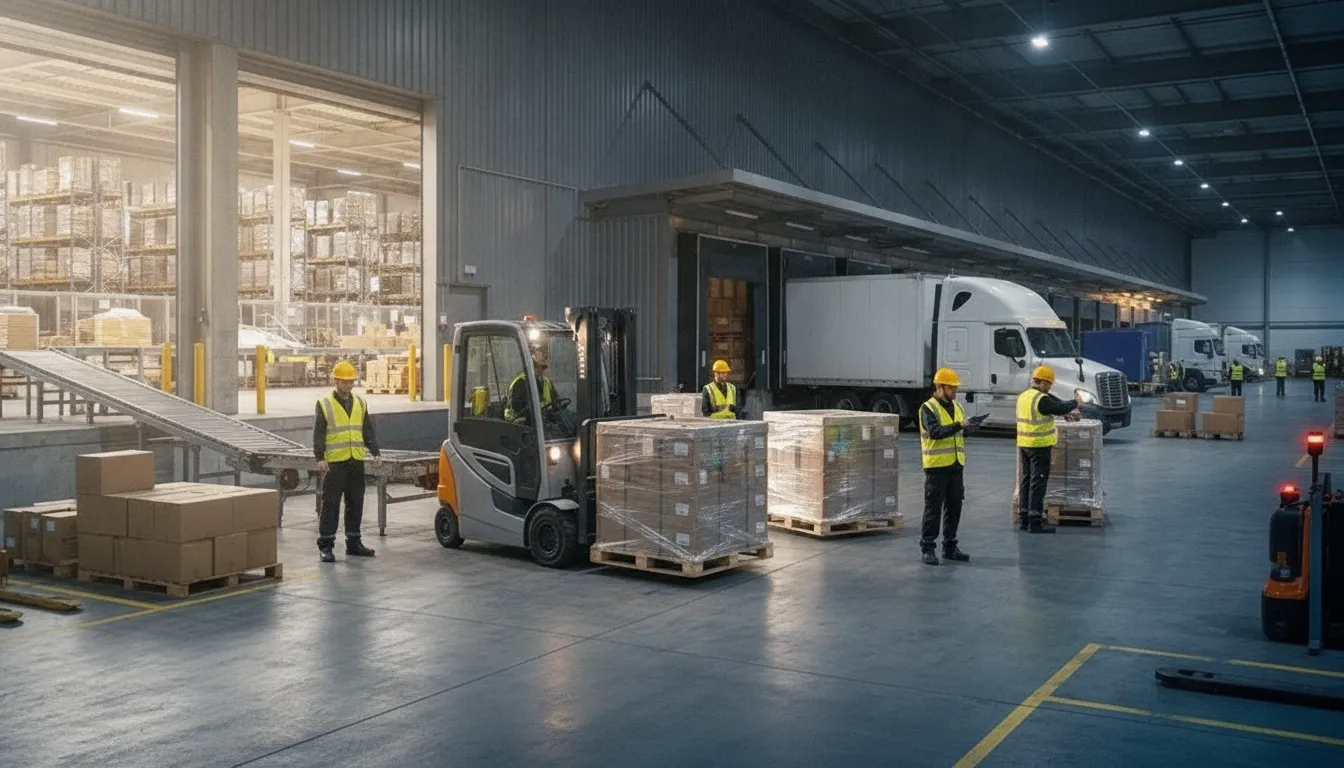
Cross-docking moves inbound freight to an outbound vehicle with little or no storage, while warehousing holds inventory for later fulfillment. To decide between the two, see our comparison of short-term warehousing versus cross-docking.
How storage time changes the operation
| Factor | Cross-docking | Warehousing |
|---|---|---|
| Storage time | Usually measured in hours. | Often measured in days or weeks. |
| Inventory role | Freight flows through with minimal reserve stock. | Inventory remains available for later orders. |
| Primary work | Unload, sort, consolidate, and reload. | Receive, put away, pick, pack, and ship. |
| Best freight profile | Predictable inbound and outbound movements. | Variable demand requiring stored supply. |
The time distinction affects nearly every planning decision. Cross-docking is built around synchronized arrivals and departures, so freight stays in motion instead of occupying storage locations. Traditional warehousing creates a buffer between supply and demand. That buffer is useful when customer orders are unpredictable, replenishment is delayed, or safety stock is necessary.
Labor, space, and inventory costs
By bypassing conventional storage, cross-docking can improve inventory turnover and use warehouse square footage more efficiently. It can also reduce the labor and overhead associated with putting stock away, picking it later, and packing it for shipment. Those savings are not automatic. A missed appointment, incorrect sort, or loading error can delay multiple outbound shipments, making disciplined coordination essential. See the inventory and distribution considerations behind cross-docking.
Which model fits the freight?
Cross-docking is often a strong fit when several smaller shipments can be consolidated into one outbound vehicle, such as retail freight moving from multiple suppliers to store locations. It supports faster distribution and can reduce the amount of safety stock held in reserve. Warehousing is generally the better choice when products need extended storage, demand fluctuates significantly, or the operation must maintain inventory for later release. In practice, a network may use both models, routing time-sensitive or already-allocated freight through a cross-dock while holding other goods in storage.
When Should Freight Brokers Use Cross-Docking?
Freight brokers and shippers should use cross-docking when freight needs to move through a facility quickly instead of sitting in storage. The strongest fit is a shipment with dependable timing, a clear outbound destination, and products that can transfer directly between vehicles. In practice, what is cross docking in freight logistics becomes a useful decision question: can the freight be received, sorted, and dispatched within hours without a warehousing step?
When demand and shipment timing are predictable
Cross-docking works especially well for stable products with predictable demand patterns. Brokers can coordinate inbound arrivals and outbound capacity with greater confidence when shipment volume, destination, and delivery windows are known in advance. That predictability supports faster transfers and reduces the need to hold inventory for an uncertain next move. Time inside the facility is generally measured in hours, not the days or weeks associated with traditional warehousing.
When speed, freshness, or rapid response matters
Time-sensitive freight is another strong use case. Perishable products, including fresh produce, may benefit from a direct transfer that helps maintain freshness while reaching regional markets. Cross-docking can also give brokers flexibility when customer requirements or market conditions change quickly. For refrigerated or temperature-sensitive loads that need an urgent transfer, review our guide to emergency refrigerated-load cross-docking. During an urgent recovery, a planned transfer can keep freight moving without waiting for a long-term storage solution.
- Fresh or time-sensitive products need a shorter dwell time.
- Urgent customer requirements call for a rapid outbound solution.
- Seasonal peaks require close performance monitoring to prevent bottlenecks as volume rises.
When consolidation improves capacity and scalability
Cross-docking can consolidate smaller inbound shipments so outbound vehicles are used more efficiently. That can improve load utilization while reducing the pressure to build or expand warehouse space immediately. It is also a scalable option for businesses experiencing rapid growth, provided scheduling, handling, and destination data remain accurate. Before booking the move, confirm that arrival times, freight compatibility, labor, dock capacity, and outbound equipment align. Without that operational discipline, a transfer designed for speed can create a bottleneck instead.
Types of Cross-Docking Operations
Cross-docking is not one fixed workflow. The right operating model depends on when orders are known, how freight is grouped, which transportation modes are involved, and how much handling the shipment requires. Each model is designed to keep freight moving through a facility quickly. With time on site typically measured in hours rather than the days or weeks associated with traditional warehousing.
Pre-Distribution and Post-Distribution Cross-Docking
Pre-distribution cross-docking is planned before the inbound shipment arrives. The shipper or supplier already has the customer orders, destination details, and outbound transportation arranged. That information lets the cross-dock team assign freight to outbound doors immediately, reducing dwell time and limiting unnecessary touches. It works well when demand is predictable and shipment destinations are known in advance.
Post-distribution cross-docking makes the allocation decision after freight reaches the facility. The operation may use current inventory information, updated customer demand, or changing transportation conditions to determine where each unit should go next. This model provides more flexibility when orders shift, but it requires accurate identification, real-time visibility, and disciplined communication. Without those controls, a fast transfer can create a larger delivery problem downstream.
Consolidation, Break-Bulk, and Multi-Door Operations
Consolidation cross-docking combines smaller inbound shipments into a fuller outbound truckload. That can improve vehicle utilization and make regional distribution more efficient. For example, freight from several suppliers may be sorted by destination and combined for one retail or customer delivery route. Break-bulk cross-docking applies the reverse logic. A large inbound shipment is separated into smaller loads for delivery to multiple locations. Both approaches depend on accurate pallet identification and a clear outbound plan.
Multi-door systems coordinate inbound and outbound doors, material-handling equipment, labor, and staging space across several transfer points. The goal is not simply to use more doors. It is to route each shipment through the facility with as little travel, waiting, and congestion as possible. Research on cross-dock optimization focuses on maximizing throughput while minimizing handling distance. In practical terms, effective door assignments and steady communication help prevent a bottleneck at one part of the dock from delaying the entire network.
Transloading and Specialized Freight Handling
Transloading is the mode-to-mode form of cross-docking. Freight may move from rail to truck, truck to rail, or between other transportation modes without entering long-term storage. This approach is useful when a shipment’s route, equipment, or delivery requirement changes during transit. For a fuller picture, see our guide to freight transloading services. If a transfer between transportation modes is part of the solution, We Fix Freight can coordinate transloading services as part of a broader freight remediation plan.
Hazardous-material cross-docking is another specialized operation. The transfer may be possible, but it requires trained handling, appropriate controls, and strict adherence to applicable safety requirements. The shipment classification, packaging, documentation, equipment, and staging plan should be confirmed before freight is moved. A facility should never treat hazardous material like ordinary palletized freight simply because the intended dwell time is short.
Across all these models, speed only creates value when the handoff is accurate. The right operation preserves shipment identity, protects the load, and sends each piece toward the correct destination.
How to Request Emergency Cross-Docking Services
When a trailer cannot continue as planned, the fastest solution starts with a complete operational picture. Contact the response team as soon as you know the load needs a controlled transfer. Share the shipment location, inbound and outbound timing, freight type, pallet count, equipment involved, and the delivery deadline. Those details help the team match the work to the right location, labor, handling requirements, and transportation plan. For a broader emergency, review our emergency cross-docking service guide.
Provide the details needed to move quickly
Emergency cross-docking depends on accurate scheduling and communication between carriers, shippers, brokers, and the receiving operation. Share the bill of lading or other available shipment documents, the current status of the trailer, and any known damage, leaning, shifting, or securement concerns. If the shipment includes temperature-sensitive, hazardous, or otherwise specialized freight, identify that at the beginning. The handling plan may require different equipment, procedures, or safety controls.
Also clarify what must happen after the transfer. The freight may need to move directly onto another outbound vehicle, continue through freight re-work, or require a re-delivery plan when the original delivery cannot be completed. A clear objective prevents unnecessary handling and keeps the response focused on restoring the shipment’s movement.
Coordinate the transfer and maintain visibility
Cross-docking is designed to reduce touchpoints, which can lower the opportunity for damage during handling and transportation. However, the operation must be disciplined. Errors in loading can create delivery delays across the network, so inbound and outbound schedules, dock assignments, pallet counts, and final destinations need to remain aligned. Accurate documentation and tracking for each pallet entering and leaving the facility provide an auditable record of what was transferred and where it went. These controls matter most when several parties are coordinating under time pressure.
Real-time visibility is another essential part of the request. Inbound timing and shipment status affect whether the receiving operation can turn the freight efficiently. Keep the broker, shipper, carrier, and destination contacts connected as plans change. We Fix Freight can coordinate the operational response through a nationwide network of more than 150 service agents. With availability 24 hours a day, 7 days a week and a rapid response commitment.
Confirm the scope and quote before work begins
After reviewing the shipment details, We Fix Freight can define the required scope and provide a transparent, quote-based plan. Pricing is standardized for the situation and communicated upfront, without hidden fees or surprises. Confirm the transfer location, labor and equipment needs, timing, documentation expectations, and next transportation step before authorizing the work. This gives every party the same operating plan and helps prevent avoidable delays.
For urgent freight problems anywhere in the United States, early communication is the practical advantage. When the response team understands the condition and destination of the load early. It can organize the people and process needed to get the freight back on the road quickly.
Contact us now for nationwide, 24/7 emergency cross-docking support.
Frequently Asked Questions
What is cross-docking in freight logistics?
Cross-docking is a freight transfer process in which goods are unloaded from an inbound truck or railcar and loaded onto an outbound vehicle with little or no storage between handling steps. The facility functions as a transfer point rather than a long-term warehouse. This approach can shorten delivery lead time and reduce inventory holding requirements. TechTarget describes the same direct-transfer model.
How does cross-docking work in supply chain management?
The process starts with coordinated arrival and departure schedules. Workers receive and identify the freight, sort it by destination or route, stage it at the correct dock door, and load it onto outbound equipment. Accurate pallet documentation, tracking, and communication are essential because a missed connection can delay the next leg of the shipment. A transportation management system can help coordinate inbound and outbound truck schedules.
What is the difference between cross-docking and warehousing?
Warehousing stores goods for a longer period and may involve put-away, picking, packing, and replenishment. Cross-docking is designed to move freight through a facility quickly, with minimal storage. Use warehousing when inventory must remain available for future orders or demand is uncertain. Use cross-docking when shipments are already assigned to destinations and speed, consolidation, or reduced handling is the priority.
When should a business use cross-docking?
Cross-docking is a strong option for stable products with predictable demand, time-sensitive freight, seasonal surges, and shipments that need consolidation or rapid regional distribution. It is less suitable when goods require inspection, extended storage, complex picking, or uncertain order allocation. Before scheduling, confirm that inbound freight, outbound capacity, dock space, staffing, and shipment data are aligned. For an urgent transfer, a coordinated response can help keep freight moving while limiting additional handling.
Contact us to get started
When a shipment needs to move through a cross-dock quickly, the right support can help you coordinate the next step with less disruption. We Fix Freight provides on-demand freight remediation support for brokers, shippers, carriers, and 3PLs managing time-sensitive transfer needs. Contact us now to discuss your cross-docking situation and connect with the appropriate support.