
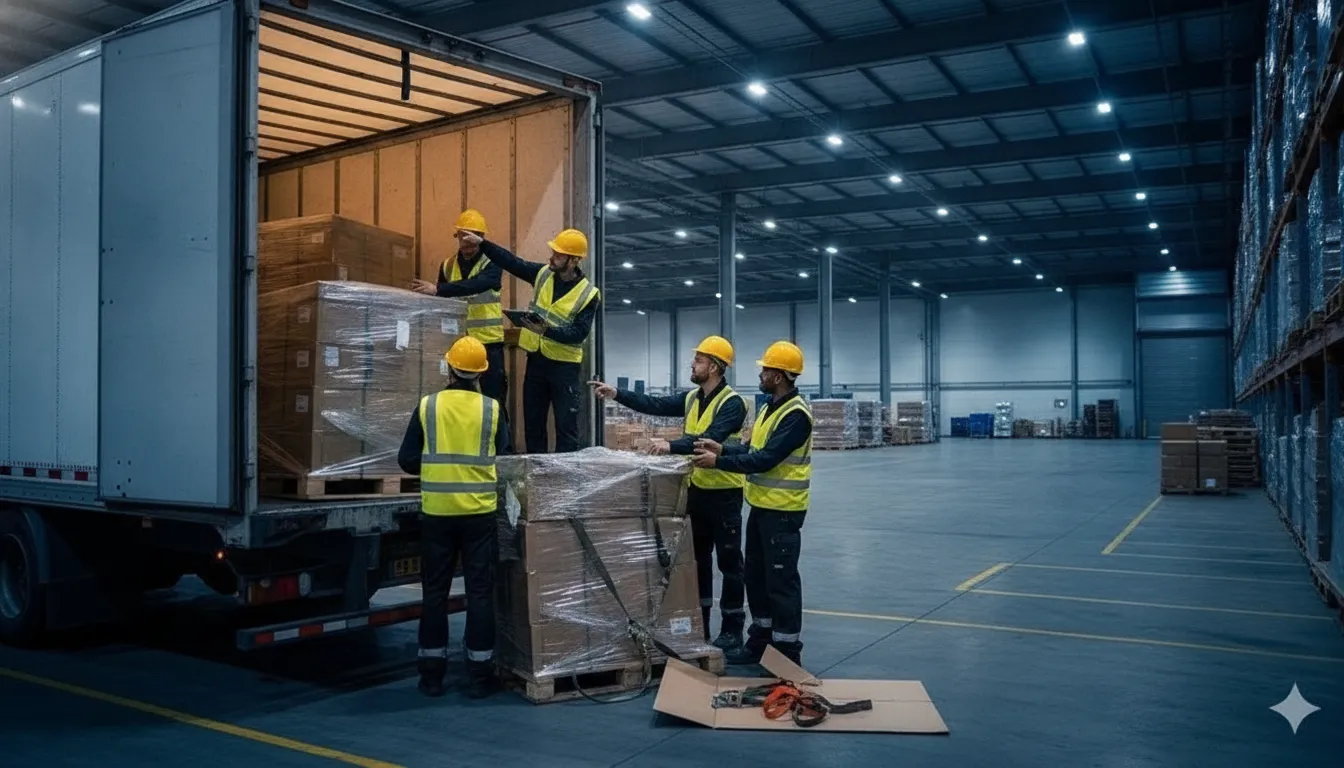
When freight is damaged, the first priority is not moving it blindly. It is stabilizing the situation, understanding what happened, and choosing the safest practical path to protect the load, delivery commitment, and customer relationship.
Damaged freight repair and recovery is a coordinated process that can include assessment, freight re-work, repackaging, cross-docking, transloading, short-term warehousing, re-delivery, or product disposal. The right option depends on the cargo condition, location, urgency, equipment, and handling requirements. WeFixFreight operates 24/7/365 and coordinates more than 150 service agents nationwide, with initial customer contact and agent identification documented within two hours.
During the first call, be ready to share the freight location, cargo type, damage condition, time sensitivity, delivery commitment, equipment needs, and any special handling concerns. That information helps determine whether the load needs on-site stabilization, a transfer, a rejected load recovery plan, or another next step. The process begins with understanding the damage and continues through the decisions that lead to a documented final resolution.
What Does Damaged Freight Repair and Recovery Involve?
Damaged freight repair and recovery is an end-to-end response, not simply a crew arriving to make a visible repair. The work begins by identifying what happened, what condition the shipment is in now, and what outcome is still practical. A pallet collapse, shifted load, packaging failure, weight-distribution problem, accident, weather event, or equipment failure can require a different response. The immediate priority is to stabilize the freight and protect people, equipment, and cargo from further harm.
The condition may also be less obvious than a torn carton or broken pallet. The U.S. General Services Administration explains that freight damage claims can involve several categories:
- Visible damage: The damage is apparent when the shipment is inspected or delivered.
- Shortage: Only part of the shipment arrives, even if the remaining freight appears intact.
- Concealed damage: Damage or a shortage is discovered after the delivery driver has left.
- Loss: Delivery does not occur.
These categories help the operations team understand the problem, but they do not determine the physical recovery plan by themselves. Visible damage may need inspection, restacking, re-palletizing, packaging replacement, protective materials, or another form of freight re-work. A shortage or loss may require tracing, communication, route coordination, re-delivery planning, or a decision about what can still move forward. Concealed damage may call for careful documentation and preservation before anyone repackages or disposes of affected product.
Recovery can therefore include more than repair. Depending on the cargo, location, equipment, delivery commitment, and handling requirements, the path may involve on-site labor, cross-docking, transloading, short-term warehousing, re-delivery, or product disposal. The aim is to establish a controlled next step for the freight. That may mean making it road-ready, transferring it to suitable equipment, holding it safely, or managing an outcome when delivery is no longer practical.
This is why assessment and coordination matter as much as hands-on work. A qualified response team can document the condition, identify the appropriate service, coordinate the people and equipment required, and keep the shipper, broker, carrier, or receiver informed. For a closer look at the initial assessment stage, review the freight inspection process. That inspection is one part of a broader recovery workflow that continues through service execution, transfer or delivery decisions, and closeout.
How Should You Assess a Damaged Load Before Repair?
Assessment should happen before anyone starts moving pallets, opening packaging, or attempting a quick fix. The first priority is to understand whether the load, vehicle, and people around it are safe to approach. A collapsed pallet, shifted freight, damaged packaging, accident, weather event, or equipment failure can create risks that are not obvious from the outside. If the load is unstable, keep personnel clear and involve the responsible site or transportation team before beginning physical work.
Start by capturing the basic operating picture. A practical freight inspection process should establish:
- Location: Record the truck, yard, warehouse, dock, or roadside location, along with the best access instructions and current operating conditions.
- Cargo and condition: Identify the commodity, packaging, pallet configuration, affected units, visible damage, shortages, leaks, contamination concerns, and whether damage may be concealed.
- Urgency: Note time sensitivity, appointment windows, product shelf life, production requirements, customer commitments, and any risk that delay could worsen the outcome.
- Equipment and handling: Confirm the trailer or container type, dock access, forklift availability, loading restrictions, labor needs, and whether specialized equipment or a facility is required.
- Special handling: Flag temperature-sensitive, fragile, regulated, oversized, wet, or otherwise sensitive freight before selecting a repair or transfer method.
These details align with the documented emergency assessment factors of severity, freight location, cargo type, special handling needs, time criticality, delivery commitments, equipment, and resource requirements. Providing them early helps dispatch determine what kind of response is appropriate instead of sending labor without the right information or resources.
Securement is a separate safety check, not an assumption. Federal cargo-securement guidance says cargo must be firmly immobilized or secured with adequate structures, dunnage, dunnage bags, shoring bars, tiedowns, or a combination of these. Cargo that could roll must be restrained with chocks, wedges, a cradle, or an equivalent method. Review the specific requirements in the federal cargo-securement rule before moving or releasing a load. Do not improvise a restraint system when the load remains unstable.
Finally, separate what is known from what still needs inspection. A photograph or initial description can support triage, but the final work plan may change after qualified personnel see the freight in person. Depending on the condition, the appropriate next step could involve freight re-work, repackaging, cross-docking, transloading, short-term warehousing, or another recovery path. That assessment-first approach supports safer damaged freight repair and recovery without promising that every load will have the same remedy or timeline.
What Should You Document Before Damaged Freight Repair and Recovery?
Before damaged freight repair and recovery begins, create a record of what happened, what condition the cargo is in, and who controlled it at each stage. Good documentation protects the shipment, gives the repair team a reliable starting point, and helps your operations team explain the situation to the shipper, receiver, carrier, insurer, or claims administrator.
Protect the cargo and preserve the evidence
First, take reasonable steps to prevent additional damage or loss. Do not move unstable freight until the location is safe and the people handling it have the right equipment. Cargo may need to be secured, isolated from weather, covered, or moved away from a hazard. The applicable cargo-securement rules require freight to be firmly immobilized or secured with adequate structures, dunnage, shoring bars, tiedowns, or a combination of those methods. See the cargo securement requirements before authorizing handling work.
Preserve the damaged product, pallets, cartons, wrapping, bands, labels, and other packaging until the transportation service provider authorizes disposal. The GSA freight damage claims guidance also recommends protecting damaged cargo from additional damage or loss. If product disposal becomes necessary for safety, sanitation, or operational reasons, document who approved it and what was discarded before disposal occurs.
Build a condition record before anything changes
Use time-stamped photographs and, where practical, video to show the trailer or facility context, the full load, individual damaged items, pallet condition, packaging failures, labels, seals, and any visible contamination or moisture. Capture wide views before close-ups so the relationship between the damage and the load is clear. The same GSA guidance identifies photographs and witness statements as useful claim evidence.
- Record the names, companies, roles, and contact details of drivers, warehouse staff, receivers, inspectors, and other witnesses.
- Write objective condition notes. Describe what is visible, such as crushed cartons, shifted pallets, shortages, wet packaging, broken bands, or exposed product. Avoid guessing who caused the damage.
- Record the date, time, location, weather or facility conditions, seal status, and any handling or inspection already performed.
- Note whether the issue is visible damage, a shortage, concealed damage discovered after delivery, or a possible loss. These categories can affect the next claims step.
Collect shipment and chain-of-custody records
Save the pro number, shipper number, vehicle number, origin and delivery dates, commodity description, and other shipment identifiers. Keep the original bill of lading, paid freight bill, proof of commodity value, inspection records, repair or re-work authorization, transfer receipts, and delivery documentation together. Update the file whenever custody changes, including the time, location, releasing party, receiving party, and condition at handoff. A simple chronological log can prevent confusion when freight is re-palletized, cross-docked, stored, or routed for re-delivery.
An inspection report is important, but it is not automatically a formal freight claim. Under 49 CFR 370.3, a written claim must identify the shipment, assert liability, and request a specified or determinable payment amount. Damage notations, appraisals, or inspection reports standing alone do not satisfy those minimum filing requirements. Filing deadlines depend on the transportation mode and the governing contract, tariff, tender, or service agreement. Some industry guidance cites a period commonly within nine months of delivery, but do not treat that as a universal deadline. Confirm the controlling terms with the responsible carrier, contract administrator, or qualified claims professional before relying on it.
Which Recovery Option Fits the Load?
The right path depends on what is damaged, what remains usable, where the shipment is located, and what the delivery plan requires next. A collapsed pallet may need immediate stabilization and re-palletizing. A load that cannot continue on its current equipment may need a transfer. Freight that is safe but temporarily without a destination may need controlled storage. When the product cannot be recovered or should not return to commerce, responsible disposal may be the appropriate closeout.
These options can also be combined. For example, a service team may complete freight re-work, move the recovered pallets through cross-docking, and coordinate re-delivery after the receiver confirms acceptance. The assessment should account for cargo condition, packaging, handling requirements, equipment, delivery commitments, and the risk of additional damage. The goal is not to select the most visible service. It is to choose the sequence that protects the freight and supports a practical next outcome.
| Option | Best fit | Typical actions | Next outcome |
|---|---|---|---|
| Freight re-work | Product is usable, but the load is unstable, damaged in handling, or not ready for safe delivery. | Restacking, re-palletizing, replacing packaging, adding protective materials, and related on-site labor. | A more stable, protected load that can be transferred, held, or prepared for delivery. |
| Cross-docking or transloading | The current trailer, container, facility, or route is no longer suitable for the shipment. | Unload, inspect, sort, stage, and transfer freight to other equipment or an approved destination. | Freight moves into a workable transportation or handling plan without waiting on the original setup. |
| Re-delivery | The shipment can proceed after repair, repackaging, route changes, or receiver coordination. | Coordinate with the shipper and receiver, confirm readiness, arrange routing, track progress, and provide ETA or delay updates. | The recovered load is directed toward an approved delivery attempt. |
| Short-term warehousing | Freight is recoverable but cannot move immediately because of a rejected delivery, scheduling issue, or temporary capacity constraint. | Secure the shipment, arrange handling or inventory control, and hold it while the next destination or transport plan is confirmed. | Additional time to coordinate a safe re-delivery, transfer, or other disposition. |
| Product disposal | Goods are unsalvageable, recalled, contaminated, or otherwise not practical to return to the intended supply chain. | Confirm authorization and disposition requirements, separate affected product when needed, and coordinate responsible removal. | Unusable freight is removed through an approved process, with records preserved for the closeout. |
Freight re-work may be enough when the problem is limited to pallet condition, packaging, moisture exposure, or load stability. If equipment or location is the constraint, cross-docking or transloading can create a safer handoff. Re-delivery becomes the focus when the shipment is ready but the original delivery failed or the receiver needs a revised plan. Short-term warehousing can prevent rushed decisions when the freight is recoverable but timing, capacity, or destination details are still being resolved.
Disposal should not be treated as an informal shortcut. Preserve the cargo and packaging until the responsible transportation service provider authorizes disposal, and maintain the records needed for claims or customer communication. A recovery partner can help coordinate the physical work, but the final option should reflect the shipper’s instructions, receiver requirements, cargo condition, and applicable handling rules. When the situation is unclear, Contact us now with the load location, cargo condition, equipment details, and delivery urgency so the response can be matched to the actual recovery need.
How Does the Recovery Process Move From Dispatch to Closeout?
A damaged load needs more than a quick fix at the truck. The recovery process connects the first call, field assessment, dispatch, physical work, transportation decisions, status updates, and final documentation. Each stage gives the broker, shipper, carrier, or 3PL a clearer path forward while the freight remains protected and the delivery plan is evaluated.
- Start with the first call. Share the freight location, cargo type, visible damage or load condition, time sensitivity, delivery commitment, equipment needs, and any special handling requirements. WeFixFreight operates 24/7/365, including nights, weekends, and holidays. Its documented response commitment covers initial customer contact and agent identification within two hours, not completion of the entire recovery. These first-call details help the dispatcher understand whether the situation involves a shifted load, pallet collapse, packaging failure, equipment issue, or another freight emergency.
- Assess the situation and define the immediate need. The recovery team considers severity, location, cargo characteristics, timing, delivery requirements, equipment, and available resources. The goal is to determine what can be safely handled on site and what must move to another facility or destination. When the load has been rejected, the rejected load remediation guide provides additional context on the decisions that may follow.
- Dispatch the right nearby resource. Central dispatch identifies a qualified agent based on proximity, capability, and availability, then coordinates mobilization and service execution. WeFixFreight coordinates more than 150 agents nationwide, but the best match still depends on the freight, equipment, location, and handling requirements. This is the dispatch stage described in F016, F017, and F023, not a promise that every agent provides every specialized service.
- Complete the on-site work. Depending on the assessment, the agent may provide on-site labor, restacking, re-palletizing, packaging replacement, protective materials, or other freight re-work. The work should stabilize the load and prepare it for the next approved step. When a transfer is needed, cross-docking or transloading may move the freight into suitable equipment, while short-term warehousing can create time to coordinate a safer resolution.
- Coordinate transfer, storage, or re-delivery. The final route depends on cargo condition, shipper and receiver instructions, and delivery feasibility. Options may include re-delivery, continued transportation, transfer, short-term storage, or responsible product disposal when recovery is not practical. Re-delivery coordination can include route planning, tracking, ETAs, delay notifications, inspection, repackaging, and communication with the shipper and receiver.
- Maintain communication through closeout. Recovery is not complete when the agent leaves the site. The parties should receive updates on what was found, what work was performed, where the freight went, and what action remains. A documented 48-hour example involving approximately 20 beverage loads during a heatwave demonstrates one complex outcome, but it is a case example, not a universal guarantee. F025 and F027 reinforce the distinction between service completion, communication, and closeout. Final records should reflect the agreed disposition and any remaining claims or delivery actions.
How Do You File a Freight Claim After Recovery?
Physical recovery and a freight claim are separate tracks. A crew may stabilize, rework, transfer, store, or re-deliver a load so the immediate operational problem is controlled. That service does not, by itself, open a formal claim or determine who is responsible for the loss. After the load is safe and its condition is documented, the cargo owner or other eligible claimant should review the governing transportation agreement and submit the claim through the appropriate process.
Start with a written claim to the responsible motor carrier
Under the federal claim rules, a written communication should identify the shipment, assert liability, and request a specified or determinable payment amount. See the requirements in 49 CFR 370.3. A damage notation, bad-order report, or inspection report can support the record, but an inspection report standing alone is not a formal claim filing.
The appropriate motor carrier is usually the delivering carrier or the carrier that caused the loss, according to the FMCSA explanation of freight claims. A broker generally does not assume responsibility for the shipment or physically handle it. However, a broker may assist the shipper with filing against the motor carrier. Keep the roles clear in the correspondence, especially when several parties coordinated the recovery.
Build the claim file while recovery records are fresh
Use the shipment identifiers that allow the carrier to locate the movement quickly. A useful file may include the pro number, shipper number, vehicle number, origin and delivery dates, and commodity description. Include the original bill of lading, paid freight bill, proof of the commodity value, and inspection materials where available. These documentation categories are outlined by Redwood Logistics.
Add recovery-specific evidence, such as dated photos before and after re-work, packaging photographs, witness statements, delivery exceptions, re-palletizing or repackaging records, and communications about the load condition. Preserve the damaged freight and its packaging until the transportation service provider authorizes disposal, and protect the cargo from additional damage or loss. The GSA freight damage claims guidance recommends both steps, along with photographs and witness statements.
If recovery involved repairs, retain work orders, itemized repair records, invoices, and proof of payment. Depending on the facts and governing agreement, detailed records may help show what work was necessary and what costs were incurred. Do not assume an estimate or invoice guarantees recovery. The claim reviewer, contract, tariff, and applicable law control how evidence is evaluated.
Check the deadline before choosing a filing date
Do not rely on a general deadline without checking the shipment’s contract, tariff, tender of service, transportation mode, and carrier instructions. The GSA notes that filing requirements vary by mode and agreement. Redwood cites nine months after delivery as a common industry reference, but that is not a universal rule. Submit the written claim as soon as the facts and supporting records are sufficiently developed, and keep proof of delivery and submission.
This is operational information, not legal advice. When liability, limitation clauses, concealed damage, salvage, or a disputed claim presents a material risk, consult qualified transportation counsel or the responsible claims professional.
Frequently Asked Questions
What happens if freight is damaged?
First, protect people and the remaining cargo from additional harm. Document the load condition, packaging, shipment details, and location, then determine whether the freight needs re-work, repackaging, cross-docking, transloading, storage, re-delivery, or disposal. The right path depends on the damage, handling requirements, delivery commitment, and available equipment. Preserve the damaged cargo and packaging until the transportation service provider authorizes disposal.
What does freight recovery mean?
Freight recovery is the coordinated process of stabilizing a damaged or disrupted shipment and moving it toward its best available outcome. That may mean repairing and re-palletizing the product, transferring it to another vehicle, arranging short-term warehousing, completing re-delivery, or documenting a loss for claims handling. Physical recovery and the formal freight claim are related, but they are separate workstreams.
What should I document before damaged freight repair?
Record the shipment identity, location, visible condition, packaging condition, shortages, time sensitivity, and delivery requirements. Take clear photos before work begins, keep relevant packaging, and collect witness statements when available. Photos and witness statements can support a claim, but an inspection report alone is not a formal claim filing. Under 49 CFR 370.3, a written claim must identify the shipment, assert liability, and request a specified or determinable payment: 49 CFR 370.3.
Can damaged freight always be repaired?
No. Some shipments can be stabilized, reworked, repackaged, or redirected, while others may require storage, disposal, or claims resolution. A qualified assessment should consider product condition, safety, handling requirements, customer instructions, and the feasibility of the next delivery step. Do not promise a fixed outcome or completion time before those conditions are known.
Contact us to coordinate damaged freight recovery
When a damaged load needs assessment, on-site work, transfer, or re-delivery coordination, the next step is a clear conversation about the shipment and its current condition. Share the location, cargo details, and immediate priorities so the recovery path can be evaluated with the right context. Contact us now to connect with We Fix Freight and discuss the support your shipment needs.