
Intermodal companies coordinate freight through connected truck, rail, and sometimes ocean legs. A shifted pallet, delayed container, or rejected delivery can disrupt more than one scheduled handoff. The first useful question is not simply which mode failed. It is what condition the freight is in, who can authorize work, and what next step protects the shipment’s onward plan. This guide walks through a practical way to assess the exception and coordinate recovery.
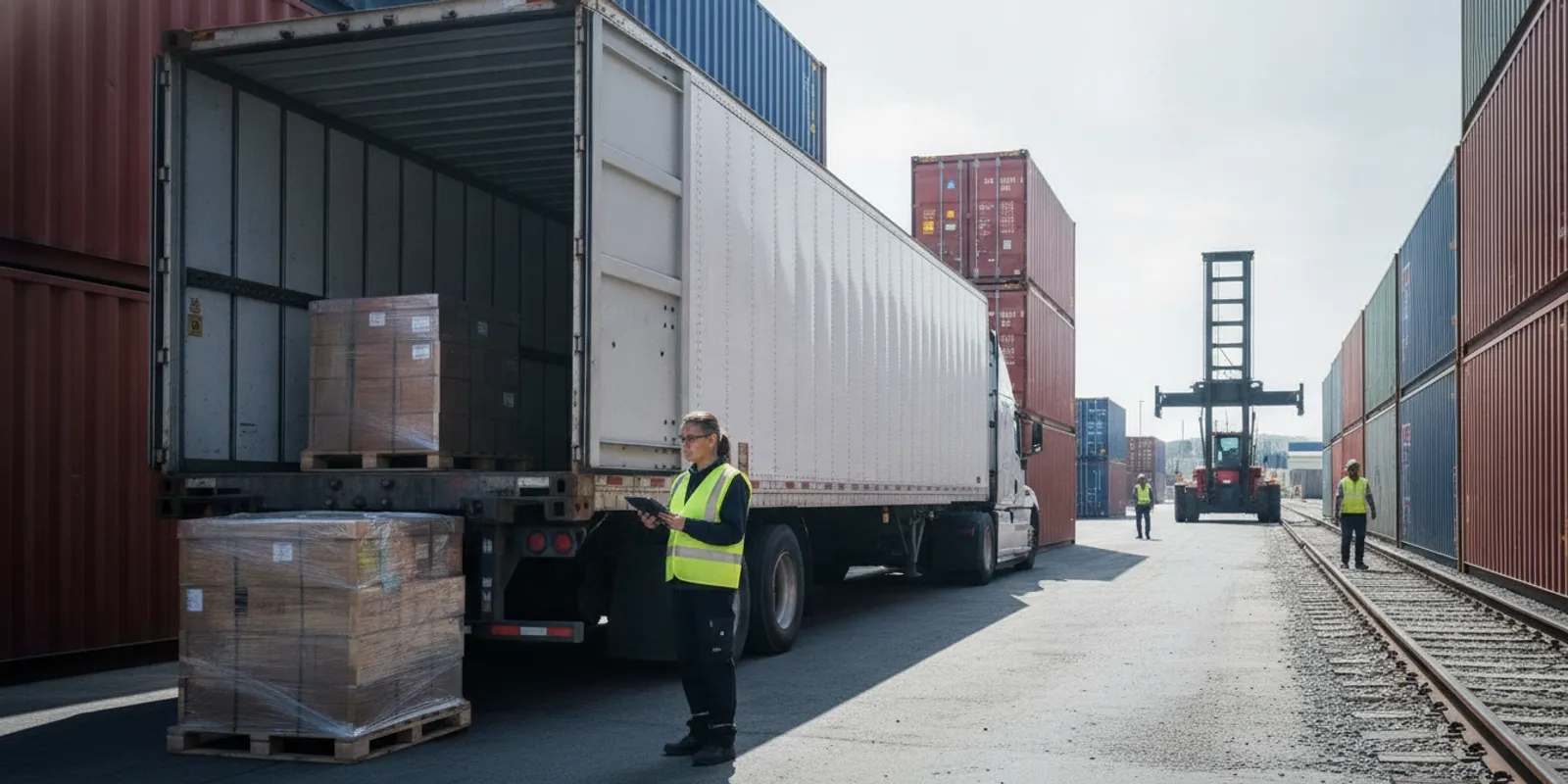
Start with the failure, not the service name
A freight exception can look similar from a distance but need a different response on the ground. A receiver may report a load as damaged when the immediate issue is that pallets shifted and cannot be safely unloaded. A container may be delayed because the freight needs attention, or because the unit cannot be accessed. Begin with observable facts rather than guessing at a cause or requesting a service before the constraint is understood.
Describe what was seen, who reported it, and when. Separate confirmed details from assumptions. “Three pallets are leaning inside trailer 4821 at the east gate” is more useful than “the load is bad.” If the report is secondhand, identify that too. This gives the coordinator and the party with approval authority a shared starting point. For an introduction to pallet restacking in intermodal freight, consider the load condition alongside the next planned movement.
What should you confirm before arranging recovery?
Before anyone is dispatched or freight is moved, establish the current location and operating conditions. A rail terminal, private yard, public road, consignee dock, and partner warehouse may each have different access procedures. Ask who controls the space, whether the unit can remain there, what equipment is available, and who can approve labor or handling.
- Shipment identity: Give the reference or load number, commodity, quantity, and any special handling requirements known to the team.
- Exact location: Confirm the facility name, address, gate or dock instructions, unit location, and a reachable on-site contact.
- Observed condition: State which pallets or packages shifted, fell, broke, lean, or appear exposed. Report any visible leakage or immediate hazard without speculating about its cause.
- Equipment and timing: Identify the trailer, container, railcar, or other unit, its current status, appointments, cutoffs, and any deadline that could affect the decision.
- Authority: Name the person or organization that can approve the work and identify who must accept the freight afterward.
- Evidence: If safe and permitted, share clear photographs from several angles. Do not enter restricted areas or move freight to obtain an image.
- Desired outcome: Say whether the immediate goal is to make the load handleable, transfer it, hold it, reach another destination, or arrange re-delivery.
Use a consistent freight inspection process to organize the details before re-work. If the location requires nearby response, the guidance on finding shipment assistance can help clarify what to include in the request. Accuracy matters more than a long list of possible causes.
Which urgent freight path fits the failure?
Recovery options solve different problems. Freight re-work changes how cargo is arranged or supported. Cross-docking transfers freight between inbound and outbound vehicles, generally without planned storage. Transloading moves cargo between transportation modes or equipment types. Re-delivery addresses a shipment that cannot be accepted at the planned delivery point. Holding freight may be sensible when the next destination or authorization is not yet confirmed.
| Observed constraint | Possible recovery path | Decision to settle first |
|---|---|---|
| Pallets are leaning, shifted, or fallen, but the freight may be handled | Freight re-work, pallet services, or on-site labor | Can the unit be accessed safely, and who approves the work? |
| Freight needs a quick vehicle-to-vehicle transfer | Cross-docking | Are labor, receiving capacity, and the next vehicle available at the same time? |
| Cargo must change modes or equipment type | Transloading | What handling method and receiving arrangements does the cargo require? |
| The consignee cannot accept or has rejected the load | Re-delivery or another coordinated recovery plan | Who can accept it, at what location, and in what delivery window? |
| A rail or intermodal unit is held or stranded | Rail remediation or a specialized project | Who controls the unit, and what operating restrictions apply? |
| No onward move or authorized decision is ready | Short-term warehousing or a controlled hold, if suitable | Who will release the cargo and arrange the next move? |
For a vehicle-to-vehicle transfer, the emergency cross-docking guide explains how that response differs from a broader freight move. It is also a useful reference when comparing transloading services with a simple transfer. A load that is unstable rather than misplaced may call for pallet restack support. Make the choice only after confirming access, authority, equipment, and the receiving plan.
What should each party do in the first hour?
In a multi-party move, the discovery, approval, transportation, and receiving roles may belong to different organizations. Assign one person to keep the status current and coordinate the messages. The exact sequence will vary by site and urgency, but this checklist helps reduce conflicting directions:
- Notify the responsible parties. Contact the broker, shipper, carrier, terminal or facility contact, and receiver as relevant. Follow any shipment-specific escalation process.
- Check immediate safety and access. Ask the party controlling the unit what can safely wait and what access rules apply. Do not ask unqualified personnel to rearrange cargo.
- State the outcome needed. Clarify whether the priority is to stabilize freight, transfer it, hold it, or deliver to a different receiving point.
- Confirm approval and scope. Record who authorizes work, what work is under consideration, where it will occur, and who accepts the freight afterward.
- Coordinate the next movement. Confirm the next vehicle or destination before a transfer. A move that lacks an onward plan can relocate the delay rather than resolve it.
- Share status at each handoff. Note arrival, work completion, any changed condition, and the next appointment or movement plan.
For a broader view of nationwide coverage information, review the network details while preparing the exact location. WeFixFreight describes a network of more than 150 service agents and 24/7 availability for urgent freight issues. A particular response depends on location, access, cargo, and job requirements; confirm the specific request rather than assuming a response time or outcome.
What causes avoidable delays?
Small information gaps can keep a shipment waiting after the exception has been identified. An approximate terminal name may send responders to the wrong entrance. A request without a named approver can leave work pending. A transfer without an available receiver can add another stop without solving the original problem.
- Confirm the unit’s current location, not just the scheduled destination or last reported stop.
- Do not assume a driver can approve work on behalf of the cargo owner, broker, or shipper.
- Describe the observed condition rather than using “restacking” as a catch-all for every problem.
- Do not arrange cross-docking or transloading until receiving capacity and onward transportation are addressed.
- Do not promise a delivery time before the parties, equipment, access, and appointment are confirmed.
- Keep the latest instruction in one shared status record so an outdated message does not reach the next handoff.
For shifted freight, this action plan for shifted pallets can help focus the first conversation. If the immediate need is handling at the existing site, rather than a facility transfer, consider whether on-site labor services fit the conditions.
A short example: shifted freight at a transfer point
Suppose a carrier arrives at a transfer facility and reports that several pallets have shifted inside a trailer. Before proposing a solution, the team confirms the trailer’s location, whether the facility can access it, what the receiver will accept, and who can authorize re-work. The carrier or facility supplies current observations; photographs are shared only if they can be taken safely and permitted. The person coordinating the shipment records the deadline and tells all involved parties what remains unknown.
If the freight can be handled where it is, pallet re-work may restore a manageable load. If the trailer or onward schedule cannot support that work, a transfer could be considered, but only after the next vehicle, destination, and receiver are confirmed. If the receiver cannot accept the shipment, the team may need to arrange re-delivery or a temporary hold while an authorized party decides. The deciding factor is the actual constraint, not the first service name suggested in a message.
Consider how the answer changes if the facility has no access window until later. That is an access and scheduling constraint, not proof that the cargo needs transloading. The coordinator should confirm whether the unit can wait, whether another suitable site is available, and whether the receiving appointment can be updated. If the shipment must change equipment, verify cargo handling needs and who will control the new unit before authorizing that extra handoff.
What changes when equipment is held or unavailable?
Sometimes the cargo is not the only constraint. A railcar or container may be unavailable for movement, a trailer may need to be returned, or a receiving location may lack space at the planned time. Separate the condition of the goods from the status of the equipment. Ask who controls the unit, what movement is permitted, whether access is available, and whether the cargo can be transferred or temporarily held without creating another unresolved handoff.
Short-term warehousing can be part of a plan when freight cannot proceed immediately, but storage alone does not resolve the shipment. Establish who releases the cargo, who arranges onward transportation, where the freight must go, and how updates will be shared. If goods appear damaged beyond practical recovery, product disposal may be a possible service to discuss with the authorized cargo decision-maker. Do not assume that disposal, salvage, or any other disposition is approved without that party’s direction.
How should you prepare for a recovery conversation?
A concise opening summary can help a coordinator identify the next useful question. For example: “Load 123 is at the named terminal; the receiver reports three leaning pallets, the unit is held, and the shipper’s contact can approve re-work.” Follow with the address, access contact, appointment or cutoff, available safe photographs, equipment type, and any handling requirements. State the outcome you want and identify what is still unconfirmed.
Keep a basic event log as details change. Record when the exception was noticed, who was notified, who approved a response, and what the facility or carrier confirmed. This does not replace the customer’s claims or incident process. It helps operational coordination rely on current information rather than memory, especially when a new person takes over communication.
Teams that handle recurring exceptions can decide in advance who approves emergency work and who updates the receiver. Keep current contact details for the shipper, broker, carrier, terminal, and consignee with the shipment record. A clear escalation path is particularly helpful outside normal business hours, when the usual approver may not be available.
Frequently asked questions
What does freight recovery mean for intermodal companies?
It is the coordination of a practical response when a shipment moving through connected modes encounters an exception. Depending on the situation, that may include freight re-work, cross-docking, transloading, re-delivery, rail remediation, a temporary hold, or another appropriate service.
Can shifted pallets be restacked at a rail or transfer facility?
Possibly, if the freight can be accessed, the facility permits the work, suitable labor and equipment are available, and an authorized party approves it. Share the current location and observed condition so the practical options can be assessed.
When should a team consider transloading instead of cross-docking?
Look at the freight’s next move and what must change. Cross-docking generally transfers freight between inbound and outbound vehicles without planned storage. Transloading involves transfer between transportation modes or equipment types. Cargo handling and receiving requirements determine which, if either, fits.
What information belongs in an urgent request?
Provide the exact location, shipment reference, cargo and observed condition, equipment type, access contact, relevant deadline, desired outcome, and the person authorized to approve work. Include photographs only when they can be obtained safely and are allowed.
Does every freight exception require a new delivery plan?
No. Some exceptions can be addressed where the freight is. Others call for a transfer, hold, or re-delivery. Identify the immediate constraint and confirm the next receiving plan before choosing a path.
FMCSA cargo securement rules provide regulatory context for cargo securement requirements in applicable highway transportation. Consult the applicable rules and responsible parties for a specific shipment.
Get the next move started
Once the load condition, location, approval, and next destination are clear, intermodal teams can make a more coordinated recovery decision and keep each handoff informed.