
A refused or shifted load at a remote dock can become a coordination problem before it becomes a handling problem. The broker may not control the facility. The carrier may be waiting on detention. The shipper still needs a plan for the freight and the delivery.
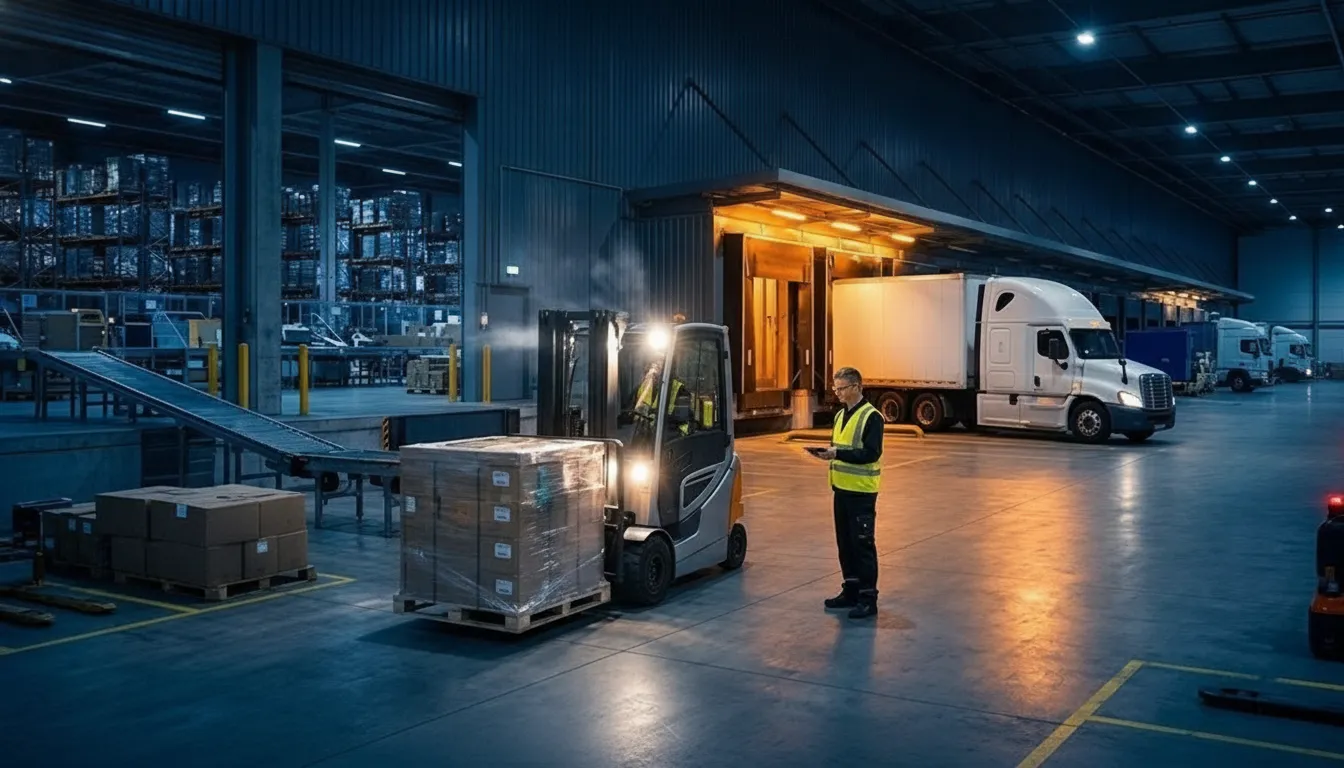
When crossdock freight cannot clear a remote dock, first confirm who can authorize floor access, labor, and a routing change. Then choose one move: stabilize it on site, transfer it, hold it, or set re-delivery. The right choice depends on freight condition, equipment, dock access, and the next delivery.
The decision is easier when everyone shares the same facts. Share the location, the refusal reason, the load condition, the trailer status, the appointment limits, and who can approve work. The response can then match the real limit instead of assuming the dock has space or labor.
When crossdock freight cannot clear a remote dock
A normal cross-dock move is already explained on the cross-docking definition page. This section covers what to do when that handoff cannot happen at a remote facility.
There are three common stalls. First, the receiver refuses the freight. The refusal may involve visible damage, a shifted load, missing paperwork, a delivery appointment problem, or a condition the receiving team cannot accept. Until the receiver, shipper, carrier, or another authorized party agrees on the next move, the trailer is not simply ready for another stop.
Second, the load shifts before it can transfer. Freight that is leaning, unstable, or no longer safely secured may need inspection and restacking before anyone can unload or reload it. Moving it again without addressing the condition can increase product damage and create a safety problem. The immediate question is whether the freight can be stabilized at that location or needs a controlled move to a facility with the right labor and equipment.
Third, the dock cannot give the trailer floor time. A facility may have no available door, labor, equipment, appointment window, or space to work the load. That does not make the facility a storage plan. Research from Georgia Southern University notes that shipments usually remain in a cross-dock for less than a day and often less than an hour. A stall at someone else’s dock is therefore a decision: hold, re-deliver, rework, transfer, or move to another site. Rijal, Bijvank, and de Koster, Georgia Southern University, 2016.
The facility usually controls the floor, not the broker. A broker can coordinate the parties and request access, but the remote facility decides whether its dock, labor, equipment, and floor space are available. Get that decision in writing, then document the freight condition, receiver’s reason for refusal, trailer location, appointment limits, and the time available before choosing the recovery path. For a time-sensitive transfer problem, the emergency cross-docking guide outlines the factors to review before arranging another facility or handling team.
Who can authorize work at a dock you do not run
A broker can request help, share the shipment details, and approve the spend. That request does not open the door. Floor access, lumpers, photos, and a restack belong to the facility that controls the dock. Until that facility names a contact and a window, no one should assume the work can happen there.
Four parties usually have to agree before labor moves:
- The facility contact who can approve the door, the floor time, and whether outside labor is allowed.
- The receiver or shipper who can accept a restack, a hold, or a change in destination.
- The carrier or driver who controls the trailer and can stay for the work window.
- The service agent who confirms that the freight can be handled safely with the equipment on site.
We Fix Freight does not own the remote dock. Central dispatch matches the request to a nearby agent in a network of more than 150 service agents. The match uses the location and the kind of work the freight needs. The coverage map shows where that network can respond. The first commitment is initial contact within 2 hours. That call confirms the request was received. It is not a promise that an agent is identified or that floor work starts in 2 hours, because the facility still has to grant access.
If the facility will allow outside labor, on-site labor can restack, sort, or repack at that dock. If it will not, the decision moves to a transfer rather than a longer argument at the door.
Facts to collect before anyone is dispatched
A remote-dock request moves faster when the first call answers who, where, and what happened. Collect these details before anyone is dispatched:
- Exact facility name and city: Record the facility’s full name, city, state, and the specific location where the trailer is waiting. A precise destination helps the response team identify the right access point.
- Dock or door contact: Get the name and direct contact details for the person who can approve dock access, labor, and the proposed next step. Confirm whether that person will be available when help arrives.
- Trailer and freight identifiers: Gather the trailer number, PRO number, and BOL number. Include any other reference the facility, broker, shipper, or carrier will use to locate the shipment.
- What failed: State whether the facility refused the load, the freight shifted, the freight was damaged, or the facility had no floor time. Describe what was observed without guessing at the cause.
- Freight condition and safe movement: Explain whether the freight is intact, leaning, crushed, exposed, leaking, or otherwise compromised. Note whether anyone qualified at the site believes it can be moved safely. FMCSA cargo securement rules require cargo to be secured so it does not shift enough to affect stability or maneuverability. The next move has to be stable, not just fast. This is general information, not legal advice.
- Appointment or rejection details: Capture the appointment time, arrival time, rejection reason, facility instructions, and any new time offered. Ask whether the facility can receive the freight after a restack or repack, or whether it requires a different destination.
- Photos, if permitted: Ask the facility and carrier whether photos are allowed. If they are, collect clear images of the load, damaged packaging, trailer interior, labels, seals, and the dock conditions without delaying a safe response.
When these facts show that the freight needs a restack or repack before it can proceed, review the rework service as the next step.
Restack, transfer, hold, or re-deliver
Pick one next move from what the dock will allow and what the freight can safely do. The table is a decision, not a list of services to order together.
| Decision | Choose it when | Do not choose it when |
|---|---|---|
| Restack on site | The freight can be handled safely here, the site allows floor access and labor, and the planned route can continue. | Do not choose it when the floor, equipment, labor, or securement conditions are inadequate, or when the current site cannot authorize the work. |
| Move to a cross-dock | Choose a cross-dock when the freight needs a controlled transfer to the next truck and can stay on the same mode. | Do not choose it when there is no approved receiving point, the shipment needs a mode change, or moving it would create an unsafe condition. |
| Transload to another mode | Choose transloading when the recovery plan requires changing the shipment from one transportation mode to another and the receiving arrangement is approved. | Do not choose it when the shipment can continue by the same mode through a cross-dock or when no carrier, destination, or handling plan is confirmed. |
| Short hold | Choose a short hold only when the freight cannot safely move yet or has no approved destination, and a responsible party is actively resolving that constraint. | Do not choose it as a default storage option when the freight is ready to move and a safe, authorized transfer is available. |
| Re-deliver | Choose re-delivery when the shipment is intact and the original or an approved alternate destination can receive it on a confirmed appointment. | Do not choose it when the freight needs inspection, restacking, a mode change, or a different destination before it can move safely. |
Restack on site only after the facility has approved the floor, the labor, and the equipment. If any of those is missing, a restack request usually burns the driver’s hours without making the freight safer.
A cross-dock move keeps the freight on a truck and points it at the next truck. The emergency cross-docking guide explains how that transfer is set up. Request cross-dock service when the remote dock will not work the load. Choose transloading only when the recovery changes the mode, such as truck to rail or rail to truck. A same-mode transfer is not a transload.
A short hold is a pause, not a storage plan. Use it when the freight cannot move safely or no destination is approved, and name the person who is clearing that block. Re-delivery comes after the freight is stable and a receiver has a confirmed appointment. Sending a refused load back to the same door, in the same condition, repeats the refusal.
How the handoff stays clear
Once the next move is approved, the broker should have one work order that everyone can follow. It should identify the shipment, the freight condition, the requested service, the facility address, and the person authorized to approve labor or floor access. Keeping those details in one place reduces the chance that a driver, facility, and service team are working from different instructions.
The work order should also state the facility access window. Confirm when the dock can receive the team, where the driver should stage, and who will meet the driver on arrival. That person may be a facility contact, a carrier representative, or another authorized party. If access changes, the broker should update the work order before the team is dispatched rather than relying on a last-minute call.
At the dock, the handoff should create a simple record of what was found and what was done. The service team can document the condition with photos, record the piece or pallet count, and note any visible shortage, damage, shifted freight, or packaging issue. Those records help the broker coordinate with the shipper and carrier and give the next facility a clearer receiving plan. If cargo has shifted, the finished work has to leave it secured. FMCSA cargo securement rules require cargo to be contained so a shift does not affect the vehicle’s stability or maneuverability. Under 49 CFR 393.100, that securement has to hold before the freight rolls again.
A quote comes after the location, condition, and access are known. The broker can then confirm the authorized scope, timing, and next appointment without guessing at the work before the freight is inspected. Services are payable upon completion to We Fix Freight via Comchek, EFS, or Credit Card. The driver will not pay on location.
Before the freight rolls again, the broker should have a revised appointment and destination instructions, including any changed arrival window or receiving requirements. If the transfer itself already failed, see the failed cross-dock operation guide for that separate situation.
What each party should do in the first hour
The first hour is for decisions, not for a second telling of the same story. Each party owns a different fact, and the load stays stuck when those facts stay in separate inboxes.
The broker opens one thread and names the decision owner. That note should say where the trailer is, why it stopped, and which of the five moves is being requested. It should also say who is allowed to approve a change in destination. A group text with no owner is how a restack and a transfer get ordered at the same time.
The carrier confirms the driver can stay for the access window, or says when the trailer has to leave. Hours of service and the next dispatch matter here. A perfect floor plan is useless if the driver is out of hours before labor arrives.
The shipper confirms what “acceptable” means for this freight. A shifted load of canned goods and a shifted load of packaged equipment do not get the same answer. If the shipper will not accept a restack, the broker should stop asking the dock for floor time and move to a transfer or a hold.
The facility gives a yes or no on access, a door, and outside labor. A maybe is a no until a named contact puts a window on it. We Fix Freight uses that yes or no to match a nearby agent. The agent does not show up to negotiate with the guard shack.
Mistakes that keep the trailer sitting
Three habits turn a short stall into a missed delivery.
The first is sending the driver back to the same receiver before anyone has changed the freight or the appointment. A refusal for damage, a shift, or a missed window does not clear itself on a second arrival. Confirm the new appointment only after the condition that caused the refusal is fixed.
The second is treating the remote dock as free storage. A cross-dock is built to turn freight, not to hold it while the parties debate. If the facility has no door and no labor, move the freight to a site that can work it. A short hold is the other choice, and it needs a named owner and an end time.
The third is splitting the work across two vendors before the access answer is in. One team cannot restack freight the facility will not let them touch, and another team cannot book a cross-dock until someone confirms the freight can leave. Get the access answer, pick one row in the decision table, and put that row on the work order.
Frequently Asked Questions
Who can authorize rework when the crossdock refuses the freight?
The broker or shipper should confirm who can approve dock access, labor, restacking, a hold, or a new move. The remote facility may control the floor, but it should not change the freight plan without direction from the party responsible for the shipment.
What information should I collect before deciding what to do?
Record the dock location, shipment and appointment details, refusal or damage reason, pallet and carton counts, photographs, seal status, available equipment, and the next delivery requirement. Also confirm whether the facility will allow floor access, how long it can hold the freight, and who can authorize work on site.
When should the freight be restacked instead of moved to another crossdock?
Restack on site when the facility permits access, the freight can be made stable safely, and the next move can continue without a separate transfer. Move the shipment when it needs controlled handling or the current site cannot provide labor or space.
When is transloading a better choice than another crossdock?
Choose transloading when the recovery requires a change in transportation mode or equipment, not just a transfer to a nearby dock. If the same mode can continue after rework, a crossdock may be the simpler option. Confirm the destination, equipment, handling permissions, and timing before authorizing either move.
Get the next move started
If crossdock freight is sitting at a dock you do not control, send the facility, the trailer details, and what the dock will allow. We Fix Freight will match the request to a nearby agent and confirm whether the freight should be restacked, transferred, held, or set for re-delivery.