
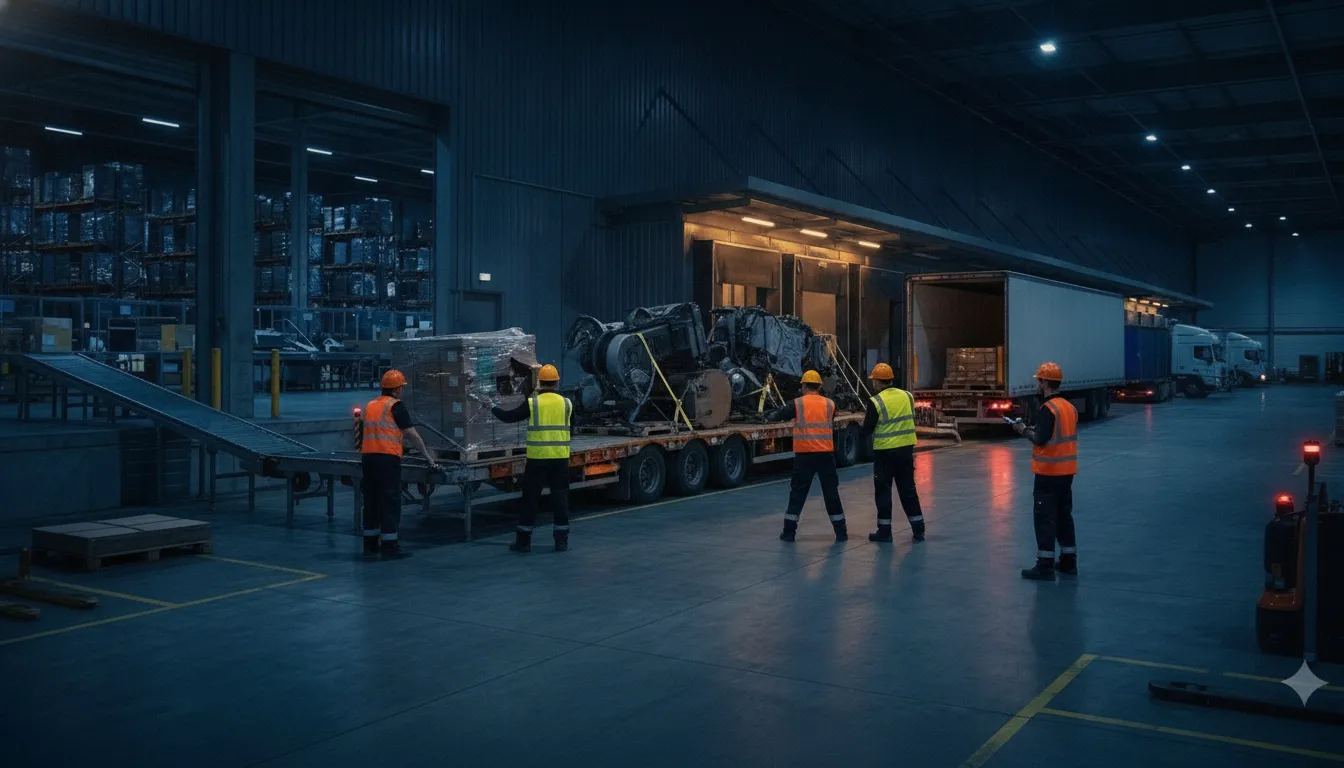
A rejected delivery, shifted load, equipment failure, or temperature issue can put a 3PL in a difficult position: the customer expects an immediate solution. But the 3PL may not own the warehouse, truck, labor, or specialized equipment needed to stabilize the freight. The answer is not to build every response asset in-house. It is to coordinate qualified capacity quickly, with clear ownership of communication and execution.
Contact us now for emergency freight support
Effective emergency freight solutions for 3PLs combine fast crisis classification, a qualified service network, and disciplined status updates. An asset-light provider can use partner-owned facilities, trucks, equipment, and labor while central dispatch matches the situation to an available agent by location and capability. That model gives the 3PL a practical path to protect the shipment and the customer relationship without pretending to own every response asset.
That boundary matters most when the problem exceeds normal brokerage or coordination work. Understanding which freight emergencies require outside capacity is the first step toward building a response that is fast, accountable, and appropriate to the load.
What Freight Emergencies 3PLs Cannot Handle In-House
A non-asset-based 3PL can coordinate a shipment without owning every truck, warehouse, dock, or labor crew involved in moving it. That model is efficient during normal operations, but a freight emergency can expose its limits quickly. A shifted pallet may need hands-on re-work before the carrier can continue. A rejected delivery may require temporary storage and a new delivery plan. Temperature concerns, equipment failures, and route disruptions can create specialized needs that a 3PL cannot reasonably maintain in every market.
That does not mean the 3PL lacks operational control. It means the response must be orchestrated through qualified outside capacity. The first decision is to classify the problem accurately: Is the load unstable, damaged, refused, delayed, inaccessible, or at risk of further loss? The answer determines whether the next step involves on-site labor, freight re-work, cross-docking, short-term warehousing, re-delivery, or another intervention.
Where the in-house model reaches its boundary
Keeping every possible capability in-house would require maintaining facilities, equipment, trained labor, and transportation options for situations that may occur in different regions and at unpredictable times. It would also make it difficult to respond when a local carrier fails, a receiving location refuses the load, or a route disruption changes the shipment’s destination. For a 3PL, the practical goal is not to own every response asset. It is to know how to activate the right resource without losing time or visibility.
When cargo is damaged or no longer safe to deliver as loaded, a specialized damaged freight recovery guide can help frame the next operational questions. The 3PL still needs to confirm the freight’s location, condition, timing requirements, and customer priorities, then match those details to an available provider. That is the operating foundation for emergency freight solutions for 3PLs: retain responsibility for coordination while bringing in the physical capacity the crisis requires.
How Asset-Light 3PLs Use Service Networks for Crisis Response
An asset-light response model gives a 3PL access to capacity without requiring it to own every warehouse, truck, cross-dock, piece of equipment, or labor team. The network can include partner-owned warehouses with dock space, trucking companies with available capacity, cross-dock facilities, specialized equipment providers, and independent freight handlers. That structure helps a 3PL scale its response around the shipment’s location and actual requirements instead of searching for a single provider that can do everything.
The important distinction is coordination. Central dispatch receives the request, captures the freight location and operational need, and identifies a qualified local agent. Selection is based on proximity, capability, and availability. Once an agent accepts, the response moves through resource mobilization, on-site assessment, service execution, and status updates. The 3PL retains a clear communication path rather than leaving its customer to coordinate separately with a warehouse, carrier, and labor provider.
For emergency freight solutions for 3PLs to work, the network must be available when normal operating hours are over. We Fix Freight markets 24/7/365 availability, including nights, weekends, and holidays, supported by continuous dispatcher coverage.
Its documented commitment is to make initial customer contact and identify an agent within two hours. That is a response commitment, not a promise that every freight problem will be resolved within that period. Resolution time still depends on the cargo, location, required equipment, site conditions, and the selected service.
A strong network also keeps the 3PL informed while local capacity is being activated. The dispatch team can coordinate acceptance, confirm what the agent can perform, and relay progress through the response. With more than 150 independent service agents across the United States, We Fix Freight presents a distributed model rather than a company-owned nationwide fleet or warehouse system. The result is a practical way to extend a 3PL’s crisis capacity while preserving accountability for communication and execution.
Which Services Matter Most in a Freight Emergency?
The right response depends on what is blocking the shipment, where the freight is located, and what must happen next. A 3PL should match the service to the operational decision, rather than defaulting to a generic recovery request. Specialized capabilities, including temperature-controlled storage, hazmat handling, heavy equipment, and rail remediation, are location-dependent and should be confirmed during dispatch.
| Situation | Response option | 3PL decision point |
|---|---|---|
| Shifted, leaning, unstable, or damaged pallets | Freight re-work and pallet restacking, with on-site assessment and handling as needed | Can the load be safely stabilized and made deliverable at its current location? |
| A receiver, route, or facility cannot accept the shipment as planned | Emergency cross-docking services to transfer, stage, or redirect freight | Should the freight be transferred locally, staged temporarily, or redirected to another destination? |
| A delivery attempt failed, or a receiver rejected the load | Freight re-delivery services, coordinated around receiver requirements | What must change before the next appointment, and who will confirm acceptance? |
| Freight needs a temporary holding point | Short-term warehousing with suitable dock and handling capacity, subject to local availability | How long must the freight be held, and what storage or handling conditions apply? |
| A truck, trailer, or transportation mode cannot continue | Transloading or load transfer to another vehicle or mode, with equipment matched to the cargo | What transfer method protects the freight while preserving the next feasible movement? |
| The shipment needs physical handling beyond the driver or facility team | On-site labor for unloading, sorting, restacking, loading, or related freight handling | What labor, equipment, access, and safety requirements must be confirmed before mobilization? |
| Cargo is damaged or cannot be economically returned to the delivery stream | Product disposal options coordinated as part of the resolution | Has the customer authorized disposition, and what documentation is needed to close the shipment? |
These options can be combined. For example, a shifted load may require re-work, temporary warehousing, and re-delivery. Clear location, cargo, timing, and receiver information helps dispatch identify the appropriate partner capacity without assuming that every service is available at every location.
How to Vet an Emergency Freight Partner as a 3PL
When a shipment problem reaches your operations desk, evaluate the response partner as an extension of your team, not simply as a vendor with a nearby dock. The right emergency freight solutions for 3PLs should help you protect the shipper relationship while coordinating the physical work required to stabilize the load.
- Confirm geographic coverage. Ask whether the partner can coordinate help nationwide and how it selects a local resource for the shipment’s actual location. A broad network is useful only when dispatch can identify an available, qualified agent.
- Match capability to the cargo. Describe the freight, packaging condition, handling requirements, equipment needs, and delivery objective before accepting a proposed solution. The partner should distinguish among freight re-work, cross-docking, re-delivery, short-term warehousing, transloading, and on-site labor. Specialized resources, including temperature-controlled storage or heavy equipment, may be available only at select locations.
- Clarify dispatch ownership. One coordinator should own the request from initial intake through agent acceptance, mobilization, on-site assessment, and resolution. Ask who updates your team when the local resource accepts the work and when conditions change. For a transfer that requires specialized capacity, review the partner’s emergency load transfer capability.
- Require usable documentation. Confirm how the partner records the location, cargo condition, service performed, status updates, and completion details. This record supports your customer communication, internal handoff, and any follow-up with the carrier or receiver.
- Test pricing and payment clarity. Look for standardized, quote-based pricing explained before work begins, without unsupported promises or surprise charges. The approved payment process is simple: services are payable upon completion to We Fix Freight via Comchek, EFS, or Credit Card. The driver will not pay on location.
Finally, ask whether the company maintains direct relationships with its service agents and monitors customer feedback. That accountability matters when your brand is relying on an external network during a time-sensitive freight disruption.
How Emergency Freight Solutions for 3PLs Extend Response Capacity
We Fix Freight gives asset-light 3PLs an operating extension for urgent freight problems without requiring them to own every warehouse, truck, piece of equipment, or labor resource. Central dispatch coordinates a partner-owned network of more than 150 service agents across the United States, while direct agent relationships support consistent procedures, communication, and quote-based pricing.
A repeatable response sequence
The process starts by classifying the incident. A shifted pallet, rejected delivery, equipment failure, temperature concern, or route disruption may require a different response. The team then captures the details that determine the next move: the freight’s location, cargo condition, service needed, timing, equipment requirements, and delivery objective.
Dispatch matches the situation with an available agent based on proximity, capability, and availability. Once the agent accepts, We Fix Freight helps mobilize the required labor, equipment, facility access, or transportation support. The agent assesses the freight on site before the appropriate work begins, which may include re-work, cross-docking, re-delivery, transloading, short-term warehousing, or on-site labor.
Communication continues through execution and resolution. That gives the 3PL a coordinated point of contact while local partners perform the physical work. It also preserves the distinction between coordination and ownership: We Fix Freight does not claim to own all the facilities or assets in its nationwide network. Its value is in organizing qualified capacity when the 3PL’s existing options are limited.
Capacity that can scale with the incident
The company’s nationwide freight coverage supports response planning across the United States, although capabilities remain location-dependent. A documented InBev case describes approximately 20 beverage loads stabilized and back on track within 48 hours during a heatwave. That example demonstrates coordinated execution in one situation, not a guaranteed timeline for every emergency.
Frequently Asked Questions
What should a 3PL do first when a shipment is disrupted?
Classify the problem before choosing a response. Capture the freight location, cargo condition, delivery deadline, equipment issue, and immediate safety concerns. Then identify whether the load needs re-work, temporary storage, cross-docking, re-delivery, transloading, or another intervention. A clear intake prevents the response team from sending the wrong resource or duplicating work.
Can an asset-light 3PL get local freight help without owning facilities?
Yes. A 3PL can use a qualified service network with partner warehouses, cross-dock locations, labor resources, trucking capacity, and specialized equipment. The important safeguards are local capability, clear dispatch ownership, documented handoffs, and one communication path for the customer. The provider should match the response to the freight’s market, condition, and timing rather than assume one facility or service fits every load.
What information does an emergency freight partner need to mobilize?
Provide the exact location, shipment and commodity details, pallet or packaging condition, quantity, delivery destination, required completion time, equipment involved, and any access or handling restrictions. Photos, appointment details, and the decision-maker’s contact information can also reduce clarification delays. With that information, the partner can determine the capability needed and coordinate an appropriate local agent.
What services can support a 3PL during a freight crisis?
Common responses include freight re-work and pallet restacking, cross-docking, re-delivery coordination, on-site labor, transloading, and short-term warehousing. Damaged or unusable cargo may require controlled product disposal. Some locations also support specialized needs such as rail remediation, temperature-controlled storage, or heavy equipment. Availability depends on the cargo, location, and qualified local resources, so confirm capability before dispatch.
Contact us now for emergency freight support
When a freight crisis exceeds your team’s available capacity, an experienced response partner can help you coordinate the next practical step without adding permanent assets. We Fix Freight supports urgent re-work, transfers, storage, re-delivery, and related logistics needs for 3PL operations. Contact us now to explain the situation, location, and service required so the response can be assessed and coordinated.