
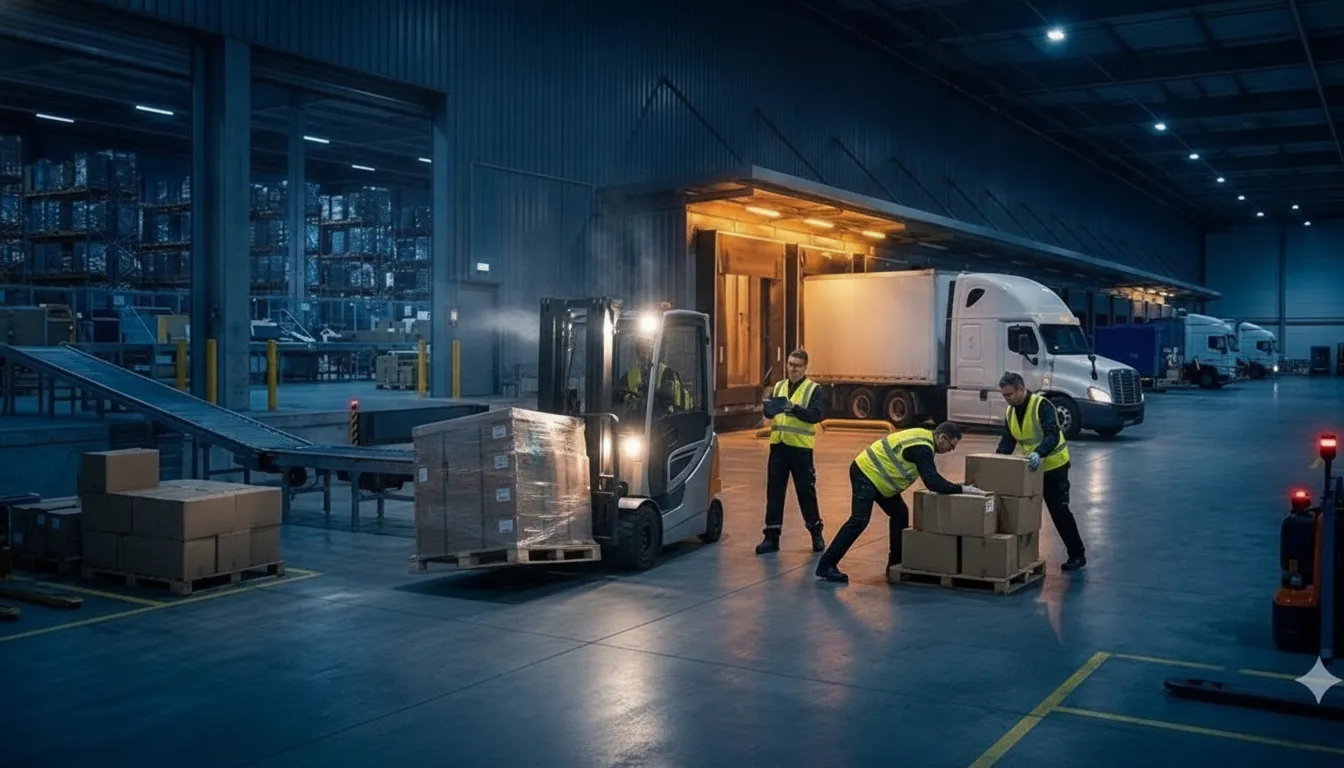
When pallets collapse inside a trailer, a freight broker has more than a damaged load to manage. Delivery timing, carrier coordination, inventory control, and shipper expectations can all be at risk at once. The first priority is to stabilize the freight and bring in qualified help before the problem creates further damage or delays.
Fallen pallets rework near me means urgent, on-site freight remediation that can include restacking, repositioning shifted product, replacing damaged pallets, or transloading the load when necessary. A qualified rework partner can coordinate local labor and equipment, document the condition, and help move the freight toward its destination safely.
WeFixFreight provides 24/7 emergency support through a nationwide network of more than 150 service agents, with a two-hour commitment for initial contact and agent identification. Learn more about our pallet rework and restack services, then consider the conditions that commonly cause pallets to fall during transit.
What Causes Pallets to Fall During Freight Transit
Palletized loads usually shift because several small weaknesses combine during a trip. A pallet may leave the facility appearing stable, then move when the trailer brakes, turns, vibrates over uneven pavement, or transfers freight between facilities. Understanding the cause helps a broker or carrier choose the right correction instead of simply pushing a leaning pallet back into place.
Loading, spacing, and load balance
Improper loading is a frequent starting point. Gaps between pallets can allow movement, while uneven weight distribution can leave one side of the load unsupported. A top-heavy stack is especially vulnerable because its center of gravity sits higher and can shift during braking or cornering. Pallets that are broken, leaning, or stacked beyond their stable footprint also have less margin for movement. As a general safety principle, OSHA states that cargo and pallets stored in tiers must be stacked to provide stability against sliding and collapse. OSHA’s stacking standard provides the relevant guidance.
Wrap, dunnage, and handling failures
Loads can also shift when stretch wrap or shrink wrap is loose, incomplete, or applied without enough tension. Wrap helps hold cases together, but it cannot compensate for poor pallet alignment or a damaged pallet base. Insufficient dunnage, blocking, or bracing leaves empty space where cartons and pallets can slide. These conditions may worsen as the trailer moves, causing leaning stacks, crushed packaging, or a complete pallet fall.
Cross-dock and transfer handling creates another risk point. Moving freight with a forklift, changing trailers, or repositioning a compromised pallet can add impact to an already unstable load. If a pallet arrives leaning or broken at a cross-dock, professional pallet rework can include restacking and securing the freight before it continues over the road. When the load cannot be safely stabilized through immediate restacking, transloading may be necessary. The goal is to restore load integrity before another movement turns a partial shift into a full collapse.
Why Collapsed Pallets Are Both a Safety and Liability Issue
A collapsed pallet is not simply a damaged unit that needs cosmetic repair. Once freight has fallen, shifted, or begun leaning, the load may be unstable inside the trailer, at the dock, or during unloading. Moving it without a controlled plan can expose warehouse workers, drivers, and others nearby to falling cases, broken boards, sharp materials, and sudden load movement.
OSHA’s cargo-handling standard states that cargo, pallets, and other material stored in tiers must be stacked to provide stability against sliding and collapse. That requirement is directly relevant when a palletized load is being staged, handled, or rebuilt at a facility. See OSHA 29 CFR 1917.14. A safe response should therefore address the underlying stability problem, not merely push freight back into place.
Why the risk extends beyond the trailer
On public highways, an unstable load can create danger for the driver and for other road users. A pallet that moves during braking, turning, or impact can damage adjacent freight, obstruct access to the trailer, or make continued travel unsafe. Even when no one is injured, additional handling can worsen product damage and increase the chance of shortages, contamination, or rejected freight.
The operational consequences can be just as serious. A carrier may be unable to complete delivery until the load is inspected and made stable. That can lead to missed appointments, detention, re-delivery requirements, claims, and disputes over who bears the cost of damage or delay. The specific liability outcome depends on the contracts, facts, and parties involved, but poor documentation and improvised handling make those disputes harder to resolve.
The best response is controlled remediation: secure the area, document the condition. Assess whether the pallets and products remain usable, then restack, reposition, or transload the freight as needed. Professional rework protects people first while also preserving evidence and giving brokers, shippers, and carriers a clearer path to safe delivery.
The Broker’s Checklist When a Load Collapses in Transit
A collapsed load creates pressure to move quickly, but the first response should protect people and preserve clear information. Use this checklist to keep the carrier, shipper, and remediation partner aligned while reducing avoidable downtime.
- Assess the scene and confirm driver safety. Ask the driver to stop in a safe location, follow applicable site and carrier procedures, and avoid entering an unstable trailer or handling freight without the right equipment. Determine whether anyone is injured, whether the trailer or pallets present an immediate hazard, and whether the load can remain where it is safely. Cargo stored in tiers should be stable against sliding and collapse, as recognized in OSHA’s stacking guidance.
- Photograph and document the condition. Request clear photos of the trailer interior, fallen or leaning pallets, damaged packaging, pallet labels, restraints, and any visible product damage. Record the location, time, trailer number, seal status, shipment identifiers, and the driver’s initial account. Keep the original images and note what is known versus what still needs confirmation.
- Secure the load without improvising a repair. Keep unauthorized personnel away from unstable freight. Do not instruct the driver to force pallets upright, climb into a collapsed stack, or continue the route before the load is assessed. If the vehicle cannot safely proceed, coordinate a safe holding location while a qualified team is dispatched. Rework may involve restacking, repositioning, or transloading when pallet integrity has been compromised.
- Call a professional rework partner immediately. Provide the exact truck location, access instructions, freight type, pallet count, visible damage, and equipment needs. A rapid call helps identify whether on-site restacking is practical or whether cross-docking and transloading are required. For more detail on responding to fallen pallets, follow a documented emergency process rather than waiting for the problem to worsen.
- Coordinate with the carrier and update the shipper. Confirm who is managing the incident, where the truck is being held, and what information the rework team needs. Send factual updates as the assessment, dispatch, and repair plans change. Avoid promising a delivery time until the freight is stabilized and the onward route is confirmed.
- Verify the rework before onward routing. Request completion photos, updated pallet and piece counts, notes on damaged product or packaging, and confirmation that the load is stable for transport. Reconcile the documentation with the carrier and shipper, then release the truck only when the responsible parties agree that the freight can move safely.
How Fallen Pallet Rework Near Me Gets Dispatched Nationwide
When a broker searches for fallen pallet rework near me, the goal is not simply to find a warehouse. It is to reach a response team that can identify the load’s location. Understand the condition of the freight, and send qualified labor and the right equipment without delay. A nationwide emergency rework provider coordinates that process around the truck’s actual position, whether the driver is stopped at a distribution center, cross-dock, consignee, or roadside location.
We Fix Freight provides 24/7 nationwide service through a network of more than 150 agents. That coverage allows the dispatch team to match a shipment with available local resources instead of treating every incident as a distant, one-size-fits-all request. The initial response target is about two hours, although the exact arrival time depends on the location, access conditions, freight type, and scope of the damage.
Matching the load to local labor and equipment
Dispatch begins with practical details. The broker or carrier shares the truck’s location, the number of affected pallets, the condition of the trailer and freight, and any immediate safety concerns. The provider then identifies nearby labor and equipment suited to the job. A minor shift may require on-site pallet handling and restacking. A collapsed or damaged load may require additional handling equipment, replacement pallets, or a controlled transfer into another vehicle or facility.
This location-based coordination is important because freight rework is more than moving boxes. The objective is to restore a stable load that can continue safely and with as little disruption as possible. The process may include repositioning shifted freight, restacking fallen pallets, inspecting damaged units, and separating product that cannot be returned to the original configuration. See the pallet rework and restack services overview for the broader remediation process.
Restacking, transloading, or cross-docking as needed
Restacking is often the first option when the pallets and products remain suitable for transport. For more complex incidents, transloading may be necessary when the vehicle cannot safely continue because load integrity has been compromised. Cross-docking can provide a controlled location to unload, assess, reconfigure, and reload the shipment. These options help keep a single fallen-pallet event from becoming a longer delivery failure.
| Option | Best when | What it involves |
|---|---|---|
| Restacking | Pallets and product remain usable | Rebuild unstable pallets, re-wrap or strap cartons, and secure the finished load on site. |
| Transloading | The current vehicle cannot safely continue | Transfer the load into another trailer or vehicle while preserving load integrity. |
| Cross-docking | A controlled rework site is needed | Unload, assess, reconfigure, reload, and possibly stage freight short term. |
For immediate pallet stabilization, review the emergency pallet restack service. Brokers managing incidents outside normal business hours can also use the 24-hour pallet rework resource to understand how round-the-clock dispatch supports urgent freight recovery.
Documenting Fallen-Pallet Events for Claims and Reporting
Good documentation turns a chaotic fallen-pallet event into a clear record that carriers, shippers, brokers, and service teams can act on. Start before freight is moved, unless leaving it in place creates an immediate safety hazard. Photograph and record video from multiple angles, including the trailer interior, pallet positions, damaged packaging, visible product loss, restraints, and any areas where the load shifted. Make sure each file carries a reliable date and time.
Then build an itemized inventory. Count affected pallets and note the SKU, product description, quantity, and condition for each one. Separate crushed, leaning, broken, wet, or potentially salvageable goods in your notes. Record the trailer number, seal information, location, and the time the issue was discovered. Keep the load-out records, bill of lading, delivery paperwork, and any prior inspection records with the incident file.
- Ask the driver and carrier representative for written notes describing when and where the shift was noticed.
- Capture names, roles, contact details, and statements from people who inspected or handled the freight.
- Record what was secured, discarded, restacked, repositioned, or transferred, along with the time each action occurred.
- Attach photos, video, inventory counts, BOL records, and communication logs to one incident report.
The report should also explain the corrective action. If the pallets were restacked, identify what changed and how the finished load was stabilized. If the vehicle could not safely continue, document the decision to use a cross-dock or transloading solution. OSHA states that cargo and pallets stored in tiers must be stacked to provide stability against sliding and collapse. That standard supports treating load stability as a documented safety concern, not merely a claims detail: review the OSHA stacking requirement.
Clear records help a rework provider prepare an accurate scope and support transparent standardized pricing, so emergency remediation does not create unexpected costs or disputes. They also give every party the same timeline, condition report, and completion record when a claim or delivery exception is reviewed.
Frequently Asked Questions
What is pallet rework and why is it necessary?
Pallet rework is corrective handling that stabilizes and re-secures a shipment after freight shifts, falls, or becomes unsafe to handle. It can include restacking, repositioning, re-wrapping, or transferring freight so the load can be unloaded, stored, and delivered safely.
What causes palletized loads to shift during transit?
Common causes include improper loading or spacing, inadequate stretch wrap, insufficient dunnage, and uneven weight distribution. Repeated handling at terminals or cross-docks can also worsen an unstable load.
How can I find freight rework services near my location?
Contact a specialized freight rework provider that can identify nearby warehouse labor, equipment, and an appropriate work site. Give the dispatcher your location, trailer status, freight type, pallet count, and the immediate safety concern so the response can be coordinated efficiently.
What services are included in a typical pallet restacking job?
A restacking job may include unloading affected freight, rebuilding unstable pallets, re-wrapping or strapping cartons, repositioning shifted product, and checking the finished load. Depending on the situation, the provider may also arrange cross-docking, transloading, relabeling, or short-term storage.
Is pallet rework required for all shifted loads?
Not every shift requires the same corrective work, but any load that cannot be safely handled, transported, or delivered needs a documented assessment. If pallets are fallen, leaning, damaged, or blocking safe access, qualified rework personnel should stabilize the shipment before the next handling or delivery step.
Get Fallen Pallet Rework Near Me Fast
A collapsed or shifted load does not need to turn into a delivery failure. WeFixFreight provides 24/7 emergency freight rework through a nationwide network of more than 150 service agents, ready to restack, reposition, or transload fallen pallets at your location. Pricing is clear, upfront, and standardized, so there are no surprises when the work is urgent.
Contact us now to get a fallen-pallet rework team dispatched to your site and keep your freight moving.