
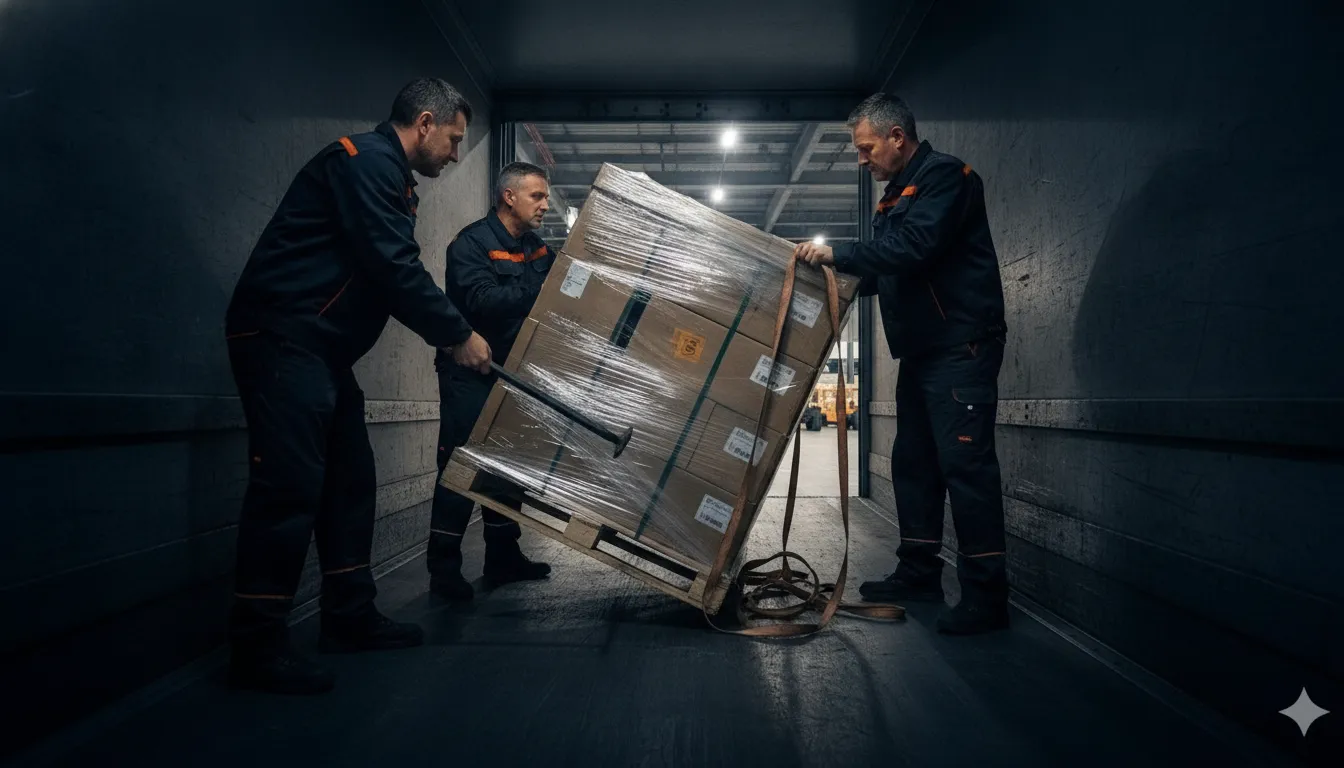
Freight damage rarely becomes a claim at the first sign of trouble. A shifted pallet, failed packaging, or unstable load can worsen during handling, transit, or delivery unless someone assesses the condition and acts quickly.
To prevent freight claims through rework, inspect the load early, document its condition, and correct the underlying problem through restacking, re-palletizing, repackaging, or other appropriate stabilization. Timely intervention can help reduce the risk of rejection, delay, additional cargo damage, and a more difficult recovery process.
For shippers, brokers, carriers, and 3PLs, the first decision is not whether every claim can be avoided. It is whether the freight can be safely stabilized and moved forward with a clear record of what happened. A practical assessment of the load, cargo, delivery commitment, and available resources creates that decision point. The next step is understanding why timing matters when freight is already exposed.
Why Timely Rework Can Reduce Freight Claim Exposure
A load problem becomes harder to manage when damaged or unstable freight continues through the delivery process without a clear decision. A shifted pallet, collapsed stack, or failed package may create additional damage, a rejected delivery, or uncertainty about when the condition changed. Timely rework gives the operations team a chance to assess the situation, protect the cargo from additional loss, and choose a documented recovery path before the issue grows.
The first decision should be based on the actual condition of the shipment, not on an assumption that every problem requires a claim. Early assessment considers the severity of the incident, cargo type, location, special handling needs, delivery commitments, equipment, and available resources. That information helps determine whether the load needs stabilization, repackaging, restacking, cross-docking, re-delivery, or another response. Qualified emergency pallet restack service can be part of that response when fallen, leaning, or shifted freight needs immediate attention.
Rework cannot guarantee that a freight claim will be avoided. It can, however, help prevent a correctable load condition from becoming a larger delivery failure or cargo-damage escalation. Restacking and re-palletizing may improve stability and road readiness, while replacement packaging or protective materials may reduce the chance of additional damage. The goal is to contain the operational problem while preserving an accurate record of what happened and what was done.
That record starts before the crew changes the load. Use a documented freight inspection before rework to capture the shipment’s condition, visible damage, packaging, pallet positions, and other relevant details. Photos, timestamps, delivery information, and the work performed can help the carrier investigate later. Federal freight-claim rules require claims to be investigated promptly and thoroughly, and an investigation may require the bill of lading, freight-charge evidence, and invoice or certified value evidence. Rework is therefore both a physical intervention and an evidence-sensitive operational step. When the shipment still cannot be delivered normally, coordinated re-delivery or another recovery option may be more appropriate than forcing a damaged load onward.
What Does It Mean to Prevent Freight Claims Through Rework?
Preventing freight claims through rework does not mean guaranteeing that no claim will ever be filed. It means identifying a correctable load condition early, protecting the shipment from additional damage, and restoring the freight to a condition that supports safe delivery when possible. A shifted or unstable pallet, collapsed stack, failed packaging, or poor weight distribution may create a larger problem if the load continues moving without intervention.
Rework can include pallet restacking and re-palletizing shifted freight, replacing damaged packaging, adding protective materials, and addressing moisture or mold damage. These steps can improve stability and make the shipment road-ready. WeFixFreight’s emergency pallet restack service is one example of a response for fallen, leaning, or shifted loads that may otherwise sustain additional damage.
Which claim conditions can rework address?
Freight claims are commonly described as visible damage, shortage, concealed damage, or loss. Visible damage is apparent at delivery. A shortage means only part of the shipment arrives. Concealed damage or shortage is discovered after delivery, often when packaging is opened or freight is un-palletized. Loss means delivery did not occur. These categories are defined by the U.S. General Services Administration in its freight damage claims guidance.
Rework is most directly useful before a correctable condition becomes additional visible damage, a shortage caused by goods falling from a compromised pallet, or a rejected delivery. For example, stabilizing a shifted load and replacing failed packaging may protect cargo that is still recoverable. It may also reduce the chance that handling at the next stop worsens the condition. The work should be assessed against the cargo type, severity, location, handling requirements, and delivery commitment rather than ordered as an automatic response.
What rework cannot prevent
Rework cannot reverse cargo that is already lost, make irreparably damaged goods new, or decide liability for a completed transit event. It also does not replace claim documentation. If a claim remains necessary, the written submission must contain enough facts for the transportation provider to investigate and decide it. Preserve damaged cargo and packaging until the provider authorizes disposal, protect the shipment from further loss, and retain condition evidence before and after the intervention.
The practical goal is a controlled recovery: inspect the condition, document what happened. Stabilize or repackage what can be saved, verify the result, and coordinate the next delivery decision. That approach can reduce claim exposure without pretending that every freight exception is recoverable.
How to Document Rework Before You File a Freight Claim
Rework changes the condition of a shipment, so document what was present before anyone restacks, repackages, transfers, or otherwise handles the freight. A clean record helps separate the original exception from the corrective work and gives the broker, shipper, carrier, and receiver a shared account of what happened. It can also help preserve options if a claim is still necessary after recovery.
- Inspect the load before work begins. Record the shipment location, trailer or container condition, pallet condition, visible damage, shifted or collapsed freight, missing pieces, moisture, and packaging failures. Note which portions appear stable and which require immediate attention. A prompt freight inspection before rework creates a condition record before the load is altered.
- Photograph the condition from several angles. Take wide photographs that show the overall load and location, then closer images of broken pallets. Torn packaging, crushed cartons, exposed product, moisture, labels, seals, and any other relevant detail. Photograph the surrounding trailer or dock area when it helps establish context. Direct evidence is useful during claim review, and visible damage should be documented before a receiver signs the delivery receipt. Keep the original files and note when each image was taken.
- Protect and preserve the cargo and packaging. Move carefully to prevent additional damage or loss, but do not discard damaged cartons, stretch wrap, pallets, straps, or other packaging merely because rework has started. Preserve damaged cargo and packaging until the transportation service provider authorizes disposal. In some cases, early disposal can undermine or even lead to denial of a later claim. If damaged materials must be moved for safety, identify where they were placed and who controlled them.
- Record the timeline and instructions. Create a simple event log with arrival time, discovery time, inspection time, calls, emails, approvals, crew arrival, rework start and finish, and the next delivery instruction. Identify who authorized the work, what action was requested, and whether the instruction was to restack, exchange pallets, repackage, hold, transfer, or continue delivery. A clear timeline helps distinguish transit conditions from post-delivery handling.
- Itemize the freight before and after rework. Compare the bill of lading, packing list, pallet count, carton count, product identifiers, quantities, and visible condition. After work, record what was stabilized, repackaged, separated, refused, short, or placed on hold. For shifted or broken freight, pallet restacking and exchange may be part of the recovery, but the record should show exactly what changed and what did not.
- Retain the supporting records. Keep the bill of lading, freight bill, invoice or other proof of value, delivery receipt, inspection report, photographs, written instructions, crew or repair records, and any rework invoice. These records support investigation and help establish the shipment, value, condition, and corrective action. Brokers should also retain the dispatch trail and use rework documentation for brokers as a repeatable operating reference.
- Separate rework evidence from the written claim. Rework notes, photographs, inspection reports, and repair records document the operational response. They do not automatically replace a formal written claim. Under 49 CFR 370.3, a written claim must be filed with the proper carrier within the applicable time limits. And a notation on a freight bill or delivery receipt alone is not sufficient. Check the bill of lading, contract, tariff, and applicable mode requirements before filing. If a claim proceeds, submit a complete, consistent package that identifies the shipment, states the alleged loss or damage, and includes the required supporting value and freight records.
This separation lets the team pursue recovery without losing sight of evidence. It also makes the handoff cleaner when the load needs a documented re-delivery, further inspection, or another decision after rework.
Rework vs. Claim Escalation: Compare the Operational Decision
The choice between timely rework and claim escalation should follow the condition of the freight, the risk of additional loss, and the evidence available. It is an operational decision, not a promise that rework will eliminate a claim or determine its outcome. A quick assessment should consider severity, location, cargo type, handling requirements, delivery commitments, equipment, and available resources. Those details help the team decide whether the load can be stabilized or whether the incident needs to move directly into a formal claim process.
| Decision factor | Timely rework | Claim escalation |
|---|---|---|
| Freight condition | Use when the load is shifted, unstable, palletized poorly, or has packaging damage that may be corrected. Rework can include restacking, repalletizing, replacing packaging, or adding protection. See freight rework services. | Use when goods are lost, visibly damaged, short, or affected by concealed damage, or when the condition cannot be responsibly recovered through an operational intervention. |
| Immediate action | Protect the cargo from additional damage, assess the incident. And coordinate qualified labor or equipment to stabilize the shipment before a delivery failure becomes a rejection, delay, or wider damage escalation. | Preserve the cargo and packaging, prevent further loss, notify the appropriate parties. And begin the claim workflow without assuming that a delivery receipt notation alone is a complete claim. |
| Evidence to capture | Record the pre-work condition, photographs, time, location, work performed, materials used, and post-work condition. This creates a clear operational record while preserving evidence relevant to any later claim. | Gather the bill of lading, freight-charge evidence, invoice or certified value evidence, photographs, inspection records, and a clear account of the incident. A carrier claim must be investigated promptly and thoroughly. |
| Likely next step | Verify that the load is stable and road-ready, then coordinate delivery, re-delivery, or another recovery step based on the receiver and shipment requirements. | Submit a written claim with enough facts for investigation and follow the applicable contract, tariff, or filing requirements. The carrier may review liability and determine the appropriate resolution. |
Rework and claims are not mutually exclusive. Stabilizing freight can protect it from additional loss while preserving the documentation needed for a later review. Under 49 CFR 370.7, claim support may include the bill of lading, freight-charge evidence, and invoice or certified value evidence. Keep those records separate from the operational work order, and do not discard damaged cargo or packaging before the transportation provider authorizes disposal.
How Brokers, Shippers, and Carriers Build a Rework-First Policy
A rework-first policy gives every party the same response when a load shifts, pallets collapse, packaging fails, or weight distribution creates a delivery risk. The goal is not to promise that every claim can be avoided. It is to create a disciplined intervention that can help protect the freight. Preserve evidence, and keep a correctable problem from becoming a rejection, delay, or larger damage event.
Use one inspect, document, authorize, rework, verify, and release workflow
Inspect: The carrier or on-site operations contact should stop unsafe handling. Assess the load condition, location, cargo type, special handling needs, delivery commitment, equipment, and labor required. A broker or 3PL should collect that information immediately. They should also identify who can authorize the next step.
Document: Record the condition before anything is moved. Capture clear photographs, the load location, visible damage, pallet or packaging failures, seal information when relevant, and a concise timeline. Direct evidence can improve the probability of a favorable claim outcome, according to federal freight-claim guidance. Preserve damaged cargo and packaging unless the transportation service provider authorizes disposal.
Authorize: The shipper or cargo owner should confirm the acceptable recovery path. The broker or 3PL coordinates communication among the customer, carrier, receiver, and service provider. The carrier should provide current equipment and access details. Escalate immediately when freight is unsafe to handle, the cargo is leaking or contaminated, or the receiver may refuse delivery. Escalate when temperature or special handling requirements are at risk, or the load cannot be stabilized with available resources.
Rework and verify: Dispatch qualified labor for the defined task, such as restacking, re-palletizing, replacing damaged packaging, or adding protective materials. Afterward, photograph the completed condition, document materials or work performed, confirm securement and road readiness, and obtain the next delivery instruction in writing. A freight rework service can support this coordinated response.
Assign ownership before the exception occurs
Brokers and 3PLs should own escalation and customer communication. Shippers should define cargo-release authority and evidence requirements. Carriers should secure the scene, report conditions accurately, and avoid unauthorized disposal or movement. If internal resources are unavailable, WeFixFreight coordinates urgent services through a nationwide network of more than 150 independent service agents and central dispatch, with 24/7/365 availability. That structure supports response across the United States, but each load still requires an assessment and a defined scope of work.
Review the policy after each incident. Track where inspection, authorization, documentation, or handoff failed, then update contacts and escalation triggers before the next freight exception.
What Happens When the Load Is Not Economically Recoverable?
Not every freight exception can be solved by restacking or repackaging. When another delivery attempt is not a responsible recovery path, make a documented operational decision. Do not assume that the freight is automatically a total loss.
Start by separating the physical condition from the claim decision. Visible damage, shortage, concealed damage, and loss are distinct claim categories, and the available evidence may affect how the transportation provider investigates the matter. Protect the cargo from additional damage, photograph the condition, record what was found, and preserve the packaging. Damaged cargo and packaging should not be discarded until the transportation service provider authorizes disposal. Premature disposal may contribute to a claim denial. See the re-delivery coordination options when the shipment may still reach its intended receiver after a controlled recovery step.
Choose the least disruptive recovery path
A rejected or compromised load may require re-delivery, cross-docking, short-term warehousing, or another approved handling plan. Re-delivery can make sense when the freight remains acceptable after inspection and the delivery problem can be resolved. Cross-docking can provide a controlled transfer point for separating usable product, correcting packaging, or coordinating the next movement. Learn more about cross-docking after freight damage.
Short-term warehousing may be appropriate when the receiver, equipment, route, or timing must be resolved before the freight moves again. Product disposal is a final operational step, and it should occur only after the responsible parties authorize it and the condition, quantity, and disposition are documented. Keep the bill of lading, freight-charge records, invoices or proof of value, delivery evidence, inspection records, photographs, and a clear timeline. A notation on a delivery receipt alone may not satisfy formal claim requirements, and claim deadlines can depend on the governing contract or transport mode.
The honest claim path is to submit the facts that support investigation, without describing recoverable freight as destroyed or promising an outcome. That disciplined record helps brokers, shippers, carriers, and 3PLs decide whether to re-deliver, hold, salvage, or file a claim while preserving the evidence needed for the next decision.
Frequently Asked Questions
What are the steps involved in the freight claims process?
Start by documenting the shipment condition, preserving damaged cargo and packaging, and notifying the appropriate transportation provider. Gather the bill of lading, delivery receipt, freight bill, invoices, inspection records, and repair documentation. Then submit a written claim that identifies the shipment, explains the alleged loss or damage, asserts liability, and requests a defined payment amount. Rework may address a correctable load condition before or alongside that process, but it does not replace required claim documentation. See the federal freight-claim guidance linked above.
What is the time limitation for filing a freight claim?
There is no single deadline for every shipment. The applicable time limit can depend on the transportation mode, bill of lading, tariff, transportation contract, or other governing authority. Review the shipment documents immediately and confirm the requirement with the carrier or claims contact. Under 49 CFR 370.3, a written claim must be filed with the proper carrier within the time limits specified in the applicable contract of carriage or transportation.
How long do you have to report concealed damage from an LTL shipment?
Do not rely on a universal concealed-damage window. Inspect the shipment as soon as possible after delivery, photograph the condition, retain the packaging, and notify the carrier or claims contact promptly. The actual reporting and filing requirements may be set by the carrier’s rules, the bill of lading, the contract, or the governing mode. Confirm those terms before discarding packaging or beginning work that could change the evidence.
Who is responsible for filing a freight claim?
The party with the legal or contractual right to claim generally files, often the shipper, consignee, cargo owner, or another authorized claimant. A broker, carrier, or 3PL may coordinate records and communication, but should confirm authority and contract responsibilities before submitting the claim. Everyone involved should preserve evidence, document the timeline, and protect the cargo from additional loss while responsibility is being established.
Contact us to plan the next step
When a load needs prompt attention, a coordinated rework assessment can help your team choose a clear path for stabilization, documentation, and recovery. Contact WeFixFreight to discuss the situation and determine what support fits the shipment.