
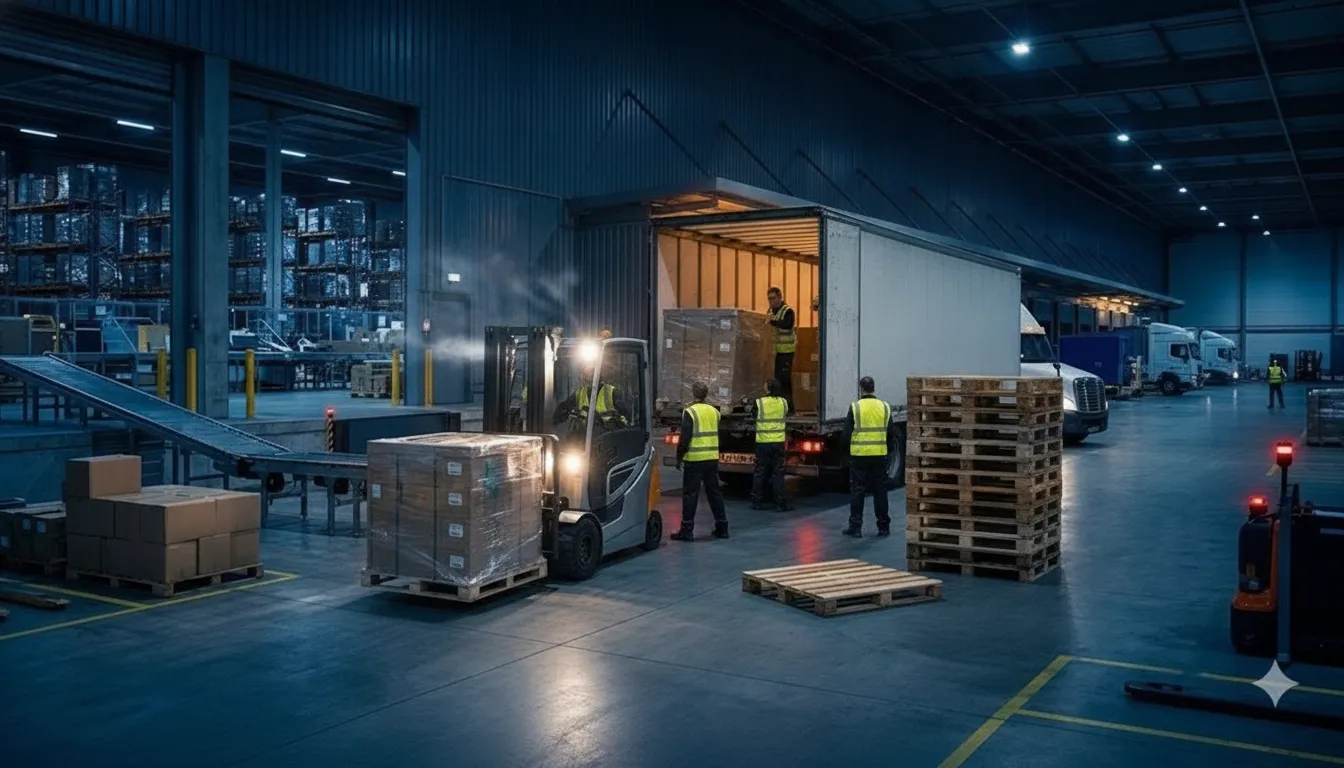
A shifted load does not always need a full recovery operation. A pallet restacking and exchange service can help with both fixes: restacking a sound load and replacing pallets that no longer support the freight. If the freight is leaning because cartons moved, a controlled restack may restore stability. If the pallet itself is cracked, broken, or no longer suitable for the receiver, moving the same freight back onto it leaves the underlying problem in place.
A pallet restacking and exchange service addresses both problems by stabilizing the load and replacing pallets that are structurally compromised or fail destination requirements. WeFixFreight coordinates urgent freight re-work nationwide, 24/7/365, through a network of more than 150 service agents. Initial contact and agent identification are guaranteed within two hours of an emergency call.
The key is recognizing whether the pallet needs repositioning or replacement before the load reaches a dock. The emergency pallet restack service process starts with that distinction, then matches the work to the condition of the freight and the receiver’s standards.
When Do You Need Pallet Exchange vs Just a Restack?
The right response depends on whether the pallet is still structurally sound. A shifted load on an intact pallet may need careful unloading, repositioning, and restacking. A pallet with broken boards, a severe lean, or other structural damage may need to be removed and replaced before the freight can be safely moved.
Restack when the pallet can still support the load
Restacking is appropriate when the pallet itself remains usable, but the freight has moved out of position. For example, cartons may have shifted during transit, a stack may be leaning because its weight is no longer distributed evenly. Or the wrap and load pattern may need to be rebuilt. The rework team can stabilize the freight, inspect the pallet, and rebuild the unit load without exchanging the supporting platform.
This distinction matters because moving an unstable load without correcting its alignment can create more damage at the dock or during the next lift. It can also increase the chance of rejection when the receiver expects a stable, properly configured unit load. In those cases, an emergency pallet restack service can restore the load without treating every incident as a full pallet replacement.
Exchange when the pallet has failed
Exchange is needed when the pallet can no longer safely carry or support the freight. A broken stringer, split deck board, collapsed section, or pronounced lean is more than a stacking problem. The compromised pallet should be exchanged for a sound pallet, then the freight should be restacked and secured on the replacement.
The practical decision is usually clear when you see one or more of these conditions:
- The pallet is visibly broken, cracked, or missing structural components.
- The pallet leans because its support points are no longer level or intact.
- Forklift entry, lifting, or offloading could worsen the damage or drop the unit load.
- The receiving facility requires a standard pallet condition or type that the current pallet does not meet.
Broken pallets can compromise entire unit loads and create workplace hazards, according to OSHA forklift safety guidance. OSHA-related safety guidance also identifies structural failure in the supporting pallet as a frequent cause of load instability. Replacing the failed pallet addresses the source of the problem, while simply restacking on it may leave the freight vulnerable to another collapse.
For brokers, shippers, carriers, and 3PLs, the safest workflow is to have the pallet and load assessed together. If the pallet is sound, restack and secure the freight. If its structure is compromised, exchange it first, then complete the rework and confirm that the finished load is suitable for movement and receiving.
What Types of Pallets Are Used in Emergency Freight Rework
The replacement pallet must support the load, fit the handling equipment, and meet the receiving facility’s requirements. That is why an emergency pallet exchange is not simply a matter of finding any usable platform. A broker, carrier, or shipper may need a specific construction, footprint, or rental-pool pallet to keep the shipment moving through the next warehouse.
Common pallet choices include:
- Stringer pallets: These use boards supported by stringers running between the deck and the floor. They are common in general freight applications and may be built for different entry and handling configurations.
- Block pallets: These use blocks between the top and bottom decks, allowing handling equipment to approach from multiple sides. The added access can be important when a load moves through different docks or warehouse systems.
- Wood pallets: Wood remains common because it is widely available and can support many ordinary freight applications. During inspection, damaged boards, split stringers, loose blocks, and protruding fasteners are reasons to remove a pallet from service.
- Plastic pallets: Plastic designs can be useful where cleanliness, repeatability, or compatibility with automated handling matters. They still must match the receiver’s specifications and the weight and handling demands of the shipment.
- Presswood pallets: Molded or compressed-wood pallets are lightweight options used in some distribution and export settings. Their suitability depends on the freight, the handling process, and the receiver’s standards.
Many domestic supply chains use the GMA footprint, commonly associated with a 48-by-40-inch pallet. However, a familiar footprint does not guarantee acceptance. A receiver may require a particular pallet construction, condition, entry style, or rental-pool pallet. CHEP-style pooled pallets are one example. If the destination operates with a controlled exchange program, replacing a damaged pallet with an unapproved alternative can create a receiving problem even when the load appears stable.
Receiver requirements often dictate the standard pallet type because uniform pallets support safer, more predictable movement through automated warehousing systems. Standardized pallet practices also improve compatibility and load stability across the logistics network. See the pallet rework guide for more on how the broader process protects freight during a crisis.
Condition matters as much as design. A broken pallet can compromise the entire unit load and create a workplace hazard. OSHA identifies load instability and pallet condition as important forklift safety concerns. While NIST research notes that mechanical pallet failures can jam automated conveyor systems and cause distribution-center downtime. Sources: OSHA forklift safety guidance and NIST.
Safe handling is also part of the exchange decision. Correct pallet specifications, inspection, and lifting practices reduce unnecessary manual strain and injury risk during loading and unloading. CDC/NIOSH ergonomics guidance emphasizes proper pallet management and safe lifting techniques for freight-handling work. When the original pallet is broken, leaning, or structurally compromised. A qualified rework team can match the replacement to the receiver’s requirements instead of forcing a risky temporary fix.
How Pallet Exchange Is Handled During a Load Rework
A pallet exchange is completed as part of a controlled freight re-work process. The goal is not only to move product off a damaged support, but to restore a stable, receiver-ready load. WeFixFreight coordinates skilled on-site agents 24/7 so brokers, shippers, carriers, and 3PLs can address the problem before it creates a rejection, claim, or additional delay.
- Assess the load and identify compromised pallets. The service team first reviews the condition of the shipment, including leaning stacks, shifted product, broken boards, damaged stringers, and pallets that cannot safely support the load. This assessment determines which units can be reused and which need to be exchanged. A compromised pallet can affect the stability of the entire unit load, so the team addresses the underlying support issue rather than simply straightening the visible product.
- Unload the product safely. Product is removed in a deliberate sequence that protects the freight and keeps workers clear of unstable areas. The exact approach depends on the load, packaging, available dock space, and the condition of the pallets. Skilled on-site labor can often perform this work without specialized warehouse equipment, reducing the need to arrange heavy equipment at the receiver’s dock.
- Inspect each piece for damage. Once the product is accessible, agents check cartons, cases, wrapping, and individual pieces for visible damage, contamination, moisture, or crushing. They also separate sound product from anything requiring documentation or additional handling. This step gives the broker or shipper a clearer record of the load condition before the shipment is rebuilt.
- Swap broken pallets for sound standard ones. Compromised pallets are removed and replaced with sound pallets that meet the receiver’s requirements. Pallet exchange is a critical part of re-work because it swaps unsafe supports for usable ones and helps the shipment meet warehouse safety standards. The CDC’s National Institute for Occupational Safety and Health emphasizes safe pallet management and handling practices for reducing worker injury risk: CDC NIOSH guidance.
- Restack and reinforce the load. Product is placed back onto the replacement pallets in a stable configuration. Freight re-work includes restacking and reinforcement, so agents also correct leaning or uneven arrangements and apply the appropriate wrap, bands, or other securement. If the load needs a broader transfer between equipment or staging areas, a cross docking service may be coordinated as part of the recovery plan.
- Verify receiver compliance and release the shipment. Before release, the team confirms that the pallets, stack height, product condition, and securement align with the receiver’s instructions. The completed load is then documented and released for the next transportation or receiving step. This final check helps prevent the shipment from arriving with the same instability that caused the emergency.
The process may look different from one load to the next, but the sequence remains focused on safety, product integrity, and a clean handoff. When a pallet cannot safely carry the freight, exchanging it during re-work is the practical path to getting the load back on the road.
Cost Implications of Pallet Exchange vs Repair
The right response depends on whether the pallet is merely out of position or has lost its structural integrity. A restack can correct a shifted or leaning load when the pallets remain sound. A pallet exchange replaces a compromised pallet before it creates a receiving, handling, or transportation problem. That distinction matters because the least expensive decision at the dock is not always the one with the lowest immediate labor requirement.
For a practical overview of the factors that shape a service decision, review this pallet restacking cost guide. In an active freight emergency, an emergency pallet restack service can assess the load and recommend the narrowest effective intervention.
| Response | When it fits | Cost implication |
|---|---|---|
| Restack only | The pallet is still sound, but the freight has shifted, leaned, or needs to be stabilized. | Usually the fastest, lowest-scope option when the existing pallet can safely support the load. |
| Pallet exchange | The pallet is broken or otherwise compromised, or the receiving facility requires a compliant standard. | Replaces the failed support and helps the shipment meet receiver specifications without escalating to a full transfer. |
| Full transloading or disposal | The equipment, cargo, or site conditions make focused pallet rework insufficient. | A broader, higher-cost response and generally a last resort when restacking or exchange cannot resolve the issue. |
Why a focused pallet response can protect the freight budget
Restacking and exchange preserve more of the existing load-handling process than full transloading or disposal. The service addresses the failed pallet or unstable arrangement directly instead of moving every unit to different equipment or treating the shipment as unrecoverable. That is why a pallet restacking and exchange service is generally more cost-effective than disposing of a full load or transloading it when the underlying problem is limited to pallet integrity.
There are also costs that do not appear on the first work order. A broken pallet can contribute to load instability, receiver rejection, cargo claims, storage, and re-delivery. Swapping it for a sound pallet helps the shipment arrive in a condition the receiver can handle. Reducing the chance that a preventable pallet failure becomes a larger service event. The final decision should account for cargo value, receiver requirements, safety, delay exposure, and whether the pallet can be moved without further damage.
Plan for a predictable emergency decision
For brokers, carriers, shippers, and 3PLs, standardized upfront pricing supports budget predictability during a disruption. Clear scope and consistent pricing help teams understand the expected response without hidden fees. While the service provider can escalate to transloading or disposal only when the load genuinely requires it. The goal is not to choose the most extensive intervention. It is to restore a safe, deliverable load with the least disruptive effective service.
How to Request Pallet Restacking and Exchange Services
When a load cannot move safely because pallets are broken, leaning, or shifted, give the response team enough information to assess the problem quickly. A clear request helps WeFixFreight determine whether the shipment needs a simple restack, pallet exchange, reinforcement, or a broader freight re-work response.
Start by reaching out through the Contact us now page. Freight brokers, shippers, carriers, and 3PLs can request help at any hour, including nights, weekends, and holidays. WeFixFreight provides a pallet restacking and exchange service through a nationwide network of more than 150 service agents available 24/7/365.
Information to include in the request
Share the exact location of the load, including the facility name, city, state, and any dock or appointment details that could affect access. If the truck is at a shipper, receiver, cross-dock, truck stop, or other holding location. Identify that setting so the response can be coordinated with the people on site.
Then describe the pallet condition as specifically as possible. Note how many pallets appear broken, leaning, collapsed, or shifted, whether product has fallen, and whether the load can be safely accessed. Photos can help clarify the condition when they are available, but do not delay an emergency request while trying to document every detail. Also provide the delivery deadline, receiver requirements, and any known pallet specifications. These details help determine whether sound replacement pallets are needed instead of simply repositioning the existing load.
What happens after you reach out
After receiving the request, WeFixFreight works to make initial contact and identify an on-site service agent within about two hours of an emergency call. The agent can then review the load condition, confirm the work required, and coordinate access with the driver or facility contact. If the original pallets are structurally compromised, the work may include exchanging them for sound pallets while restacking and stabilizing the freight.
Before work begins, ask for the scope and pricing terms to be confirmed. WeFixFreight uses transparent, standardized upfront pricing, so brokers and logistics teams can make a decision without relying on uncertain emergency add-ons or hidden fees. Services are payable upon completion via Comchek, EFS, or Credit Card. The driver does not pay on location.
Contact us now to get a pallet restacking and exchange service started before the load reaches the dock.
Frequently Asked Questions
What is the difference between pallet restacking and pallet exchange?
Restacking rebuilds and secures a load on the existing pallets when the pallets remain structurally sound. Exchange removes pallets that are broken, leaning, or otherwise compromised and replaces them with sound pallets before the freight is stabilized for delivery.
When should I choose pallet restacking instead of transloading?
Choose restacking when the main problem is shifted, unstable, or poorly arranged freight and the trailer and destination equipment are still suitable. Transloading is more appropriate when cargo must move between trailers because equipment is malfunctioning or incompatible with the receiving dock.
How does pallet exchange work for freight brokers?
A service agent reviews the load and the receiver’s requirements, identifies pallets that cannot safely support the freight, and coordinates replacement pallets during the re-work. The agent then restacks and secures the shipment, giving the broker a clear path toward delivery without managing every dock-level detail alone.
Can pallet restacking save my shipment from disposal?
Often, yes. If the products remain usable and the issue is limited to pallet condition or load stability. Re-work can restore the shipment for transport instead of sending the full load to disposal or a more extensive recovery process. The final recommendation depends on the freight’s condition and receiver requirements.
What happens if a pallet is broken during transit?
Do not continue moving an unstable load without assessment. The freight may need to be unloaded, supported, and restacked, while the damaged pallet is exchanged for a sound one. Prompt action can reduce the risk of further product damage, rejection, or a cargo claim.
Ready to Get Your Freight Moving Again?
When a load needs new pallets instead of a simple restack, the right service can help restore stability and keep the rework moving. Contact us now to request pallet restacking and exchange service help for your shipment.