
A freight transfer crossdock needed near me is the right search when a load cannot finish its trip and the next move is a short transfer, not a new warehouse stay. The receiver may have refused the freight, the labels may no longer match the appointment, or the product may need a restack before anyone will take it. A nearby cross-dock can sort, restack, or hand the freight to the next trailer. It is the wrong tool when the freight is unsafe to touch, the product has to change modes, or the only problem is a missed delivery window. Start with the load’s location, condition, and who can approve the next step.
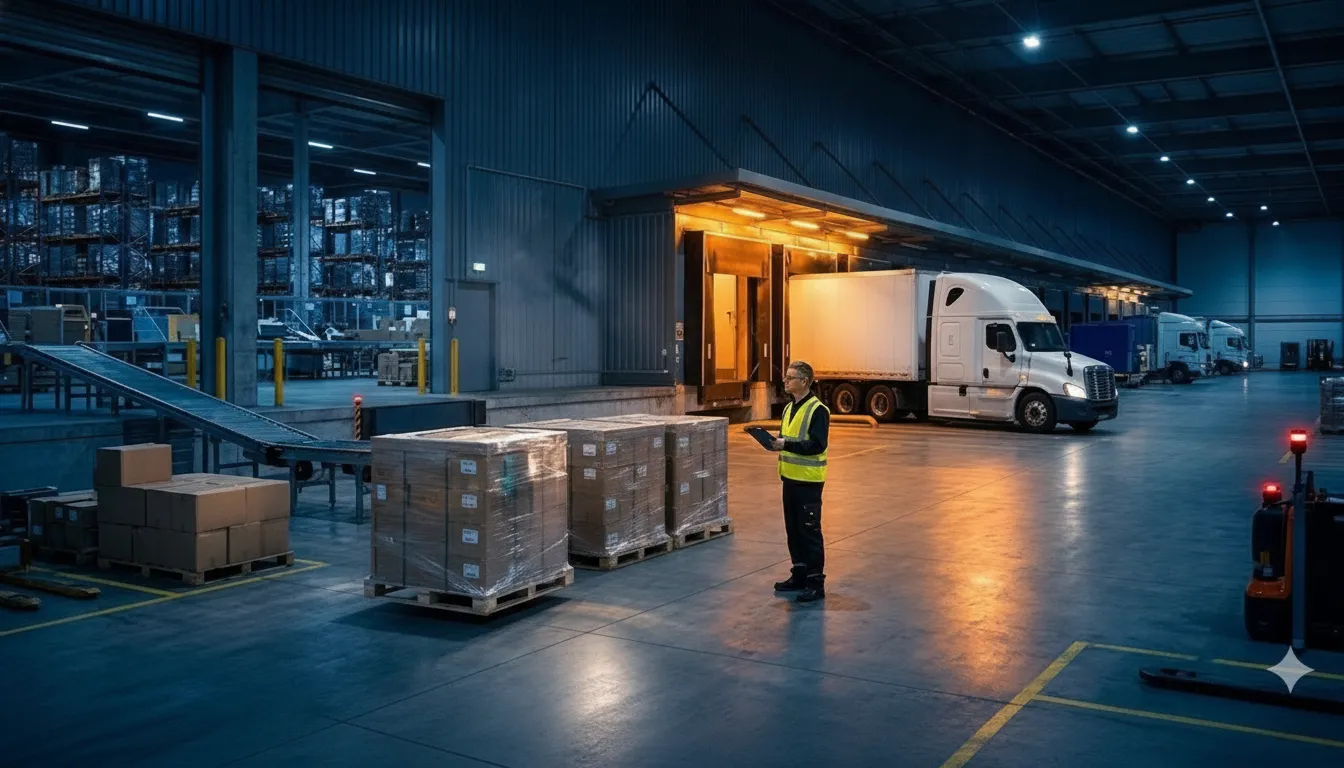
When is a freight transfer crossdock needed near me?
Use a nearby cross-dock when the freight has to leave its current spot and a short, controlled transfer will put it back on a plan. Three situations come up most often for brokers, shippers, carriers, and 3PLs.
- The receiver refused the trailer. The dock will not unload, the appointment is gone, and the driver cannot sit there while everyone argues. A cross-dock gives the freight a place to be checked, relabeled, or split before a new delivery attempt.
- Part of the load can move and part cannot. Shifted or damaged pallets may need a restack, while clean freight can transfer onto the outbound trailer. A cross-dock lets a team separate those groups instead of holding the whole shipment.
- The current location cannot do the work. A roadside lot, a closed receiver, or a dock with no labor cannot restack, recount, or stage a reload. The freight needs a dock that can.
Distance matters only in relation to the freight, not the office. “Near me” means near the stalled load. The dock should be close enough that the transfer does not add a second long haul or push the driver into a new hours-of-service problem. If the nearest workable dock is a metro away, say that plainly before anyone dispatches.
The emergency cross-docking service guide covers how an urgent cross-dock response is set up. This page stays on the narrower decision: whether this load should go there at all.
What should you check before you request a nearby cross-dock?
A fast yes wastes time if the dock cannot accept the freight. Check four facts before you ask for a transfer. None of them requires a perfect file. Each one should be known or marked unknown.
Where the freight is right now
Name the facility, the city, and whether the trailer is still on site, already rejected at the gate, or parked nearby. A cross-dock on the other side of a metro is not “near” a load that has two hours of drive time left. If the driver is about to run out of hours, the first decision is where the trailer can legally wait, then which dock can take the freight.
What condition the freight is in
Say what someone actually saw. “Two pallets are leaning into the trailer door” is usable. “The whole load is bad” is not. Leaning, fallen, wet, or broken freight may need a restack before a transfer. Crushed or leaking freight may need to be held out of the transfer entirely. Do not guess counts you have not made.
Whether the dock can touch the product
Some freight can roll from one trailer to another. Some has to be broken down, recounted, or relabeled. Temperature-controlled freight, floor-loaded freight, and freight with appointment rules all change what the dock must have ready. If the team cannot open the product, a cross-dock that only stages intact pallets will not solve the problem.
Who can approve the move
The broker, the shipper, or the carrier may each control a different piece: the freight, the trailer, and the money. Confirm who can release the freight from its current location and who will accept it after the transfer. We Fix Freight bills the customer, not the driver. Services are payable upon completion to We Fix Freight via Comchek, EFS, or Credit Card. The driver will not pay on location.
How do you judge a freight transfer crossdock near the load?
Once a nearby dock is possible, judge it against the job, not against a general provider checklist. Four questions decide most urgent transfers.
- Can they take this freight today? Ask about dock hours, after-hours labor, and whether the door can take the trailer type you have. A 24/7 answer that cannot take a reefer, an overweight axle, or a load that must be floor-stacked is still a no.
- Can they do the work the freight needs? Restack, recount, relabel, and a clean handoff are different jobs. A dock that only cross-docks intact pallets cannot fix a shifted load.
- Can they document what they touch? Photos, counts in and out, and a note of what was held back matter more than a marketing claim about speed. Those records are what the broker uses if the receiver disputes the reload.
- Is the handoff clear? Name the outbound trailer or the next carrier before the freight is unloaded when you can. A cross-dock is a transfer point. It is not a place for the freight to sit because nobody booked the next leg.
We Fix Freight coordinates this through a nationwide network of more than 150 service agents, with 24/7 coverage for urgent freight recovery. The coverage map shows where that network reaches, so you can see whether an agent is realistically near the stalled freight. For the service itself, the cross-docking service page is the commercial overview. Pricing is standardized and stated up front, without a surprise fee added after the work starts.
If you are still looking for any open dock in the area, use the existing guide to finding a cross dock near you. Come back here once you have a candidate and need to decide whether the transfer is the right move.
Which move fits when a freight transfer crossdock is one option?
A nearby cross-dock is one recovery path. It is not the default. Compare it with the other moves that solve a different problem.
| Situation | Better move | Why |
|---|---|---|
| The receiver refused intact or partly shifted freight. A nearby dock can restack or relabel it. | Use a freight transfer at a nearby cross-dock. | The freight needs a short stop with labor and a reload. It does not need a new storage plan. |
| Pallets shifted, but the trailer and the receiver can still take the freight after a fix. | Use on-site rework or a restack. | Moving the freight adds a second handling. The current dock can finish the job. |
| Freight must change trailers or modes, such as from a container to a dry van. | Use a transload. | The job is a mode or equipment change. That is broader than a same-trailer cross-dock. |
| The freight is sound. The only failure is the delivery appointment. | Use re-delivery. | A cross-dock does not fix a closed window. The product never needed to be touched. |
| Freight is leaking, unstable, or unsafe to unload. | Hold and reassess. | No dock should accept freight that cannot be handled safely. |
The cross-docking versus transloading comparison goes deeper on the mode-change choice. The emergency load transfer guide covers the physical trailer-to-trailer move when that is the method, not the decision. Use transloading services when the freight has to change equipment, and re-delivery when the freight is fine and the appointment is the problem.
A plain-language overview of cross-docking from Covenant Logistics is useful background if someone on the call has never run a transfer. It is not a substitute for the condition and access checks above.
What should you send when a freight transfer crossdock is needed near the load?
Send one note, with one load number, to the person who will dispatch the dock. Split observations from guesses. A complete request follows this order:
- Load identity: broker load number, carrier reference, and shipper and consignee names.
- Exact location: facility name, city, and whether the trailer is still on site.
- Freight facts: piece or pallet count if known, trailer type, and any temperature or handling limit.
- What failed: refused, shifted, mislabeled, or held, in one sentence, plus the time it was discovered.
- The ask: restack, recount, relabel, transfer to a named outbound trailer, or hold out damaged pieces.
- Authority and timing: who approved the move, when the freight must leave, and any hours-of-service limit on the driver.
Leave unknown fields blank rather than filling them with a guess. A dock can start with a partial file. It cannot start with a confident file that is wrong.
Photos help when they show the door, the damaged pieces, and any label the receiver rejected. They do not replace the count. If nobody has been inside the trailer, say so.
What happens after you request the transfer?
A workable request produces a yes, a no, or a narrower option. Read the answer against the job you asked for.
- Yes, with a dock and a time. Confirm the address, the appointment or drop window, what the team will do, and what “done” means. Done might be a reloaded trailer, a recounted pallet count, or freight staged for a named carrier.
- Yes, but only for part of the work. A dock may accept intact freight and refuse to restack. Decide whether the rest of the job can happen on site, at a second stop, or not at all.
- No, because of distance, equipment, or condition. Do not keep calling the same dock with the same file. Change the plan: on-site rework, a farther transload, a re-delivery hold, or a stop until the freight is safe to touch.
After the transfer, match the outbound count to the inbound count and note anything held back. That reconciliation is what lets the broker tell the shipper and the receiver the same story. If the count moved and nobody wrote down why, the cross-dock created a new dispute instead of closing one.
The 24/7 cross-docking service page describes round-the-clock coverage when the refusal happens after business hours. Use it for the service hours question, not as a second copy of this decision.
Frequently Asked Questions
How near does a freight transfer crossdock need to be?
Near means near the stalled freight, not near your office. Choose a dock the trailer can reach without a second long haul or a new hours-of-service break. If the only open dock is a metro away, treat that drive time as part of the decision, not as a detail to discover later.
Can a cross-dock fix a load the receiver already refused?
Often, yes, when the refusal is about labels, counts, shifted pallets, or a missed appointment and the product can be handled safely. A cross-dock can restack, recount, or relabel, then hand the freight to a new delivery. It cannot make a receiver accept freight they have rejected for a product or purchase-order reason.
Is a freight transfer crossdock the same as a transload?
No. A cross-dock transfer sorts or reloads freight on its way to the next trailer, usually without a mode change. A transload moves freight between equipment types, such as a container and a dry van. If the trailer type has to change, use the transload path instead of forcing the job through a cross-dock.
Who pays for an urgent cross-dock transfer?
The customer pays We Fix Freight, not the driver at the dock. Services are payable upon completion via Comchek, EFS, or Credit Card. The driver will not pay on location. The quote is standardized and stated before the work starts.
What if the freight is unsafe to unload?
Do not send it to a cross-dock. Leaking, unstable, or fallen freight that nobody can approach safely has to be stabilized first. Tell the dispatch team what was seen and keep the freight where it is until someone confirms it can be handled.
Start the transfer with the facts you have
A refused, shifted, or stuck load may need a nearby cross-dock. Send the location, the condition, and the ask. We Fix Freight can confirm whether a freight transfer crossdock near the load fits. Rework, a transload, or re-delivery may be the cleaner path. You do not need a perfect file to start. You need an honest one.