


A torn carton, crushed corner, failed pallet, or shifted load can turn a routine shipment into a time-critical operational problem. The right response is not simply to add more wrap. To repackage damaged freight safely, the team must assess product condition, replace compromised materials, rebuild load integrity, document every action, and prepare the shipment for its next controlled movement.
Contact us now for urgent, coordinated freight remediation support.
Repackaging damaged freight is a controlled freight re-work process that protects salvageable product, replaces failed packaging, stabilizes the pallet or unit load, documents condition and handling, and prepares the freight for cross-docking, transloading, storage, or re-delivery without creating new risk.
What Repackage Damaged Freight Operations Must Accomplish
Freight packaging is part of the load-control system. Cartons, crates, dunnage, bands, corner boards, stretch film, pallets, and labels work together to resist compression, vibration, impact, and movement. When one component fails, the remaining components may no longer provide the restraint or protection intended by the shipper. A response team must therefore restore the complete handling unit, not hide visible damage.
The immediate objective is to stop deterioration and determine whether the shipment can continue. The operational objective is to create a stable, identifiable, and documented unit that can be handled through the next facility and delivered with a clear record of what occurred. Product integrity, worker safety, equipment compatibility, carrier acceptance, consignee requirements, and claim documentation all influence the decision.
Repackaging Is Different From Cosmetic Repair
Cosmetic repair improves appearance. Operational repackaging restores containment and handling integrity. Placing a new carton over a crushed inner package may conceal deformation without correcting it. Applying stretch film to a leaning pallet may hold loose cases temporarily while leaving an unstable center of gravity. A credible freight re-work plan addresses the cause and verifies that the rebuilt unit is suitable for movement.
The scope may involve separating affected product, replacing packaging, rebuilding pallets, applying reinforcement, correcting labels, and staging the freight for another trailer. If the shipment requires a structured response beyond a dock team’s available labor or materials, a specialized freight re-work service can coordinate the full recovery process.
Assessment, Triage, and the Salvage Decision
Assess product condition separately from packaging condition. Isolate hazards, photograph the untouched load, sort freight by disposition, and obtain authorization before repackaging questionable goods. A defensible salvage decision protects workers, preserves claim evidence, and prevents rejected or unsafe product from returning to transit.
Assessment begins before freight is moved. Record the trailer, seal status when applicable, pallet positions, visible debris, moisture, odors, leaning units, and any immediate hazards. Photograph the load from wide angles first, then capture damaged areas and identifying labels. This sequence preserves context before unloading changes the scene.
Establish a Safe Work Zone
Unstable freight can shift when trailer doors open or when a forklift engages the pallet. Keep personnel outside the potential fall path, identify leaking or regulated material, and confirm whether powered equipment can safely access the unit. If a pallet has failed, determine whether the product must be supported, clamped, hand-unloaded, or transferred before movement. Do not ask a driver or dock worker to improvise around a load that presents an uncontrolled hazard.
Classify Product and Packaging Condition
Separate the condition of the product from the condition of its packaging. A crushed outer carton may contain undamaged, sealed product that is eligible for salvage. Conversely, a carton that appears intact may have experienced impact, water intrusion, temperature exposure, or internal breakage. Confirm the commodity, shipper instructions, consignee acceptance criteria, handling marks, lot controls, and any regulatory restrictions before deciding what can be repackaged.
Create clear disposition groups: suitable for immediate re-work, hold for inspection or authorization, visibly unsalvageable, and unaffected freight. Keep questionable product segregated until the responsible party provides direction. Repackaging should never be used to make rejected or unsafe product appear acceptable.
Use Decision Criteria, Not Assumptions
| Observed condition | Likely response | Decision checkpoint |
|---|---|---|
| Outer packaging torn, product sealed and undamaged | Replace packaging and restore labels | Confirm product and consignee acceptance requirements |
| Cases shifted on an intact pallet | Restack, add restraint, and stabilize | Verify pallet capacity and load pattern |
| Pallet deck boards or stringers failed | Transfer product to a sound pallet | Match pallet dimensions, capacity, and entry points |
| Moisture, leakage, odor, or unknown contamination | Isolate and hold | Obtain qualified inspection and disposition authority |
| Product damage or broken seals | Segregate from salvageable freight | Follow shipper, insurer, and regulatory instructions |
A fast decision is valuable only when it is defensible. When information is incomplete, preserve the freight, document the uncertainty, and escalate to the party authorized to approve salvage, disposal, or continued transportation.
Replacement Packaging and Load Reinforcement
Replacement packaging must fit the commodity and the next handling environment. A carton that is convenient to source may not provide the compression strength, dimensions, or internal clearance required. Oversized cartons allow movement and collapse. Undersized cartons can place pressure on the product or prevent proper closure. When original specifications are available, match them as closely as practical and document any approved substitution.
Rebuild Protection From the Product Outward
Inspect inner packaging before selecting an outer container. Replace damaged cushioning, dividers, bags, liners, caps, or protective sleeves as needed. Eliminate voids that allow the item to accelerate inside the package, but avoid overpacking that transfers excessive force to the product. Fragile, machined, finished, or irregular items may require blocking and bracing rather than loose fill.
Close packages using a method suitable for their weight and construction. Tape selection, staple placement, strapping, band tension, and edge protection all affect performance. Reinforcement should distribute force rather than create pressure points. Bands placed directly over weak carton edges, for example, can crush the replacement packaging during handling.
Restore Identification and Handling Information
Every repackaged unit must remain traceable. Transfer or replace shipping labels, purchase order references, pallet counts, lot or serial information, orientation arrows, weight notices, and special-handling marks only after verifying them against the source documentation. Remove or obscure obsolete labels that could send the freight to the wrong dock or cause duplicate scans. If labels cannot be reproduced accurately, hold the unit for authorization rather than guessing.
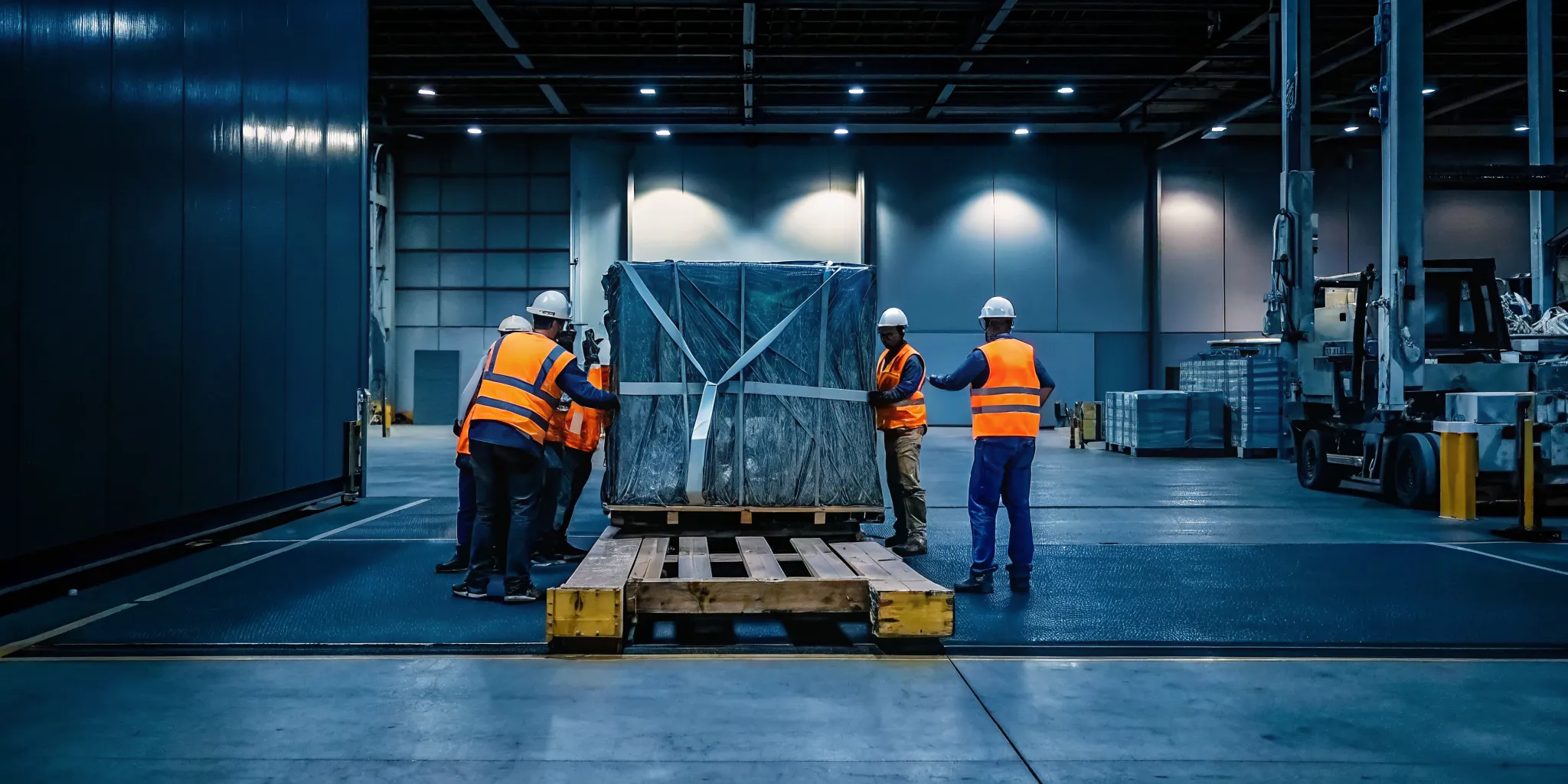
Need a response team while freight is at a dock, terminal, warehouse, or consignee? Contact us now to coordinate urgent on-site support.
Pallet Stabilization for Safe Handling and Transit
Effective pallet stabilization starts with a sound pallet and balanced load pattern, then adds the correct restraint system. Weight distribution, case strength, center of gravity, stretch-film containment, corner protection, and trailer-level securement must work together before the rebuilt freight is released.
Pallet stabilization begins with the foundation. A pallet with split deck boards, damaged stringers, missing blocks, protruding fasteners, or inadequate capacity should not be preserved simply to save time. Transfer the load to a sound pallet with compatible dimensions and forklift entry. Confirm that cases do not create unsafe overhang and that the finished unit will fit the intended trailer, rack, dock equipment, and downstream handling process.
Build a Stable Load Pattern
Place heavier and stronger cases at the base, distribute weight across the pallet, and keep the center of gravity as low and centered as possible. Align cases when their compression strength depends on vertical corners. Use an interlocked pattern only when the packaging and product can tolerate the resulting loss of column strength. Irregular freight may require custom blocking, deck sheets, or separation to prevent direct contact.
Do not stack visibly compromised cartons beneath sound freight. Replace them first or remove them from the unit. Where mixed products or partial pallets are involved, consider differences in weight, shape, crush resistance, and destination before combining them. A compact pallet is not necessarily a stable pallet.
Apply Restraint as a System
Stretch film, bands, corner boards, top caps, anti-slip sheets, and dunnage serve different purposes. Film containment depends on correct overlap, tension, and attachment to the pallet. Corner boards can protect edges and improve vertical stability, but they cannot compensate for a poor stack pattern. Bands can add strong restraint, provided they are tensioned without damaging cases. Select components based on the failure mode rather than adding material indiscriminately.
Before release, inspect all sides, check for movement, verify that the pallet can be safely engaged, and confirm there are no loose materials or sharp edges. If the unit will be loaded into a partially filled trailer, plan the trailer-level securement as well. Pallet stabilization does not replace proper blocking, bracing, or cargo securement during transportation.
Documentation and Chain of Custody
Documentation protects every party involved and supports faster operational decisions. It should show what was found, who authorized the response, what work was performed, what materials were used, and what condition existed at release. A simple photo of the completed pallet is not enough when the shipment may be subject to a freight claim, consignee review, or internal quality investigation.
Create a Before, During, and After Record
Capture wide shots that establish location and load context, close-ups of damage, product identifiers, packaging failures, and the final rebuilt units. Photograph segregated product separately and preserve labels in readable form. Time-stamped records, pallet counts, case counts, material usage, and crew notes help reconcile the work with carrier and shipper records.
During the operation, document each material change or disposition decision. If product is transferred to new cartons or pallets, record the relationship between old and new identifiers. If units are held, refused, or designated for disposal, state who authorized that outcome. For a broader framework on controlling incidents after damage is discovered, review the damaged freight repair guide.
Protect Chain of Custody Through Handoffs
Record when the remediation crew takes control of the freight and when custody transfers back to the carrier, warehouse, shipper, or delivery team. Note seal changes, trailer changes, staging locations, and exceptions. The receiving party should be able to identify the completed units and understand any remaining restrictions without relying on verbal instructions that may be lost between shifts.
Coordinate Re-Delivery and Know When to Call a Specialist
Finishing the physical re-work does not finish the recovery. The rebuilt freight must be accepted, scheduled, loaded, and delivered. Before dispatch, confirm the destination, appointment status, receiving hours, contact person, required reference numbers, equipment needs, and whether the consignee has approved another attempt. A technically sound pallet can still fail operationally if it arrives without authorization or documentation.
Plan the Next Movement Before Releasing the Freight
Determine whether the shipment will remain on the original trailer, move through cross-docking, require transloading, or be staged temporarily. Confirm how many pallets and pieces will travel, whether dimensions or weights changed, and whether replacement paperwork is required. Share exception photos and re-work records with the authorized stakeholders before the driver leaves whenever possible.
For time-sensitive shipments, coordinated re-delivery support can connect remediation work with the final delivery attempt. This reduces the risk of freight sitting after repair while parties separately arrange labor, equipment, scheduling, and transportation.
Call a Freight Remediation Specialist When Complexity Exceeds Dock Capacity
Specialist support is warranted when the load is unstable, the facility lacks trained on-site labor or replacement materials, the freight is refused away from the shipper’s network, multiple parties must authorize decisions, or timing threatens an appointment or service commitment. It is also appropriate when pallet failure, significant shifting, cross-docking, transloading, or coordinated re-delivery must occur under one response plan.
WeFixFreight coordinates urgent, on-demand remediation nationwide, 24/7, through a network of more than 150 service agents. The team can organize freight re-work, replacement packaging, pallet stabilization, on-site labor, cross-docking, transloading, and re-delivery while keeping stakeholders informed. Transparent, standardized pricing gives operations teams a clear basis for approval without hidden surprises.
Provide the Right Information at Dispatch
To accelerate response, provide the exact location, facility contact, commodity, estimated piece and pallet count, photos, visible damage, required completion time, equipment constraints, and disposition authority. State whether the trailer is at a dock, roadside location, carrier terminal, warehouse, or consignee. Clear information helps the coordinator select appropriate labor, tools, packaging materials, and transportation resources before the crew arrives.
Frequently Asked Questions About Repackaging Damaged Freight
Can Damaged Freight Be Repackaged and Delivered?
Yes, when the product remains acceptable, the replacement packaging and unit load are suitable for handling, and the authorized parties approve continued movement. Product condition and packaging condition must be assessed separately. Freight with contamination, compromised seals, unknown exposure, or product damage may require inspection, segregation, or another disposition instead of re-delivery.
Who Decides Whether Damaged Product Is Salvageable?
The decision belongs to the party with disposition authority, which may be the shipper, product owner, insurer, carrier claims representative, consignee, or another designated stakeholder. A remediation crew can document condition and execute approved work, but it should not independently declare questionable product safe or acceptable when specialized inspection or authorization is required.
What Materials Are Commonly Used During Freight Re-Work?
Materials may include replacement cartons, pallets, tape, stretch film, bands, corner boards, deck sheets, cushioning, dividers, labels, dunnage, and blocking or bracing components. The correct selection depends on the commodity, packaging failure, unit weight, handling method, transportation mode, and consignee requirements. More material is not a substitute for the correct material and application.
How Quickly Can a Repackaging Response Be Coordinated?
Timing depends on location, damage complexity, facility access, labor and material requirements, and how quickly stakeholders provide authorization. A useful initial request includes photos, counts, commodity details, location contacts, and the required delivery timeline. WeFixFreight is available 24/7 and uses its nationwide service-agent network to coordinate urgent on-demand responses.
Protect the shipment, preserve the record, and move the recovery forward. Contact us now for 24/7 nationwide freight remediation support.