
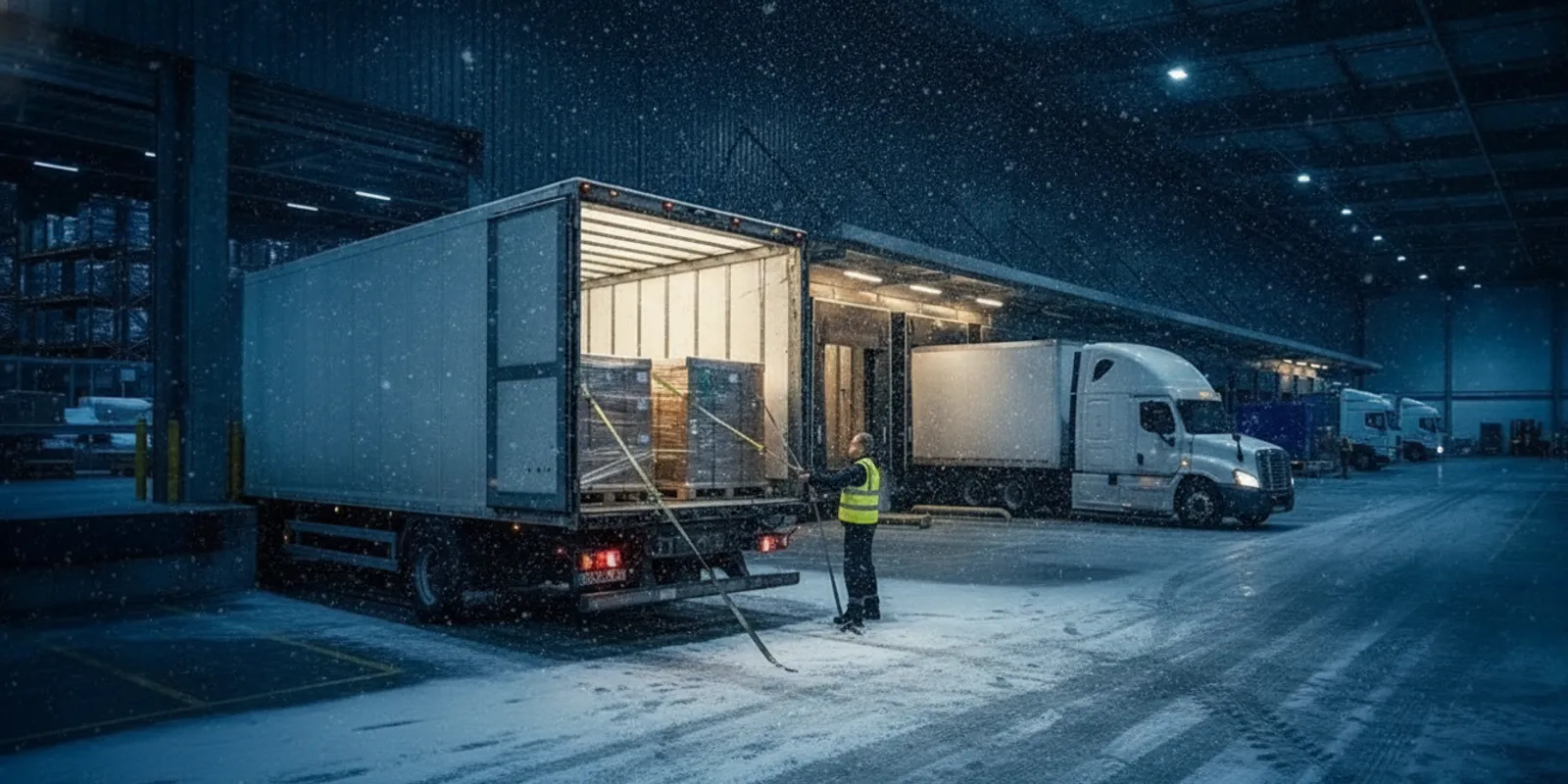
Winter freight damage can start before a truck reaches the highway. Cold temperatures, snow, ice, delayed appointments, and sudden changes in handling can all put cargo and delivery plans at risk. A practical cold-weather freight protection plan helps teams prepare the load, watch for problems in transit, and make sound decisions when damage or delay occurs.
Contact us now for emergency freight support
This guide is for shippers, freight brokers, carriers, and 3PLs coordinating winter shipments. It covers planning before loading, precautions for temperature-sensitive goods, ways to reduce snow- and ice-related pallet problems, and what to do when a load needs urgent attention. Weather and cargo requirements vary, so follow the applicable product, carrier, and customer instructions for each shipment.
Why does winter freight damage happen?
Winter conditions can complicate several parts of a shipment at once. A storm may slow a route, close a facility, or move an appointment. A trailer may sit longer than planned while exposed to cold. Snow or slush tracked into a dock can make floors slick, while wet packaging may lose strength. Repeated handling during a delay or transfer can add stress to pallets and cartons.
Not every delay causes product damage, and not every damaged-looking package means the contents are unusable. The key is to identify the actual risk, record what is visible, and avoid making assumptions about product condition. For regulated, food, pharmaceutical, or otherwise sensitive cargo, follow the shipper’s quality process and the product’s handling requirements. Do not rely on a general winter checklist in place of cargo-specific instructions.
Winter preparation also means checking conditions before dispatch. Review relevant forecasts, road conditions, facility status, and delivery windows, then share changes with the people responsible for the shipment. FEMA’s winter storm preparedness guidance is a useful starting point for understanding local winter hazards and preparing for severe weather.
How can you prepare freight before winter loading?
Good protection begins with a clear plan for the shipment, not just a last-minute check of the trailer. Before loading, align the shipper, carrier, broker, and receiver on the cargo’s handling needs and what to do if weather disrupts the original plan.
- Confirm the cargo requirements. Identify temperature limits, moisture sensitivity, special handling instructions, and any monitoring or inspection steps specified by the shipper. Confirm who can make decisions if readings, packaging, or delivery timing fall outside those instructions.
- Check the route and handoffs. Consider the forecast, expected transit time, facility hours, planned stops, and the possibility of a diversion or missed appointment. Make sure dispatch has current contacts for the shipper and receiver, not only the original booking details.
- Inspect the trailer and loading area. Check that the equipment is appropriate for the freight and that the floor and loading area are clear of standing water, snow, and loose ice. Follow the carrier’s inspection and equipment procedures. If a condition is unsafe or unsuitable, pause and resolve it before loading.
- Review packaging and pallet condition. Look for wet, crushed, leaning, shifted, or broken pallets and damaged stretch wrap before freight enters the trailer. Address unstable units using the approved handling method. The overview of what pallet rework involves can help teams distinguish rework from simply moving a load.
- Agree on escalation triggers. Decide in advance who should be notified about a weather delay, a temperature concern, a compromised pallet, or visible product damage. Set a simple expectation for sharing photos, location, time, and the next appointment information.
Build these checks into the normal shipping handoff. A short pre-load conversation can reveal that a receiving site has changed hours, a route plan is no longer practical, or a product-specific instruction has not reached the driver. These are easier to resolve before the freight is on the road.
What cold-weather risks should teams watch for?
Temperature-sensitive freight needs controls that match the commodity and the shipper’s specifications. Some goods have defined temperature ranges; others may be affected by freezing, condensation, abrupt changes, or extended exposure. Do not invent a universal safe temperature. Confirm the approved range, packaging method, trailer requirements, monitoring process, and escalation contact for each relevant load.
If a temperature reading or monitoring alert raises concern, preserve the information and contact the designated decision-maker. Record the time, location, reading, equipment status, and any changes in the shipment’s schedule. Avoid opening packages or altering controls unless authorized. A carrier, broker, and shipper should share the same understanding of the next step, especially if the freight is being held, rerouted, transferred, or re-delivered.
Moisture is another winter concern. Wet outer packaging, condensation, or water entering a trailer can weaken cartons and compromise labels. Note where moisture appears and whether it is limited to packaging or may have reached the product. Keep affected freight separate when the handling plan calls for it, and get shipper guidance before combining it with unaffected goods.
How do you reduce snow- and ice-related pallet damage?
Snow and ice create risks both outside and inside the trailer. A slippery dock or trailer floor can make loading and unloading less controlled. Moisture can soften packaging. An unstable pallet can lean or shift during braking, turns, or additional handling. These are reasons to check the load at each handoff rather than assume that a sound pallet at origin will remain sound throughout transit.
- Keep loading and staging areas clear of snow, ice, and avoidable water where site procedures allow.
- Check pallets for broken boards, leaning stacks, crushed corners, loose wrap, and visible movement before loading.
- Load and secure freight according to the shipment plan and applicable carrier procedures. Do not use a generic blocking or bracing approach that conflicts with cargo instructions.
- At a stop or transfer, note whether pallets have shifted, fallen over, or become wet. Photograph the condition before handling when it is safe and practical to do so.
- Do not ask an unqualified person to climb into an unstable stack or handle damaged freight without the right plan and equipment.
When a pallet has moved but the cargo may be recoverable, the right remedy depends on the condition, available space, equipment, and delivery plan. Teams can review options such as pallet repositioning or a freight restack service when a load needs to be made stable again. For a shifted load inside a trailer, first follow safe site and carrier procedures; this guide to correcting a shifted trailer load covers the response considerations.
What should you do when winter weather damages a load?
Respond in a sequence that protects people, preserves useful information, and gets the right decision-makers involved. The precise steps depend on the cargo and the site, but a disciplined handoff reduces confusion and can help teams choose between continued transit, rework, transfer, temporary storage, or another response.
- Make the scene safe. Stop unsafe handling and follow site emergency procedures. Do not move a leaning stack, enter an unsafe trailer, or operate equipment unless it is safe and authorized.
- Notify the responsible contacts. Contact dispatch and the shipper, broker, or receiver according to the shipment’s escalation plan. Share the current location, weather or facility issue, and any delivery time pressure.
- Document the condition. Capture clear photos of the overall load and close views of affected pallets, packaging, seals, and labels when safe. Note time, location, pallet count, visible damage, and any temperature or moisture information available. Keep records factual and distinguish observed damage from suspected damage.
- Protect the freight from further exposure. Follow approved cargo instructions while awaiting direction. Keep affected freight identifiable and avoid mixing it with undamaged product if that would make inspection or disposition harder.
- Choose a workable recovery path. Determine whether the shipment needs on-site labor, freight re-work, cross-docking, re-delivery, transloading, rail remediation, short-term warehousing, or a specialized project. Match the service to the actual problem and the next delivery requirement.
- Confirm the next handoff. Agree who authorizes the work, where the freight should go, what must be documented, and who will update the receiver. Keep the carrier and customer informed if the plan changes.
A structured freight inspection process can help teams gather condition details before deciding on rework. If the shipment requires hands at the location, review available on-site freight labor support. For time-sensitive recovery options, WeFixFreight also explains its 24/7 freight rework response.
Which winter recovery option fits the problem?
Choose the response by matching the cargo condition and immediate constraint to the work needed. A repair or transfer should not be selected just because it is available; it must support the shipment’s handling requirements and the agreed next destination.
| Situation | Potential response | What to confirm first |
|---|---|---|
| Pallets are leaning, shifted, or fallen over, but the freight may be recoverable | Freight re-work, restacking, or pallet repositioning | Safe access, product condition, equipment and labor needs, and shipper approval |
| The original trailer or delivery plan is no longer workable | Cross-docking or transloading | Receiving location, cargo handling requirements, appointment timing, and custody handoff |
| The load is sound, but the receiver cannot accept it on schedule | Re-delivery or short-term warehousing | Updated appointment, approved holding conditions, duration, and delivery instructions |
| Freight is delayed or stranded in an intermodal or rail move | Rail remediation or a specialized project plan | Equipment status, access, responsible contacts, and mode-specific constraints |
| Some freight may be damaged or wet | Inspection followed by an authorized recovery decision | Shipper quality rules, evidence, separation needs, and who can approve next steps |
These are planning categories, not a promise that every service fits every load. A brief description and photos help responders understand the situation and identify what information is still needed. WeFixFreight describes its nationwide network and emergency freight support through its freight services overview.
How can teams plan for after-hours winter emergencies?
Weather does not always disrupt a load during normal office hours. Before winter shipping peaks, keep an accessible contact list for the shipper, carrier, broker, receiver, and any cargo-specific decision-maker. Include the shipment or load reference, location, route, appointment window, commodity handling notes, and an alternate contact. Make sure dispatch knows who can authorize recovery work and who should receive updates.
When calling for help, be ready to explain what happened, what is visible, and what must happen next. Useful details include:
- Current facility or roadside location and whether the freight can be accessed safely.
- Shipment reference, cargo type, approximate pallet or piece count, and delivery deadline.
- Photos of the full load and specific damage, plus temperature or moisture details if available.
- Equipment on site, such as a dock, forklift, or other handling resources, if known.
- Whether the immediate need is inspection, stabilization, transfer, temporary storage, or delivery recovery.
WeFixFreight states that it coordinates emergency freight services through a nationwide network of more than 150 service agents and is available 24/7. That network model can be useful when a winter incident needs local hands and coordinated response. The exact solution depends on the freight, location, access, and requirements of the shipment. The coverage information offers another way to understand the company’s nationwide reach.
Frequently Asked Questions
Can cold weather damage freight even when the packaging looks intact?
It can, depending on the product and its approved handling range. Packaging appearance alone does not establish whether the contents remained within specification. Use the shipper’s monitoring and quality process, preserve relevant readings, and ask the designated decision-maker to assess the condition.
What information should I send when reporting a winter-damaged load?
Share the location, shipment reference, cargo type, visible condition, pallet or piece count, delivery deadline, and clear photos when safe to take them. Include known temperature or moisture information and explain what decision or service is needed next.
Should a driver unload a leaning or shifted pallet?
Not automatically. First assess whether the scene is safe and follow carrier and site procedures. An unstable load may require trained labor, suitable equipment, or an approved rework plan. Do not put a person at risk to speed up a delivery.
Can a winter-delayed shipment be transferred instead of stored?
Possibly. Cross-docking or transloading may suit a shipment when the cargo can be safely handled and a receiving point is ready. If the freight needs to wait, confirm the approved holding conditions and timing before choosing short-term warehousing. Cargo requirements and customer approval guide the decision.
How can we arrange emergency help outside business hours?
Contact the response provider with the load’s location, condition, timing, and handling needs, and keep the shipper or authorized decision-maker involved. WeFixFreight provides a contact page for urgent freight requests.
Contact us now to prepare for a winter freight emergency
Contact us now to discuss freight recovery
A clear plan, accurate shipment details, and prompt communication give your team a better starting point when winter weather interrupts a load. Prepare contacts and cargo instructions before the next storm, so you can focus on a safe, practical recovery when conditions change.