
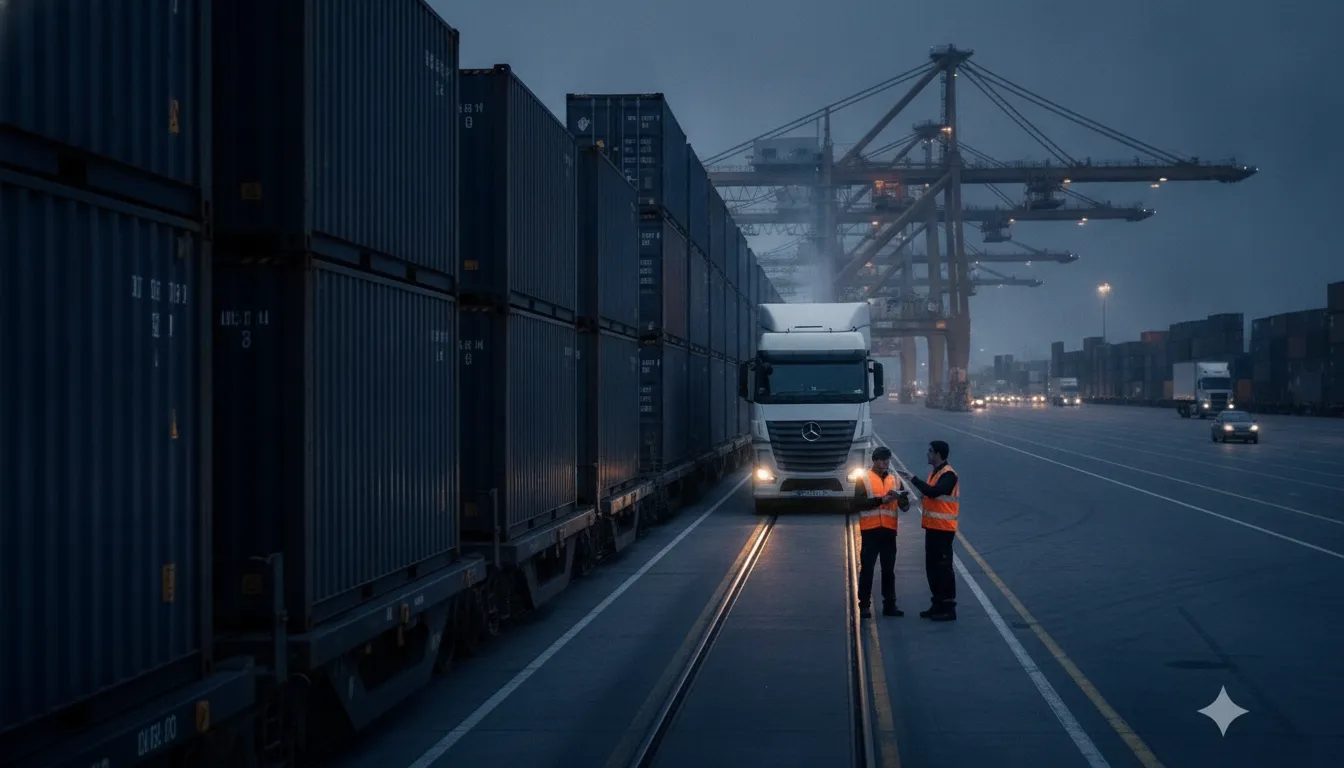
A shipment can move by road, rail, or water and still arrive as one coordinated movement. The operational challenge begins when a terminal delay, damaged load, rejected shipment, or missed connection interrupts that handoff.
Intermodal freight uses more than one transportation mode while keeping the container or trailer central to the move. In practice, intermodal connects roads, railways, ports, terminals, and warehouses so freight can change modes without unnecessary handling. When a disruption breaks that coordination, qualified teams may need to assess the cargo, equipment, location, and deadline before choosing re-work, transloading, cross-docking, re-delivery, or another response.
Understanding the structure of these moves makes it easier to identify what is normal, what signals an exception, and which next step protects the shipment. Start with the basic meaning of the term and how the equipment and connection points fit together.
What Does Intermodal Mean in Freight?
Intermodal freight is the movement of cargo using more than one transportation mode while keeping the overall shipment connected and coordinated. A load may travel by truck for pickup, rail for the long-distance leg, and truck again for final delivery. The defining idea is not simply that several modes are involved. It is that the shipment is organized around a connected handoff between those modes.
Intermodal, explained in plain language
In most intermodal moves, the cargo stays inside the same container or trailer as it moves between transportation modes. The truck, railcar, or other equipment changes, but the cargo unit remains the common component. This continuity can reduce unnecessary handling because freight does not have to be unloaded and rebuilt at every mode change. The Wisconsin Department of Transportation describes intermodal freight as moving cargo in shipping containers or trailers by more than one mode. With the container itself serving as the universal component of the movement (Wisconsin DOT freight report).
The system includes more than the vehicle carrying the load. It also includes connection points, such as ports, terminals, and warehouses, plus the links between them, including roads and railways. The U.S. Department of Transportation’s ROSAP research describes these points and links as part of the intermodal system, not as separate details outside the shipment plan (ROSAP intermodal transportation research).
That is why an intermodal shipment can be affected by a problem at a terminal or warehouse even when the rail or truck leg itself is available. The connection point is part of the route. If freight arrives damaged, a container cannot move safely, or a transfer window is missed, the next step may involve freight transloading process, cross-docking, re-work, or another form of remediation.
Intermodal and multimodal are related terms, but they are not always interchangeable. Multimodal simply means that two or more modes are used. Intermodal places greater emphasis on coordination and making the changes between modes as seamless as possible. In practical terms, ask two questions: Does the cargo remain in a consistent container or trailer, and are the connection points coordinated as part of one movement? If the answer to both is yes, the shipment is generally being handled as intermodal freight.
How Does Intermodal Transportation Move a Shipment?
An intermodal shipment moves through a planned chain of handoffs while the cargo stays in a container or trailer designed for more than one transportation mode. The journey typically begins with a truck pickup, continues through a terminal, port, or warehouse, and then uses rail or water for a longer segment before returning to a truck for final delivery. The goal is not simply to use several modes. It is to connect them so each transfer is coordinated.
From origin pickup to the main line-haul leg
At origin, a drayage truck collects the loaded container or trailer and delivers it to an intermodal terminal, port, or other designated connection point. The shipment may be checked into the facility, matched with its movement plan, and positioned for the next leg. These connection points matter because an intermodal system includes both the links, such as roads and railways, and the places where those links meet, including ports and warehouses. Federal transportation research describes these connections and links as part of the system itself.
From the terminal, the container may be placed on a railcar for a rail segment or transferred through a port for a water movement. The container is the common component that lets cargo move between modes without requiring a complete unload at every change. The exact sequence depends on the origin, destination, equipment, terminal plan, and available transportation connections. It is not useful to promise a universal timeline or assume every shipment follows the same pattern.
Destination drayage and coordinated handoffs
After the rail or water leg, another truck typically handles destination drayage. It collects the container from the destination terminal and moves it to the consignee, warehouse, or another approved location. If cargo must be transferred into different equipment, the freight transloading process may be part of that handoff. For container-specific needs, container transloading services can provide a more focused reference.
Good coordination keeps the parties aligned on container status, terminal instructions, documents, equipment, and delivery ownership. When a planned connection fails, teams may need a different transfer or remediation path rather than treating the shipment as a routine delivery.
Intermodal vs. Truckload and Multimodal: What Is the Difference?
These terms describe related but different ways to move freight. The distinction matters when a shipment changes modes, because the equipment, handoffs, and coordination plan determine who must act when an exception occurs.
| Transportation type. | Mode use. | Equipment continuity. | Coordination focus. | Best-fit question. |
|---|---|---|---|---|
| Intermodal. | Two or more modes, commonly truck and rail, connected as one planned movement. | The cargo container or trailer remains the common transport unit across modes. | Make transfers between modes connected, coordinated, and as seamless as possible. | Can this shipment move through planned mode changes while keeping the same load unit? |
| Truckload. | Truck transportation for a shipment that moves by road from origin to destination. | The trailer generally remains with the road movement, without a planned rail or water leg. | Coordinate pickup, linehaul, delivery, and any required road handoffs. | Can one road-based shipment plan meet the origin, destination, and handling requirements? |
| Multimodal. | Two or more transportation modes in the same overall movement. | Equipment continuity can vary, depending on the arrangement and individual mode segments. | Coordinate the separate mode segments, which may not be integrated or efficient as one system. | Which combination of modes is involved, and how are the handoffs being managed? |
Intermodal is therefore more specific than simply saying that a shipment is multimodal. The U.S. Department of Transportation’s ROSA-P research distinguishes multimodal transportation as the use of two or more modes that is not necessarily coordinated efficiently. Intermodal freight, by contrast, emphasizes connected processes and mode changes that should be difficult to notice from the shipment’s perspective. That distinction is useful when reviewing a transportation plan or diagnosing a failed handoff.
Truckload can be one part of an intermodal movement, such as the first or final road leg. But a truckload shipment does not become intermodal merely because it involves more than one truck or a transfer between facilities. The key questions are whether another transportation mode is part of the planned movement and whether the cargo unit is being carried across those modes.
When freight must be moved from one load unit or mode to another, the operational issue becomes a transfer decision rather than a vocabulary question. The difference between cross-docking versus transloading can help teams identify whether freight should pass directly between vehicles or be unloaded and reloaded into different equipment. For a specific rail-to-road exception, see the guide to rail-to-truck transloading.
What Can Disrupt an Intermodal Shipment?
Intermodal shipments depend on several connected handoffs, so an exception at one point can affect the rest of the move. The problem may begin at a terminal, during a mode change, or with the condition of the container and cargo. Identifying the type of disruption helps the broker, shipper, carrier, or 3PL decide whether the next step is a schedule adjustment, inspection, rework, transfer, or re-delivery.
Common exception points
- Terminal or connection delays: Congestion, limited operating windows, equipment availability, or a missed rail, port, or drayage connection can leave freight waiting longer than planned. A delay at one connection point may also cause the next appointment or handoff to be missed.
- Rejected or damaged freight: A receiving location may refuse a load because of visible damage, shifted product, packaging problems, condition concerns, or a mismatch between the shipment and the receiving requirements. The load may then need assessment, rework, transloading, storage, or a new delivery plan. See this guide to rail freight rejection response for the specific recovery path.
- Container or chassis concerns: Structural damage, defective fittings, an unavailable chassis, or a securing problem can prevent safe movement. OSHA states that intermodal containers should be inspected for defects in structural members or fittings before handling. It also states that an unsafe container must be identified, removed from service, and repaired before returning to service. Review the OSHA container-handling requirements for the applicable safety boundary.
- Missed handoffs: A driver, terminal, warehouse, rail operator, or receiver may not be ready at the expected time. When custody, appointment, or location information is unclear, cargo can remain staged while teams determine who controls the next move.
- Mode-change constraints: The available equipment, access route, cargo dimensions, handling needs, or delivery deadline may not suit the planned transfer. A rail-to-truck move, for example, may require a different trailer, a cross-dock, or on-site labor rather than a simple pickup.
These scenarios do not all require the same remedy. The key distinction is whether the shipment can continue as planned, needs a controlled transfer, or must first be made safe and workable before movement resumes.
When Does an Intermodal Shipment Need Emergency Transfer or Remediation?
An exception becomes a candidate for emergency transfer or remediation when the shipment cannot safely or reliably continue through its planned handoffs. That does not mean one specific service is automatically required. The right response depends on the condition of the container, cargo, equipment, route, delivery commitment, and available transfer point.
Five common triggers for escalation
- Unsafe container or equipment: A visible structural defect, damaged fitting, or equipment issue should stop routine handling until qualified personnel evaluate it. OSHA states that intermodal containers must be inspected for defects before handling. An unsafe container must be identified, removed from service, and repaired before it returns to service. Damage may also require special handling methods, rather than an ordinary lift or transfer. Chassis and flatbed equipment must secure the container against shifting during movement. See the OSHA container-handling requirements for the applicable safety framework.
- Blocked terminal or route: A terminal closure, access problem, congestion event, or other obstruction can prevent the planned connection even when the freight itself is intact. If a practical alternate handoff exists, rail-to-truck transloading may be one option to evaluate. It is a potential recovery path, not a promise that another route or facility will be available.
- Damaged or refused freight: Freight that arrives damaged, is rejected at a facility, or cannot be accepted in its current condition may need inspection, re-work, re-delivery planning, or a controlled transfer. The trigger is the exception and its effect on the shipment, not an assumption about which remedy will work.
- Missed delivery commitment: A missed appointment or connection can create cascading problems for a broker, shipper, carrier, or 3PL. Emergency coordination may be appropriate when the original plan no longer protects the delivery objective and the shipment needs a new handoff or destination plan.
- Need for re-work or temporary storage: Leaning, shifted, compromised, or otherwise unready freight may require on-site labor or re-work before onward movement. If the next leg is not immediately available, short-term storage can provide an interim option while the responsible parties confirm the next move. WeFixFreight also provides emergency freight transfer options for situations that require a coordinated change of custody or mode.
WeFixFreight supports intermodal exceptions through rail remediation, transloading, cross-docking, freight re-work, and related services. Its network includes more than 150 service agents, with stated 24/7/365 availability across the United States. These capabilities support coordination, but do not guarantee the same resolution or timing for incidents. Document the location, cargo condition, equipment concern, and delivery deadline so a response can be matched to the exception.
Which Emergency Freight Service Fits the Exception?
The right response depends on what failed, where the freight is located, and whether the cargo can continue in its current equipment. A mode change, a damaged load, a refused delivery, and a temporary capacity problem may all occur during an intermodal exception, but they do not call for the same service.
Match the remedy to the operational problem
- Cross-docking: Choose cross-docking when freight needs to move quickly from an inbound vehicle or container to an outbound vehicle with little or no storage. This can help when a terminal, consignee, or route change makes the original handoff impractical. See the emergency freight transfer options guide for the broader decision context.
- Transloading: Transloading fits a deliberate transfer between transportation modes or equipment, such as moving freight from a container to a truck after an intermodal leg. For a closer look at the distinction, review cross-docking versus transloading. Container-specific needs may call for container transloading services.
- Rail remediation: If the issue centers on a stranded railcar, rail handling problem. Or freight that cannot proceed through the rail network as planned, rail remediation is the more relevant lane. The rail freight remediation steps resource covers that specialized response without treating it as routine drayage.
- Freight re-work: Select re-work when the shipment condition must be corrected before it can safely or acceptably continue. That may involve sorting, restacking, repositioning, or other on-site labor, rather than simply transferring ownership of the load.
- Re-delivery: Re-delivery is appropriate when freight is ready to move but the original delivery attempt failed, the destination changed, or a consignee could not accept the load. For a rail-related refusal, see the rail freight rejection response resource.
- Short-term warehousing: Use short-term warehousing when the next move is not immediately possible and freight needs a controlled place to wait. WeFixFreight coordinates partner-owned facilities and services rather than operating a company-owned nationwide warehouse network.
These services can also be combined. For example, a damaged container may require rail remediation first, freight re-work next, and transloading or re-delivery after the cargo is ready. The condition of the container and equipment matters: OSHA guidance says intermodal containers should be inspected before handling. And an unsafe container should be removed from service until repaired. That assessment belongs with qualified personnel and the responsible parties for the shipment.
How Should Teams Coordinate an Intermodal Exception?
When an intermodal shipment stops moving, the first objective is to create one shared operating picture. Brokers, shippers, carriers, and 3PLs should assign one person to collect the facts, keep stakeholders aligned, and prevent separate decisions from sending the load in conflicting directions.
Use a six-point exception checklist
- Confirm the location. Record the container or trailer’s current facility, terminal, rail ramp, warehouse, highway position, or last verified handoff. Include the address, gate or appointment details, and the local contact who can provide access. A precise location determines whether the next move involves inspection, cross-docking, transloading, re-delivery, or another form of freight re-work.
- Describe the cargo condition. State whether the freight is intact, shifted, wet, contaminated, refused, inaccessible, or visibly damaged. Add photographs, seal information, product sensitivities, and any known handling restrictions. Avoid asking unqualified personnel to open, move, or rework a load when the condition is uncertain.
- Verify container and chassis status. Identify the container number, chassis number, loaded or empty status, visible defects, and whether the equipment can be moved safely. OSHA’s handling and inspection requirements address container defects, load identification, gross weight visibility, and equipment safeguards. Qualified personnel should determine the appropriate inspection and handling boundaries.
- Gather the documents. Share the bill of lading, delivery order, appointment details, photos, inspection notes, seal records, and any rejection or exception notice. Keep the latest version in one controlled thread so the responding team is not working from outdated instructions.
- Set the operational deadline. Identify the next appointment, storage cutoff, customer commitment, demurrage concern, or other time-sensitive constraint. Separate a firm deadline from a preferred delivery window, and explain what happens if the original plan cannot be recovered.
- Name the decision owner. One authorized stakeholder should approve the recovery path, access, document release, and changes to delivery instructions. The owner can then coordinate qualified local labor or remediation support while the carrier, facility, and cargo interests remain informed.
A clear handoff lets an emergency freight specialist evaluate the exception without guessing. WeFixFreight coordinates nationwide support through more than 150 service agents and maintains 24/7/365 availability. Available options may include rail remediation, transloading, cross-docking, or re-delivery depending on the verified facts.
Contact us now for urgent intermodal freight help.
Frequently Asked Questions
What is an example of intermodal transportation?
A shipment picked up by truck, moved by rail in the same container, and delivered by truck is a common example. The cargo changes modes while the container remains the shared handling unit. Intermodal systems also rely on connection points such as terminals, ports, and warehouses. Federal transportation research describes these coordinated links among modes and facilities.
What is the meaning of intermodal?
Intermodal means using two or more transportation modes through a connected process, often with the cargo remaining in one container or trailer. A shipment may involve roads, railways, ports, and warehouses. The goal is to coordinate each handoff so the mode changes are as seamless as possible, rather than treating every leg as an unrelated move.
What is intermodal versus truckload?
Truckload freight typically moves from origin to destination by road using a truck or tractor-trailer. Intermodal freight combines road transportation with another mode, such as rail or water, and requires planned transfers between those systems. Truckload may be the simpler fit for a direct route, while intermodal can be appropriate when the shipment is structured around container continuity and coordinated terminal connections. The right choice depends on the route, cargo, timing, and available equipment.
What is intermodal in logistics?
In logistics, intermodal is a coordinated shipment plan that connects multiple modes and the facilities where handoffs occur. When an exception affects a container, chassis, terminal connection, or delivery commitment. The response may require qualified on-site labor, freight re-work, cross-docking, transloading, rail remediation, re-delivery, or short-term warehousing. Start by confirming the shipment location, cargo condition, equipment status, and deadline so the appropriate response can be organized.
Contact us to coordinate the next step
When an intermodal shipment needs a transfer, re-work, or another remediation option, clear coordination can help your team identify a practical path forward. Contact us now to share the shipment details and discuss the support that fits the situation.